
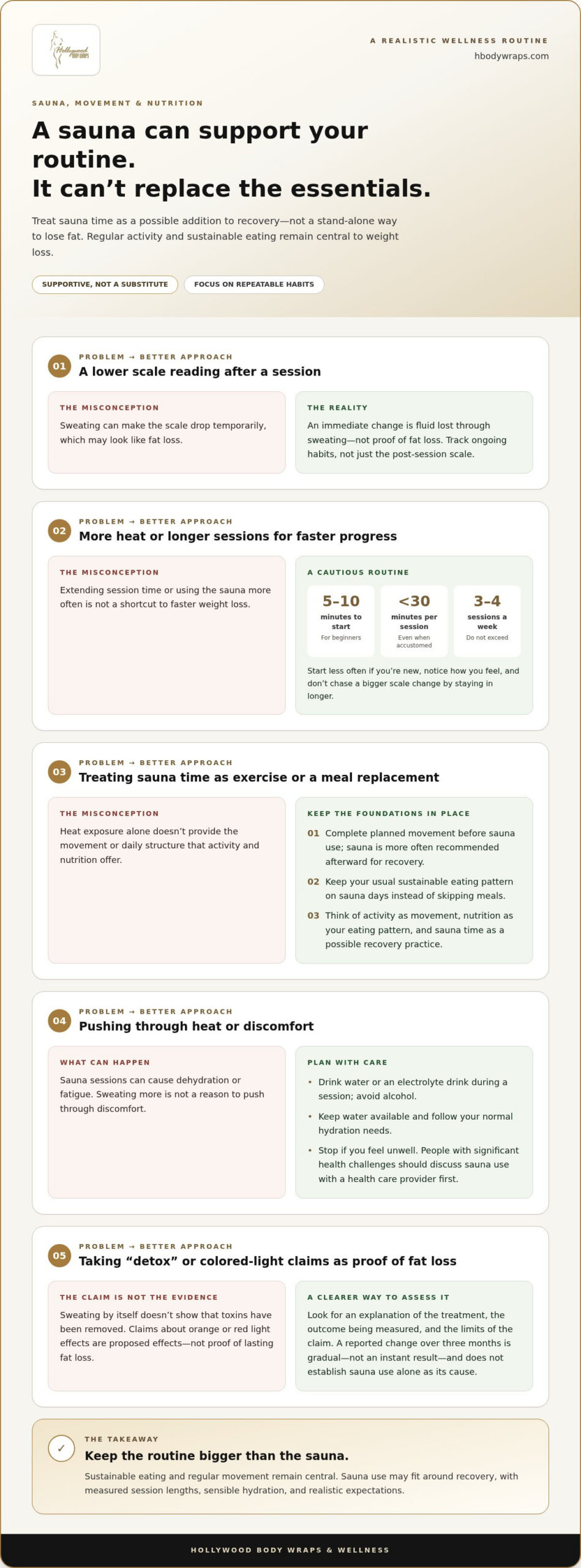
A sauna can support a weight-loss routine, but it doesn’t replace nutrition or physical activity. The potential red light sauna benefits for weight loss are best understood as supportive, not as a stand-alone way to lose fat. Beginners are advised to keep infrared sauna sessions to about 5-10 minutes, stay under 30 minutes even when accustomed to sauna use, and avoid using one more than three to four times a week. Any immediate drop on the scale is fluid lost through sweating, not fat loss.
It’s understandable to hope a warm, restorative session could support your progress. The key is to distinguish short-term changes from lasting weight loss and understand what a sauna can realistically contribute.
This guide explains how sauna sessions may fit into a wellness routine and why regular activity and balanced nutrition remain central to weight loss. It also covers practical considerations and common claims about red light sauna benefits for weight loss.
Key Takeaways
- Set a comfortable sauna routine by considering your experience and how your body responds, rather than assuming longer sessions mean faster progress.
- Separate claims about detoxification, fat, and inflammation from what a sauna session can reliably show you.
- Pair sauna use with sustainable nutrition and regular activity, and plan hydration around your session.
- Explore Mineral inch loss Body Wraps as a separate body-contouring option, not a replacement for healthy habits or weight-loss efforts.
Suggested session frequency and duration
For infrared sauna use, a cautious routine means limiting sessions to three or four times a week. More frequent or longer heat exposure doesn’t necessarily lead to greater weight loss.
Recommended Use Frequency
Three times a week is a practical reference point, with general advice not to exceed three to four weekly sessions. If you’re new to sauna use, start less often and notice how you feel afterward. More frequent sessions aren’t a shortcut to faster results and may leave you fatigued or dehydrated.
Session Duration
Beginners are advised to start with sessions of about 5-10 minutes. Even people accustomed to sauna use are advised to keep sessions under 30 minutes. A shorter first session gives you a chance to notice how your body responds before considering a longer one. Don’t extend time simply to chase a bigger scale change; sweating can lower fluid weight temporarily.
How much does red light sauna therapy cost in the United States? There’s no single standard cost. Pricing varies with the treatment format, equipment, and session length. For a specific service, the price depends on the case and is given after a quote request.
What are the risks and side effects? Sauna sessions can cause dehydration or fatigue, and sweating may lead to a temporary drop in fluid weight. Don’t extend a session to pursue more weight loss, and stop if you feel unwell.
Who should avoid it or consult a doctor first? Pregnant people are advised to avoid saunas because of potential harm to the baby, particularly in early pregnancy. People with significant health challenges should discuss sauna use with their health care provider before establishing a routine.
Claims about toxins, fat, and inflammation
“Detox” claims need a clear meaning. Sweating in a sauna doesn’t, by itself, show that toxins have been removed. A lower scale reading afterward isn’t proof of fat loss, either. Distinguish measurable changes in weight or body shape from broad claims about cleansing, inflammation, or wellness.
Chromotherapy claims also call for careful reading. Orange light is claimed to reduce localized fat and ease digestive discomfort, while red light is claimed to enhance metabolism and energize heart and blood circulation. These are proposed effects, not proof that colored light causes lasting fat loss. A claim based on color alone doesn’t explain how an outcome was measured or whether it lasted.
Infrared sauna use has also been associated with reduced belly fat over three months. That timeframe describes a gradual change, not an instant transformation after one session, and doesn’t establish that sauna use alone caused it. Nutrition, activity, and other parts of a person’s routine can affect weight outcomes, so don’t credit a single treatment without evidence that isolates its effect.
How can you tell whether a red light sauna is safe and evidence-based? Look for clear explanations of the treatment, the outcome being measured, and the limits of the claim. Treat claims about toxins, localized fat, or inflammation as unproven unless evidence directly addresses those outcomes. Take the risks of dehydration and fatigue seriously, and remember that pregnant people are advised to avoid saunas.
For a practical next step, compare the claims with the actual service being offered and ask what the session is designed to address. The Sculpt Pod red light sauna is one option to explore as part of a broader wellness routine, rather than as a detox or stand-alone fat-loss solution.
Combining sauna use with nutrition and activity
An infrared sauna may complement a weight-loss routine, but it doesn’t replace diet or exercise. Treat it as one part of a plan that includes regular movement and sustainable eating habits. Heat exposure alone doesn’t provide the daily structure that nutrition and activity offer.
Build your nutrition routine around consistent, balanced choices rather than restricting food to offset a sauna session. For example, keep your usual meals on sauna days instead of treating sweat as a reason to skip eating. A temporary change on the scale shouldn’t determine your next meal.
Hydration is a practical part of sauna planning. Drink water or an electrolyte drink during a session, and avoid alcohol. Keep a full bottle of water available; electrolyte hydrate packs are another suggested way to replenish nutrients. Follow your normal hydration needs, and don’t push through discomfort to sweat more.
Sauna use is more often recommended after a workout than before one, primarily for recovery. Finish your planned exercise first, then use the sauna as a separate recovery practice. Exercise is the activity; sauna time follows it. This distinction helps prevent a warm session from being mistaken for a workout.
- On a workout day: Complete your planned movement before using the sauna.
- During a session: Choose water or an electrolyte drink, not alcohol.
- At meals: Keep your usual sustainable eating pattern instead of skipping food.
Together, these habits give sauna use a realistic place in your routine. Nutrition supports your eating pattern, activity provides movement, and sauna use may fit around recovery. Track ongoing habits, not just sweat or a scale change immediately after a session.
Sauna use and weight loss
For weight loss, claims don’t establish that red light saunas outperform traditional saunas. Traditional saunas can approach 200 F, but higher heat alone doesn’t prove greater fat loss.
A small study found fat loss among regular sauna users, but didn’t establish sauna use as the sole cause. An observed change doesn’t reveal which part of someone’s routine drove it. Sauna use, nutrition, and physical activity can overlap, making it difficult to credit one factor alone. Treat sauna use as a possible addition, not a replacement for habits that support weight management.
Claims of up to 600 calories burned in one infrared sauna session also need context. That number is a claim, not a dependable estimate of what each person burns. Heart-rate increases during a sauna session have been described as similar to those during a short, moderate workout. But a raised pulse doesn’t make heat exposure equivalent to exercise, so the comparison can’t establish the same weight-loss effect.
A 2019 study in Complementary Therapies in Medicine compared cardiovascular effects in 19 participants using a sauna and an exercise bike. That comparison concerns cardiovascular response, not proof that sauna use causes fat loss. Keep the outcome clear: cardiovascular changes and changes in body fat are different measures.
To assess whether sauna use fits your goals, distinguish short-term scale movement from fat loss over time. Consider other changes in your routine, such as food choices or activity, before attributing progress to heat exposure. Red light sauna benefits for weight loss are best considered alongside these broader factors, not as a standalone result.
Explore wellness options for your routine if you’re considering how sauna sessions might fit alongside your existing weight-management habits.
Hollywood Body Wraps & Wellness: Mineral inch loss Body Wraps
Hollywood Body Wraps & Wellness offers Mineral inch loss Body Wraps for people interested in a body-focused treatment alongside healthy habits. This is separate from sauna use, and isn’t a substitute for nutrition and activity or a promise of weight loss.
Consider this service if your interest is body care rather than relying on sauna sessions alone to change your weight. Keeping those goals distinct can help you choose an option that fits what you want to address. Hollywood Body Wraps & Wellness also offers non-invasive cellulite treatment for people focused on cellulite.
For a thoughtful next step, contact Hollywood Body Wraps & Wellness to discuss Mineral inch loss Body Wraps and whether they fit your goals.
Choose a next step that fits your goals
Choose your next step based on what you want to focus on, whether that’s building consistent wellness habits or exploring a non-invasive treatment. Red light sauna benefits for weight loss make the most sense as part of a considered routine, not as a substitute for choices that support progress. Keep your goals specific and select services based on what you want to address.
Hollywood Body Wraps & Wellness offers Mineral inch loss Body Wraps, a non-invasive facial lift, and facials. These services address different body and skincare goals, so explore the option that fits your priorities rather than expecting one treatment to do everything.
If you’re ready to discuss your goals and explore these services, contact Hollywood Body Wraps & Wellness. Take the next step at a pace that feels right for you.
Frequently Asked Questions
Does red light sauna therapy cause weight loss or fat loss?
Sauna use alone hasn’t been established as a cause of fat loss. A small study found fat loss among regular sauna users, but couldn’t show that sauna use was the sole cause. A lower scale reading after a session may reflect fluid loss rather than a change in fat. Compare progress over time and consider changes in your wider routine.
How many calories does a red light sauna session burn?
There isn’t a dependable calorie figure for an individual red light sauna session. A claim of up to 600 calories per infrared sauna session should not be treated as a personal estimate. Heart-rate increases during sauna use have been described as similar to those during a short, moderate workout, but that comparison doesn’t establish equal calorie use or weight-loss effects.
What does clinical research say about red light therapy for weight loss?
Research findings described here don’t establish that red light itself causes weight loss. A small sauna study found fat loss among regular users without identifying sauna use as the only cause. Separately, a 2019 study in Complementary Therapies in Medicine compared cardiovascular effects in 19 participants using a sauna and an exercise bike. That comparison doesn’t prove red-light-related fat loss.
How often and how long should you use a red light sauna?
Beginners are advised to start with sessions of about 5-10 minutes, while experienced sauna users are advised to stay under 30 minutes. General advice is to avoid using an infrared sauna more than three to four times weekly; three weekly sessions offer a practical reference. Build a routine gradually, rather than increasing frequency and duration together.
Do red light sauna benefits require diet and exercise to lose weight?
Sauna use isn’t a substitute for diet or exercise for weight loss. Keep nutrition and regular activity as the foundation, and treat sauna time as an optional addition. For example, record meals, movement, and sauna sessions separately to see which habits you’re maintaining. Tampa-area readers can discuss that record with a health care provider.