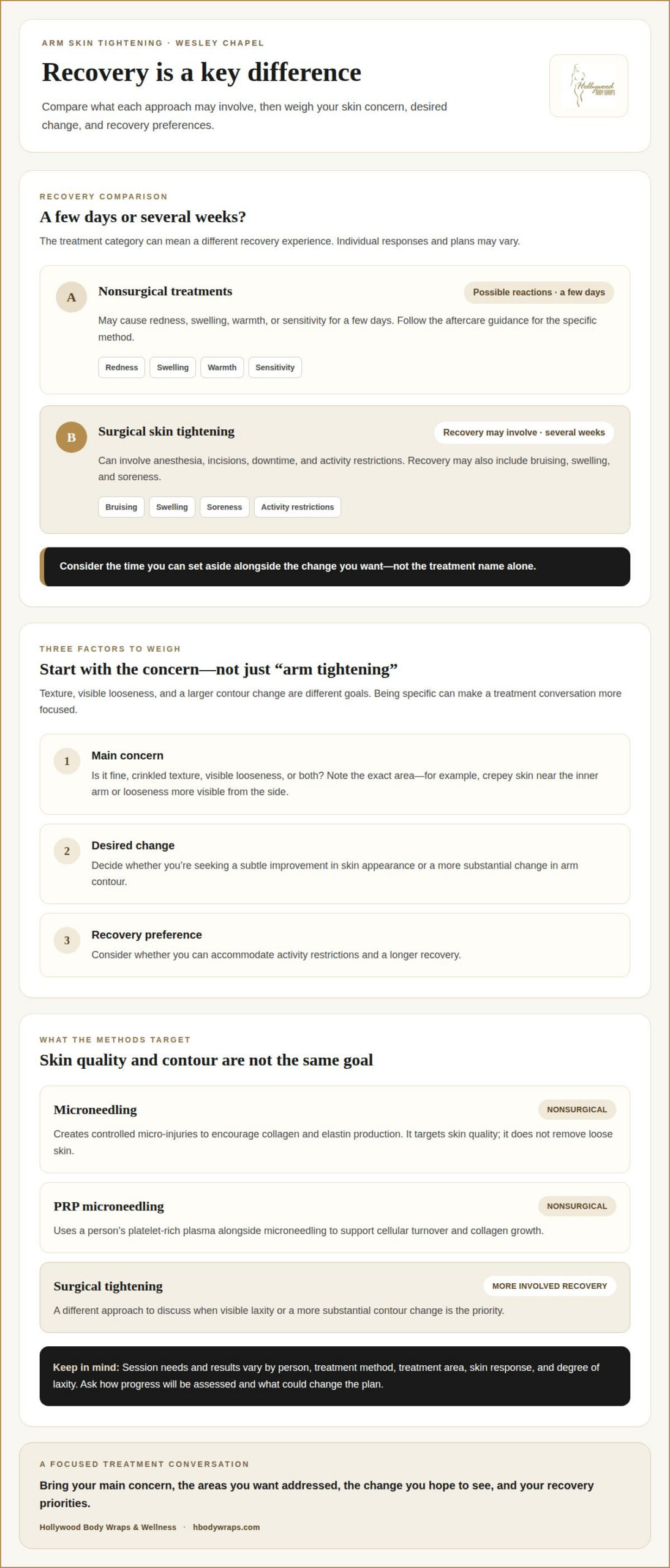
Recovery is a key difference between nonsurgical and surgical arm skin tightening. Nonsurgical treatments may cause redness, swelling, warmth, or sensitivity for a few days, while surgery can involve bruising, swelling, soreness, and activity restrictions for several weeks. For anyone considering skin tightening for arms in Wesley Chapel, this difference can help frame the decision.
It’s understandable to want smoother, firmer-looking arms without a demanding recovery. The right approach depends on how much looseness or crepey texture you want to address and whether a nonsurgical treatment aligns with your goals. This guide explains who may be a candidate, which nonsurgical options can target skin quality, and how recovery compares with surgery. You’ll also learn what to consider when weighing treatment approaches, so you can make a more informed choice about your next step.
Key Takeaways
- Assess whether your main concern is loose or crepey skin, since the degree of laxity and your goals help shape which approach may suit you.
- Learn how nonsurgical options such as microneedling work to encourage collagen and elastin production.
- Compare recovery expectations: nonsurgical treatments may bring temporary skin reactions for a few days, while surgical recovery can involve restrictions for several weeks.
- Understand how mineral inch-loss body wraps relate to body-contouring goals, and how those goals differ from treating loose arm skin.
Candidates with loose or crepey skin
Start by identifying what you want to change on your upper arms. Is your concern fine, crinkled texture, visible looseness, or both? These are different appearance goals, so note the area and concern before comparing treatments. For example, consider whether the skin looks crepey near the inner arm or whether looseness is more visible from the side. Specific observations make a treatment conversation more focused.
Consider these three points before choosing an approach:
- Main concern: Describe texture, looseness, or a combination, and point to the exact area.
- Desired change: Decide whether you’re seeking a subtle improvement in skin appearance or a more substantial change in arm contour.
- Recovery preference: Consider whether you can accommodate activity restrictions and a longer recovery.
A nonsurgical option may suit someone who wants to address skin appearance without incisions. The approach should match the concern, not just the phrase “arm tightening.” If your main concern is crepey texture, describe that. If visible looseness is your focus, explain where it appears and how noticeable it is. Clear goals help distinguish a skin-quality concern from a request for a larger contour change.
Surgery is a different decision. Surgical skin tightening can involve bruising, swelling, soreness, and activity restrictions for several weeks. That recovery may affect whether surgery fits your schedule and comfort level. Compare the time you can set aside with the change you want, rather than choosing by treatment name alone.
Before a consultation, write down your main concern, the areas you want addressed, and your recovery priorities. Note what you’ve observed and what outcome would feel meaningful. This preparation helps clarify whether a nonsurgical treatment fits your goals or whether you’re considering a more involved surgical approach.
Non-surgical skin tightening options
Nonsurgical treatments focus on skin quality without surgical incisions. Before choosing, compare what the method targets, what to expect, and the recovery involved.
Treatment Effectiveness and Session Needs
Microneedling creates controlled micro-injuries to encourage collagen and elastin production. PRP microneedling uses a person’s platelet-rich plasma to support cellular turnover and collagen growth. These methods target skin quality, but results and session needs vary by person and treatment area.
The number of sessions follows the treatment method, treated area, skin response, and degree of laxity. Ask how progress will be assessed and what changes the plan. Providers comparing arm treatments should explain who performs each procedure, the person’s relevant training, and how the chosen method addresses your specific concern. Verify credentials through applicable state records.
For a nonsurgical approach, explore non-invasive skin tightening as one treatment category to discuss.
Results Duration and Maintenance
Results don’t last for a fixed period across all methods and individuals. Skin aging, changes in body composition, the initial degree of looseness, and the treatment approach can all affect appearance over time. Ask what follow-up assessment involves and how the plan can respond to changes in your skin.
Some nonsurgical treatments may cause redness, swelling, warmth, or sensitivity for a few days. Consider this short-term response when planning, and follow the aftercare guidance for the specific method. Maintenance needs also depend on the treatment and your skin’s response, so discuss a practical review plan.
Insurance coverage for arm skin tightening or an arm lift in Florida depends on the plan and the procedure’s medical indication. Ask your insurer how the specific treatment is classified and what documentation it requires; cosmetic procedures may not be covered.
What skin tightening treatments are available for arms in Wesley Chapel, Florida?
For skin tightening for arms in Wesley Chapel, options include nonsurgical microneedling approaches and surgical skin tightening. The right category depends on whether your priority is skin quality or a more involved surgical approach.
Microneedling creates controlled micro-injuries to encourage collagen and elastin production. For crepey texture, it targets skin quality rather than removing loose skin. PRP microneedling uses a person’s platelet-rich plasma to support cellular turnover and collagen growth. These methods are nonsurgical, but the treatment area, degree of looseness, and desired change should guide the discussion.
A conversation about skin tightening for arms in Wesley Chapel should clarify what the proposed treatment is intended to address. Texture, visible laxity, and a larger contour change are different goals. Someone concerned about fine creasing may prioritize skin quality, while someone focused on hanging skin should discuss the limits of nonsurgical approaches. The method’s purpose matters more than its name.
- Microneedling: Consider how controlled micro-injuries relate to your skin-texture concern.
- PRP microneedling: Ask how platelet-rich plasma is used alongside microneedling.
- Surgical tightening: Compare its more involved process with nonsurgical care.
Surgical skin tightening can involve anesthesia, incisions, downtime, and a more involved recovery. This may include bruising, swelling, soreness, and activity restrictions for several weeks. Nonsurgical treatments may instead cause redness, swelling, warmth, or sensitivity for a few days. These differences can help you consider which recovery pattern better fits your life.
As you compare skin tightening for arms in Wesley Chapel, write down your main concern and desired change. Ask the provider to explain the method, what it targets, and what recovery involves. If a proposed treatment doesn’t address your primary concern, compare its purpose with your goal before deciding. Keep the choice focused on your arms, not just a treatment label.
Which Wesley Chapel providers offer non-surgical arm skin tightening?
For Wesley Chapel residents, focus on providers whose services address skin tightening and whose approach fits the concern on your upper arms. A useful first step is to identify whether you want to improve skin texture or address visible laxity. Then compare how each provider explains the treatment’s purpose, likely recovery, and limits.
During a consultation, look for clear answers to practical questions. Who performs the treatment? What method is used on the arms? How will progress be assessed? For example, a provider discussing microneedling should explain that it creates controlled micro-injuries to encourage collagen and elastin production. If platelet-rich plasma is involved, ask how it is used in the treatment.
Credentials matter, too. Review the practitioner’s stated training and professional credentials through the relevant issuing organization. Make sure the conversation addresses your arm concern specifically, rather than relying only on a general description of body treatments. A thoughtful plan should distinguish crepey texture from loose skin and explain how the proposed method relates to your goal.
- Match the method to your concern: Ask whether the approach targets skin quality, laxity, or another goal.
- Clarify recovery: Nonsurgical treatments may cause redness, swelling, warmth, or sensitivity for a few days.
- Understand the alternative: Surgery can involve anesthesia, incisions, downtime, and a more involved recovery, including activity restrictions for several weeks.
These points help you compare care without assuming every treatment has the same purpose. If your priority is a nonsurgical approach, explore available treatment options and consider how the method aligns with your arm goals. The best discussion is specific: it connects the treatment, the area being addressed, and the recovery you can accommodate.
Hollywood Body Wraps & Wellness: Mineral inch loss Body Wraps
Hollywood Body Wraps & Wellness offers advanced body wraps for people exploring body-contouring services alongside arm skin concerns. A body wrap and skin tightening address different goals, so consider whether you want to focus on body measurements or the appearance of loose, crepey skin. This distinction can help you choose a service that matches your priority.
If your focus is skin appearance, ask about non-invasive skin tightening; if you’re exploring body contouring, Mineral inch loss Body Wraps may be relevant. Hollywood Body Wraps & Wellness also offers facials, a non-invasive facial lift, and non-invasive cellulite treatment. Each service addresses a different aesthetic interest.
For details about the available options, visit hbodywraps.com.
Choose a next step that fits your goals
Your next step is to connect the change you want with the right kind of care. For skin tightening for arms in Wesley Chapel, consider whether your priority is skin appearance, body contouring, or another aesthetic goal. Keeping that distinction clear can make a conversation about treatment options more focused.
Hollywood Body Wraps & Wellness offers advanced body wraps, non-invasive skin tightening, and revitalizing facial treatments. These services address different aesthetic interests, so choose based on the area and concern you want to focus on. A body wrap, for example, is separate from treatment focused on arm skin.
Take time to identify your priorities, then explore the available services at your own pace. Contact Hollywood Body Wraps & Wellness to discuss your goals and take a thoughtful next step toward feeling more confident in your care choices.
Frequently Asked Questions
How does the recovery time differ between a non-surgical and a surgical skin tightening?
Nonsurgical treatments may cause redness, swelling, warmth, or sensitivity for a few days; surgical recovery can involve restrictions for several weeks. Compare these recovery needs with your work, caregiving, and exercise schedule. Someone with a physically active job, for example, may need to account for activity limits after surgery, while temporary skin sensitivity may affect plans after nonsurgical care.
Is the Procedure Painful?
Comfort depends on the treatment method and the person receiving it, so “nonsurgical” doesn’t automatically mean sensation-free. Before choosing, ask what you may feel during the procedure and what comfort measures are used. For example, clarify whether the plan involves microneedling, which uses needles, or another method. Understanding the steps beforehand helps you decide whether the experience fits your preferences.
What Causes Loose, Sagging Skin?
Loose skin can reflect changes in elasticity and shifts in body size or shape. Natural aging and substantial weight changes are common factors people consider when assessing upper-arm laxity. The appearance can differ between the inner arm and the area near the shoulder. Note where looseness appears and whether texture changes accompany it, then describe those details during a treatment discussion.
What are the different types of skin tightening services?
Options may include nonsurgical approaches such as microneedling and PRP microneedling, as well as surgical skin tightening. Microneedling creates controlled micro-injuries to encourage collagen and elastin production; PRP microneedling uses a person’s platelet-rich plasma to support cellular turnover and collagen growth. Surgical approaches involve a different process and recovery. Compare what each method targets with your main concern, such as surface texture or visible looseness.
What causes loose or sagging skin on the upper arms?
Upper-arm looseness can develop as skin elasticity changes or body volume shifts. Weight loss, weight gain, and natural aging can affect how skin sits around the arm. Genetics also influence individual skin characteristics. Consider the location and pattern: looseness concentrated on the inner arm differs from crepey texture across a broader area. Describing that pattern makes your goals more specific.
How do radiofrequency, ultrasound, laser, and microneedling compare for arm skin tightening?
These names describe different treatment approaches, so compare the specific method, device, treatment target, and recovery rather than relying on a label alone. Microneedling creates controlled micro-injuries that encourage collagen and elastin production. For radiofrequency, ultrasound, or laser options, ask what the method is designed to address on the upper arm and what sensations or recovery to expect. Match those answers to your skin concern and schedule.