
Wood therapy massage is a vigorous technique that uses handheld wooden tools, such as rollers and suction cups, over targeted areas of the body. For anyone asking what wood therapy massage is, the key distinction from standard massage is its sculpting focus and the tools used, rather than hands alone. It’s designed to work over areas where people notice cellulite or want a more contoured look, but that doesn’t mean it removes fat or delivers permanent results.
It makes sense to want more than a soothing treatment: you want to know what the technique may actually do and whether it’s right for you. This guide explains how the tools are used, what massage may temporarily change in the appearance of skin, and how wood therapy compares with a standard massage. You’ll also learn why it can feel intense, who should avoid it, and what to consider before choosing a body-sculpting treatment. Clear expectations make it easier to decide whether the experience fits your goals and comfort level.
Key Takeaways
- Learn how wooden rollers and cups target specific areas, and why the technique can feel more vigorous than a standard massage.
- Separate claims about circulation and lymphatic drainage from what massage may temporarily change in the skin’s appearance.
- Recognize why pressure matters, what bruising may signal, and why pregnancy is a reason to avoid this treatment.
- Compare the goals of sculpting-focused wood therapy and relaxation-focused massage to decide which better suits your needs.
How Do Wooden Tools Enhance Massage?
Wood therapy massage, also called maderotherapy, uses handheld wooden instruments moved repeatedly over targeted areas of muscle, fat, and cellulite. The technique is designed for focused bodywork, not simply relaxation. For example, a practitioner may work across the thighs with rolling strokes, using a shaped tool to apply pressure along the treatment area.
In the United States, the price depends on the treatment area and session length, and is given after a quote request. These details affect the scope of the appointment and the tools used.
The instruments vary in shape and purpose. Rolling pins glide over broader areas, while vacuum-suction cups create a different kind of contact with the skin. Some wood therapy methods use more than 10 types of wooden tools, allowing practitioners to select an instrument for the area and massage technique. A wide roller, for instance, can cover the thigh more evenly than a narrow-edged tool.
During a session, the practitioner moves the tools repeatedly over selected areas rather than holding them in place. The sequence and pressure can change as the work moves between body regions. A curved instrument may follow the contours of the thighs, while a roller travels along a larger surface. Sessions may focus on targeted massage across chosen areas.
Wood therapy is associated with claims of improved circulation, lymphatic flow, and a smoother-looking appearance of cellulite. These claims are not proof that wooden tools remove fat or permanently reshape the body. Massage may temporarily change how cellulite looks, and the effect can vary with pressure, technique, and the area treated. Although wood therapy is non-invasive, vigorous pressure can feel intense, so comfort should guide the pressure throughout the session.
The distinction helps set realistic expectations: wooden tools change how massage is delivered, not what massage can guarantee. Wood therapy may suit someone interested in targeted bodywork, while standard massage may better match a goal of general relaxation. Knowing how the tools are used makes it easier to understand the experience and its limits.
Can Wood Therapy Really Improve Your Skin?
Wood therapy may temporarily change the appearance of cellulite, but it has not been scientifically proven to treat it. A session should not be treated as a guaranteed way to produce lasting changes in body shape. Understanding what wood therapy massage can and cannot do helps separate a short-term cosmetic effect from claims about fat loss.
Practitioners claim that wood therapy supports circulation and lymphatic drainage. The lymphatic system moves fluid through the body, while massage applies external pressure to the skin and underlying tissues. That pressure may temporarily change how an area looks or feels. For example, massage over the thighs might leave the skin looking smoother for a time without changing the underlying cause of cellulite.
Claims about belly fat, metabolism, and contouring require careful consideration. Moving a wooden tool across the abdomen may shift tissue during massage, but this does not establish fat reduction or increased metabolism. A change in how the belly looks after a session is not proof of weight loss. Lasting changes in body shape involve more than the immediate appearance after pressure and movement.
To assess a possible benefit, distinguish a temporary cosmetic effect from a medical outcome. Note which area was treated, how the skin looks before and after, and whether any difference lasts beyond the session. Do not treat claims about improved lymphatic flow as proof that cellulite has been eliminated. Pressure, technique, and the treatment area shape the experience, and the evidence does not support promising cellulite treatment through wooden tools.
If visible cellulite is your main concern, explore a non-invasive cellulite treatment as another body-care option. The useful question is whether you want a temporary change in appearance, a relaxing massage experience, or a broader approach to body contouring. Keeping those goals separate makes it easier to judge each treatment on what it’s intended to address.
Possible bruising and who should avoid treatment
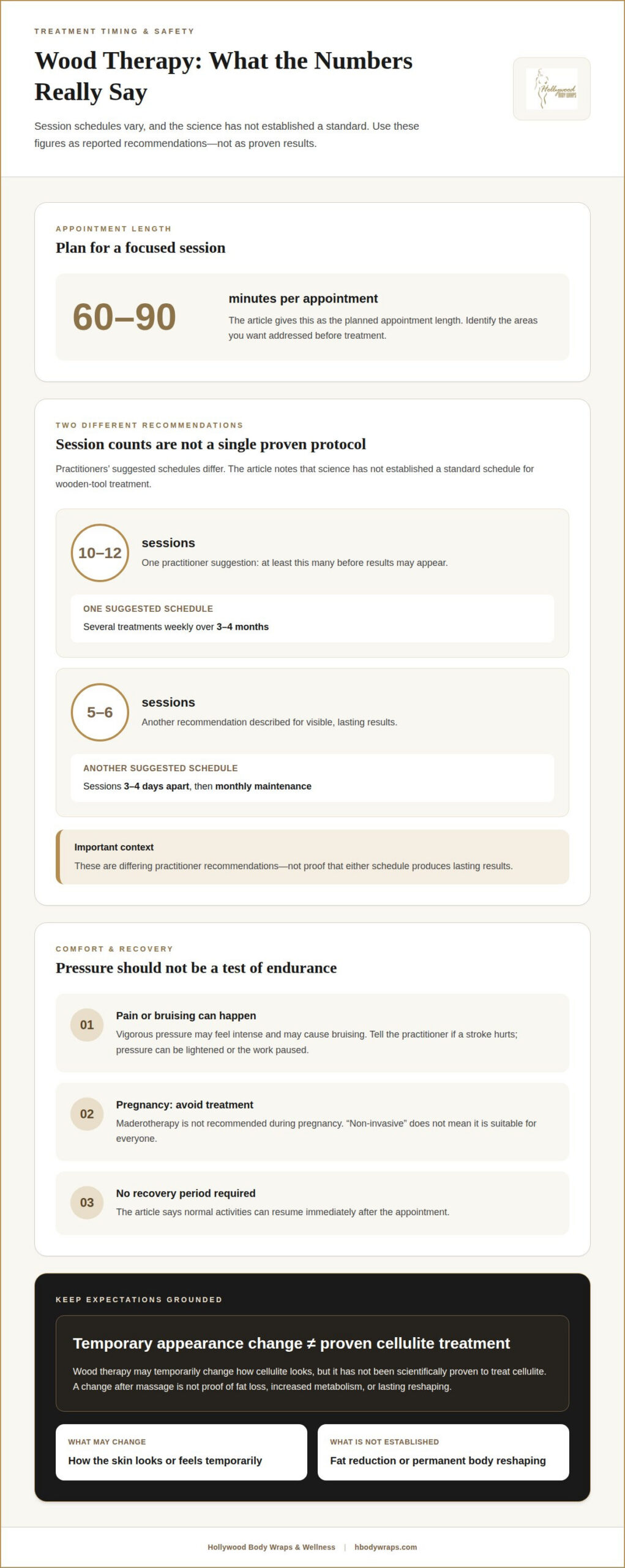
Wood therapy can feel intense, and some people report pain during treatment. Vigorous pressure may also cause bruising, so the session should not feel like a test of endurance. Tell the practitioner if a stroke hurts, and ask for lighter pressure or a pause. Because wooden tools apply pressure directly to the body, comfort matters throughout the session.
Pregnancy is a reason to avoid maderotherapy. The treatment is not recommended during pregnancy. For other health concerns, the available guidance here doesn’t establish a full list of suitable candidates, so don’t assume that vigorous massage is appropriate for every body. The key distinction is that “non-invasive” describes the technique, not a guarantee that every person can safely receive it.
Frequency recommendations vary. Some practitioners suggest at least 10 to 12 sessions before results may appear, while another recommendation is 5 to 6 sessions for visible, lasting results. These are not the same protocol. One approach describes several treatments weekly over 3 to 4 months; another spaces sessions 3 to 4 days apart, followed by monthly maintenance. The science has not established a standard schedule for wooden-tool treatment.
Plan for a 60 to 90 minute appointment. Before treatment, identify the areas you want addressed and tell the practitioner about pregnancy or discomfort with firm pressure. During the session, communicate clearly if the wooden instruments cause pain; the pressure can be adjusted or the work paused. No recovery period is required, and normal activities can resume immediately.
Keep expectations grounded in the evidence: wood therapy has not been scientifically proven to treat cellulite. A series of sessions does not establish fat loss, weight reduction, or lasting contour changes. Pay attention to comfort and skin appearance rather than treating bruising as proof of effectiveness. If pressure causes pain, bruising, or concern, stop the treatment and seek appropriate medical guidance. Safety comes before completing a planned course.
Wood therapy compared with standard massage
The clearest difference is the method: wood therapy uses shaped tools, while standard massage commonly relies on hands. A wooden roller can apply repeated, focused pressure to a selected area, such as the outer thigh. Standard massage may use hands to work broader muscle groups. The techniques can feel quite different, even though both involve pressure and movement.
The goal matters, too. Wood therapy is often presented as targeted bodywork focused on the appearance of cellulite. Standard massage is more commonly chosen for relaxation or muscle tension. For example, someone seeking a calming, full-body experience may prefer hands-on massage, while someone interested in focused work with tools may prefer wooden instruments. Neither approach is a substitute for medical care.
Claims about breaking up fibrous tissue or reshaping areas beneath the skin need careful interpretation. A 24-week study examined a localized vibrational massage device for cellulite, not wooden tools. Its results therefore cannot establish that wood therapy produces the same effects. A device-based technique and a wooden-tool massage differ, so evidence for one should not be used as proof for the other.
Use your main goal to compare the options. Choose standard massage when relaxation and broad muscle work matter most. Consider wood therapy if you’re interested in a targeted, tool-based experience and understand its limits. A temporary change in skin appearance, for example, is different from proven fat reduction or lasting contouring. Comfort matters, too: vigorous pressure may not suit someone who prefers a gentle touch.
If your priority is a non-invasive approach to body contouring, explore body-sculpting options and compare their intended goals with massage. Wood therapy and standard massage offer different experiences; matching the method to your priority makes the decision clearer. A focused sculpting technique may appeal to one person, while another may value the slower pace and relaxation of hands-on massage.
Hollywood Body Wraps & Wellness: Mineral inch loss Body Wraps
Hollywood Body Wraps & Wellness offers Mineral inch loss Body Wraps for people exploring body-care options beyond wood therapy. If you’re interested in a body wrap rather than massage with wooden tools, this is a different treatment format. The spa also offers Non invasive Cellulite Treatment for people focused on the appearance of cellulite.
The right next step depends on your goal: a body wrap, targeted cellulite care, or simply learning how these options differ from massage. Keep your expectations grounded in what each treatment is designed to address, rather than assuming all approaches work alike.
For details about these body-care options, visit Hollywood Body Wraps & Wellness online.
Choose a next step that fits your goals
Start by asking yourself whether you want a massage experience or are exploring another kind of beauty treatment. Understanding what wood therapy massage is can help you decide whether its tool-based approach matches your comfort and priorities. Bring a clear goal to your next appointment, such as body care or a facial treatment.
Hollywood Body Wraps & Wellness also offers Mineral inch loss Body Wraps, a Non invasive facial lift, and Facials. These are different treatments, not interchangeable versions of wood therapy. Consider which area and type of care you want to focus on, then explore the service that best fits your preference.
For a personal next step, contact Hollywood Body Wraps & Wellness to discuss your beauty and wellness goals. A thoughtful choice can make self-care feel purposeful and comfortable.
Frequently Asked Questions
What Is Wood Therapy for Body Sculpting?
Wood therapy massage uses handheld wooden tools on selected body areas, with a focus on targeted bodywork. A practitioner may use different tool shapes on areas such as the thighs or abdomen. The technique can temporarily affect how skin looks, but it is not a proven way to remove fat or create lasting body-shape changes. Think of it as targeted massage, not a replacement for weight management.
Can It Increase Lymphatic Circulation?
Practitioners claim wood therapy supports lymphatic circulation, but that claim is not established proof of a health benefit. The lymphatic system carries fluid through the body, and massage applies pressure to surface tissues. A temporary change in how an area looks or feels does not demonstrate improved lymphatic function. Treat claims about drainage as claims, not as a measured outcome of a wooden-tool session.
Does It Alleviate Stress?
Some practitioners describe stress relief as a possible benefit, but the experience depends on whether the pressure and pace feel comfortable to you. A vigorous session may feel relaxing to one person and too intense to another. If you want a calming massage, communicate your preferred pressure before treatment and speak up if the wooden tools feel uncomfortable. Comfort is a practical guide to the experience.
Does Wood Therapy Work for the Butt?
A practitioner may use wooden tools on the buttocks, but this does not establish lasting lifting, added volume, or fat reduction. Wood Therapy is among the services offered at Hollywood Body Wraps & Wellness. People exploring body-care options in Tampa, Carrollwood, Lutz, Wesley Chapel, or Westchase can distinguish a massage experience from claims of permanent reshaping.
How Should You Prepare for Your Session?
Before your appointment, decide which area you want addressed and what level of pressure feels comfortable. Share your preference at the start, then speak up if the sensation becomes painful. Mention pregnancy, since maderotherapy is not recommended during pregnancy. Set expectations for the appointment: wood therapy is hands-on bodywork, not a proven fat-loss procedure or a substitute for medical care.
How many wood therapy massage sessions do I need?
There isn’t one established schedule. Some practitioners recommend 5 to 6 sessions for visible, lasting results; others suggest at least 10 to 12 before results may appear. Recommendations also range from sessions spaced 3 to 4 days apart to repeated treatments over 3 to 4 months, followed by monthly maintenance. These are differing practitioner recommendations, not a scientifically proven course.