
A bigger-looking butt without surgery can come from building glute muscles, while a nonsurgical butt lift uses aesthetic treatments rather than exercise. If you’re wondering how to get a bigger butt without surgery, glute training is a practical way to develop shape and lift over time, though muscle growth takes consistent effort.
It makes sense to want a visible change without an operation or a demanding recovery. Exercise and nonsurgical treatments work differently, and neither changes your body in exactly the same way as surgery.
This guide explains what nonsurgical butt lifts involve, how they compare with surgical procedures, and what glute-strengthening exercises can do for shape, lift, and volume. You’ll also learn where body-sculpting treatments may fit alongside training, so you can weigh your options with realistic expectations and your well-being in mind.
Key Takeaways
- Understand how nonsurgical butt-lift approaches differ in their methods, visible effects, and maintenance needs.
- Compare nonsurgical options with surgery, including the differences in recovery and safety considerations.
- Learn how exercises such as squats, lunges, and hip thrusts can help build and shape the glutes over time.
- Set realistic expectations for changes in volume and lift by considering how muscle growth and aesthetic treatments affect appearance.
What is a nonsurgical butt lift?
A nonsurgical butt lift describes aesthetic treatments intended to enhance buttock contour without an operation. The approach matters: fillers, light therapy, and vacuum therapy work differently and produce different kinds of change.
Expected Volume and Results
Expected volume means the visible change in fullness or contour after treatment. Fillers add volume, while light-based approaches focus on changes that develop over time; neither should be assumed to create the same result as surgery.
For example, light therapy results may take up to six weeks to appear. Vacuum therapy uses mechanical stimulation, and sessions typically last 30-60 minutes. These approaches may suit goals such as a subtle contour change, rather than a dramatic increase in size.
Result Duration and Maintenance
Result duration is how long a treatment’s visible effects remain, which helps shape expectations for ongoing care. Dermal fillers used for nonsurgical butt lifts can last up to two years, while light therapy results usually last six months.
Maintenance depends on the treatment and the change you want to preserve. Light therapy may require repeat sessions over time, while filler results fade as the material is gradually absorbed. Bruising at a filler injection site may last a few days.
Consider both the result and the recovery needs before choosing an approach. After a nonsurgical butt lift, avoid strenuous activity for at least 24 hours. Treatments involving collagen production aim to support skin firmness, while contour-focused methods target the appearance of shape. These are distinct goals, so identify whether fullness, lift, or smoother-looking skin matters most to you.
To explore how to get a bigger butt without surgery, compare each option with your preferred outcome. A non-invasive BBL is an aesthetic treatment intended to improve buttock shape and volume, while glute training develops muscle through exercise. Consider whether your priority is fullness, contour, or muscle growth before choosing an approach.
How nonsurgical butt lifts compare with surgical procedures
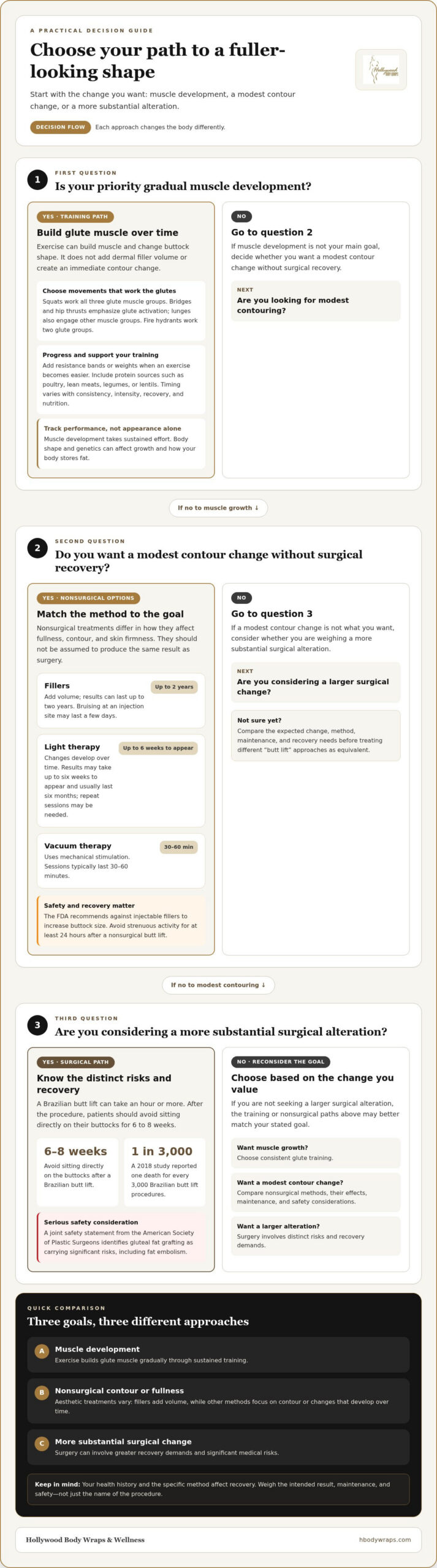
Nonsurgical and surgical butt lifts differ in how they change shape, the recovery they involve, and the scale of results. Nonsurgical procedures take less than an hour, while a Brazilian butt lift can take an hour or more. The right comparison starts with your desired change: subtle contouring, muscle development, or a more substantial surgical alteration.
For nonsurgical options, methods vary. Fillers add volume, while other approaches aim to affect contour or stimulate tissue. The U.S. Food and Drug Administration recommends against using injectable fillers to increase buttock size. This matters when weighing potential benefits against safety. The American Society of Plastic Surgeons’ joint safety statement identifies gluteal fat grafting as carrying significant risks, including fat embolism. A 2018 study reported one death for every 3,000 Brazilian butt lift procedures.
Recovery also differs. After a Brazilian butt lift, patients should avoid sitting directly on their buttocks for 6 to 8 weeks. Butt-lift surgery may involve sitting restrictions for several weeks, while nonsurgical procedures generally have shorter recovery demands. The procedure’s method and your health history shape what recovery entails, so these differences belong in your decision alongside the expected result.
Body shape and genetics can affect how much your glutes grow without surgery. They influence muscle development and how your body stores fat, so two people following similar training may see different changes.
A nonsurgical approach may suit someone seeking a modest contour change without surgical recovery. Surgery may be considered for a larger alteration, but it carries distinct medical risks and recovery demands. Compare the method, expected change, and recovery against your priorities rather than treating every “butt lift” as equivalent. If muscle stimulation is part of your nonsurgical goals, explore the SculptX EMS muscle stimulator as one option to consider alongside glute training.
Glute-strengthening exercises and training
Glute training can build muscle, change buttock shape, and create a fuller appearance. Squats, lunges, glute bridges, and hip thrusts are practical movements to include because they target or activate the glutes.
Squats work all three glute muscle groups, while fire hydrants work two. Bridges and hip thrusts emphasize glute activation, and lunges also engage other muscle groups. Sumo squats and walking lunges add variety. When exercises become easier, resistance bands or weights can make them more challenging and support muscle growth.
How much protein and how many calories should you eat to build glutes? Include protein sources such as poultry, lean meats, legumes, or lentils to support muscle growth and workout recovery. There isn’t one calorie target for everyone. Choose food intake that supports your activity and training, with carbohydrates and healthy fats helping provide energy.
How long does it take to see results from glute training? Timing depends on consistent training, exercise intensity, recovery, and nutrition. Track progress through strength and exercise performance, not appearance alone, because muscle development takes sustained effort.
For a focused routine, choose a few movements that train the glutes in different ways. Pair squats with hip thrusts, then add walking lunges or fire hydrants for variety. Use a band or weight when your current resistance no longer challenges you, and keep each movement controlled.
Exercise builds muscle, not dermal volume. Sculptra is a poly-L-lactic acid dermal filler, so it works differently from training and does not build muscle. A surgical butt lift also changes the body through a different approach. Treat these as distinct options, and choose training when your goal is gradual muscle development rather than an immediate change in contour.
Consistency is central: repeat a balanced routine, allow recovery between challenging workouts, and support training with a varied diet. Squats, bridges, and lunges offer a clear starting point for building strength and working toward more defined glutes.
Possible changes to buttock volume, shape, and lift
Volume means fullness, while shape describes the outline and lift describes how the buttocks appear positioned. These changes can come from different sources. Glute training develops muscle, while aesthetic treatments may focus on contour or skin appearance. Identify your goal to distinguish a fuller look from changes in definition or firmness.
Muscle development can add fullness gradually as the glutes grow with consistent resistance training. That differs from a Brazilian butt lift, which uses fat transfer, and injectable augmentation, which adds filler. Each approach affects the body differently. Consider whether your priority is muscle, contour, or added volume before comparing methods.
Vacuum therapy uses mechanical stimulation intended to increase blood flow and activate muscle growth in the buttocks. This describes its intended mechanism, not the same process as building strength through exercises such as hip thrusts. Treatments therefore shouldn’t be treated as interchangeable with training. A useful comparison is the target: muscle development, temporary contouring, or a more substantial procedural change.
Changes in shape can also reflect how muscle sits beneath the skin and how the body naturally distributes fat. Someone seeking more definition may want a different outcome from someone seeking added fullness. Track the specific change you want, such as improved glute strength or a smoother-looking contour, rather than relying on the broad label “butt enhancement.”
Injections require special caution. The U.S. Food and Drug Administration recommends against injectable fillers for increasing buttock size, so filler-based volume claims should not be confused with an endorsed option. A Brazilian butt lift is surgical and carries separate recovery and safety considerations. For a nonsurgical approach centered on muscle stimulation, explore the SculptX EMS muscle stimulator as one option to consider alongside your training goals.
Hollywood Body Wraps & Wellness: Mineral inch loss Body Wraps
Hollywood Body Wraps & Wellness offers Mineral inch loss Body Wraps for people with inch-loss goals alongside a glute-training routine. Wraps and resistance exercise address different goals: training builds glute muscle, while wraps are designed to support temporary inch loss. A wrap is not a substitute for strength work when your priority is muscle growth or glute strength.
Consider a body wrap if you want to complement training with a service focused on inch loss. If your main goal is greater muscle volume, keep your focus on progressive glute exercises, supportive nutrition, and recovery. Matching the approach to your desired outcome helps keep expectations clear.
For a body-contouring option to complement your personal wellness goals, contact Hollywood Body Wraps & Wellness to learn about Mineral inch loss Body Wraps.
Choose a Routine You Can Sustain
Your next step in deciding how to get a bigger butt without surgery is to choose an approach that matches your priorities and feels manageable over time. If muscle development is your goal, focus on consistent training and gradual progress rather than expecting an overnight change. A routine you can maintain gives you room to build strength and notice how your body responds.
For other personal wellness goals, Hollywood Body Wraps & Wellness offers Mineral inch loss Body Wraps, a non-invasive facial lift, and customized facials. These services address different aesthetic interests, so consider which outcome matters most before exploring an option.
Contact Hollywood Body Wraps & Wellness to learn more about its wellness services. Keep your goals personal, your expectations grounded, and your next step aligned with the change you want to pursue.
Frequently Asked Questions
How Long Do the Results Last?
There isn’t one timeline for every approach. Training-built muscle depends on continued resistance exercise, while aesthetic treatments follow their own result and maintenance patterns. For example, light therapy and fillers differ in how long their visible effects typically remain. Before choosing, consider what upkeep you’re comfortable maintaining, such as continuing workouts or following a treatment plan for your preferred contour.
Want to Enhance Your Butt Without Surgery?
Match your approach to the change you want. Glute training supports muscle development, while a non-invasive BBL is intended to improve buttock shape and volume for a lifted, contoured appearance. These approaches aren’t interchangeable: one builds muscle through exercise, while the other is an aesthetic treatment. Consider whether your priority is strength, contour, or fullness before deciding what to explore.
What Can Non-Surgical Butt Augmentation Achieve?
Nonsurgical butt augmentation can aim to enhance shape, create the appearance of volume, or produce a more lifted contour. The effect depends on the treatment method and aesthetic goal. It does not mean every method builds glute muscle: muscle growth comes from resistance training. Defining whether you want a contour change or stronger glutes helps set a clear target.
What Exercises Build Glute Muscles and Make Your Butt Bigger?
Squats, lunges, hip thrusts, and glute bridges are useful exercises for training the glutes. At home, bodyweight bridges and lunges offer accessible options; at the gym, weights can add resistance to squats or hip thrusts. Focus on controlled movement and gradually increase the challenge as your strength improves. A well-rounded selection trains the glutes through different movement patterns.
What Is the Best Glute Workout Plan for Beginners at Home or the Gym?
A beginner plan can combine a squat, a glute bridge or hip thrust, and a lunge variation. At home, start with bodyweight movements or a resistance band; at the gym, use equipment that lets you control resistance and technique. Keep the routine simple, practise each movement with steady form, and increase resistance when the current challenge feels manageable.
How Often Should You Train Glutes for Muscle Growth, and How Much Rest Do They Need?
Schedule challenging glute sessions with recovery time between them rather than training the same muscles hard every day. Rest supports recovery from movements such as weighted squats and hip thrusts, while lighter activity can keep your routine balanced. If your performance drops or soreness affects how you move, reduce the next session’s intensity and resume challenging work when you can move comfortably.