
Celebrity transformations can make postpartum belly tightening look like a quick fix, but the right option depends on what has changed. Choosing post-baby belly tightening treatments starts with identifying whether your main concern is loose skin, abdominal muscle tone, or both. Pregnancy stretches abdominal skin, and postpartum changes can take time to settle.
It’s understandable to want a firmer-looking midsection after giving birth. Belly changes may continue from six weeks to a year after childbirth, so timing and recovery matter when considering treatment. This guide explains how skin and muscles can change after pregnancy, when non-invasive options may be relevant, and what to consider before choosing an approach.
You’ll also learn how radiofrequency treatments work with skin tissue and how electrical muscle stimulation targets muscle activity. Each addresses a different concern, helping you assess what may suit your goals and what a treatment can realistically do.
Key Takeaways
- Long-lasting belly changes can reflect more than one factor; learn what may contribute and why concerns can remain years after pregnancy.
- Use recovery and family-planning considerations to understand when different treatment approaches may be appropriate.
- A tailored plan starts by distinguishing skin laxity from changes in muscle tone, since these concerns call for different approaches.
- Explore how radiofrequency and electrical muscle stimulation work, and what each method is designed to address.
1. What Causes Loose Skin and Stretched Muscles Postpartum?
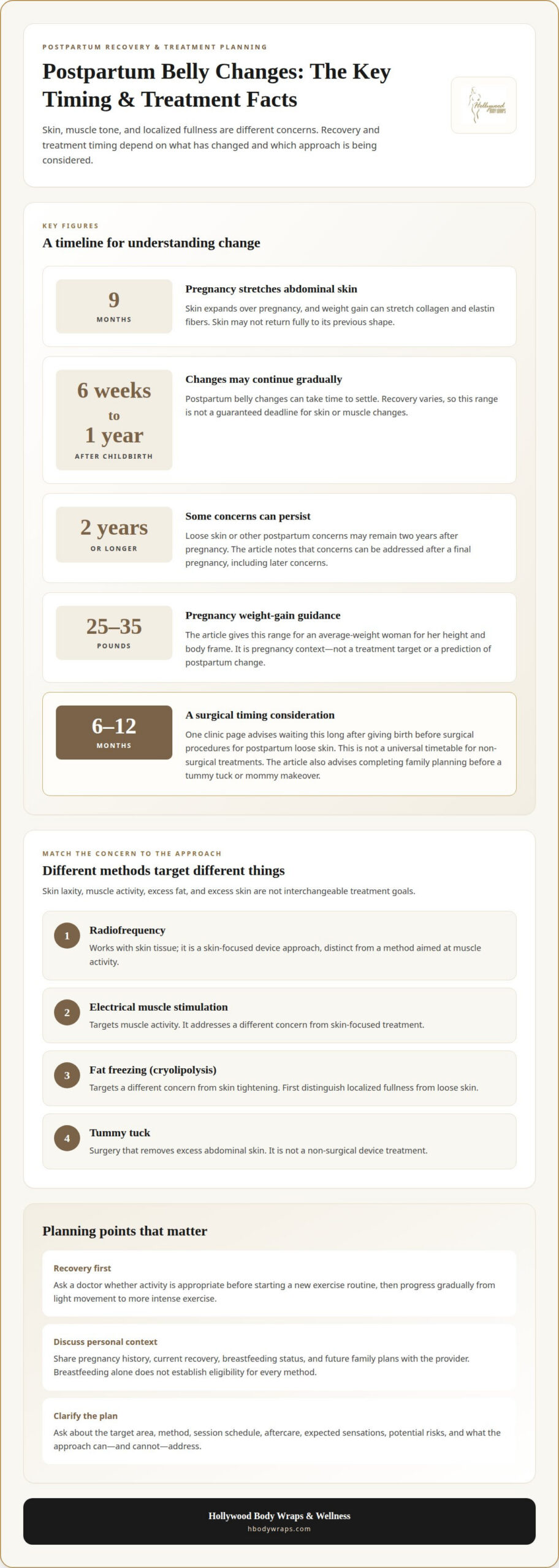
Pregnancy stretches abdominal skin over nine months, and weight gain can stretch collagen and elastin fibers. Skin may not return fully to its previous shape, while abdominal muscles can also become stretched. An average-weight woman for her height and body frame should gain 25-35 pounds during pregnancy. Stretch marks may appear as skin expands, but genetics, nutrition, exercise, and pregnancy weight gain all affect how the stomach changes.
Can postpartum belly skin tighten naturally, and how long does it take? Changes may happen gradually, from six weeks to a year after childbirth, and concerns can persist two years after pregnancy. A steady routine that includes appropriate movement and balanced nutrition supports general recovery, but outcomes depend on the individual and the type of change.
Exercise and nutrition can support abdominal strength and overall recovery. For those seeking comprehensive support with nutrition and whole-body healing after childbirth, practices like Westridge Holistic medicine focus on root-cause wellness alongside general care. After getting medical guidance on resuming activity, options may include walking, swimming, cycling, Pilates, or yoga; protein-rich foods can form part of a balanced diet. These steps may support muscle tone, but they don’t remove excess skin. Fat freezing, also called cryolipolysis, targets a different concern from skin tightening, so identify whether you’re concerned about localized fullness or loose skin before considering treatment.
How do postpartum tummy tuck surgery, skin-tightening devices, and injectable treatments compare? A tummy tuck is surgery that removes excess abdominal skin; devices and injectables are different approaches and don’t remove excess skin surgically. A plastic surgeon can discuss surgery, while device or injectable plans depend on the area and concern being addressed.
How does breastfeeding affect treatment timing or safety? Breastfeeding alone doesn’t establish eligibility for every method; the specific device or injectable, recovery, and nursing status matter. Share your breastfeeding status with the treating professional before planning a procedure. Breastfeeding and postpartum weight loss can overlap, but weight changes vary and don’t provide a reliable timeline for skin recovery.
2. Recovery and treatment eligibility considerations
Timing matters because childbirth recovery and aesthetic treatment planning are separate considerations. Before starting a new exercise routine, ask a doctor whether physical activity is appropriate, then progress gradually from light movement to more intense exercise. This keeps recovery needs central as abdominal strength and stamina rebuild. The concern matters, too: loose skin, excess fat, and reduced firmness call for different approaches.
For surgical procedures addressing postpartum loose skin, one clinic page advises waiting 6–12 months after giving birth. It also advises completing family planning before a tummy tuck or mommy makeover. These are surgical considerations, not a universal timetable for every non-surgical aesthetic procedure. A treatment plan should account for the procedure, the area being treated, and the person’s current recovery.
Session length and recovery depend on the method and treatment area, so there isn’t one timeline for every option. Radiofrequency and other skin-focused devices differ from surgery in how they’re delivered and what they target. Before a session, clarify the treatment steps, expected sensations, and aftercare instructions. This helps you plan around work, exercise, and caregiving without assuming every treatment has the same recovery needs.
Skin sensitivity deserves attention, too. During planning, identify areas that feel tender or reactive and discuss how the treatment approach accounts for them. For example, a lower-abdominal treatment plan should reflect the condition of that specific skin, rather than treating the entire stomach as one uniform area. Postpartum concerns can be addressed at any time following a final pregnancy, including concerns that remain two years after pregnancy. For a better-informed choice, explore aesthetic treatment options alongside your recovery priorities.
3. Consultation and customised treatment plans
A useful consultation starts by defining the concern, not choosing a device. Describe whether you’re concerned about loose skin, a soft abdominal area, stretch marks, or reduced strength. These changes can overlap, but they don’t share the same treatment goals. A plan for skin firmness may differ from one focused on abdominal muscle activity or excess fat.
Next, discuss your pregnancy history, current recovery, breastfeeding status, and future family plans with the provider. These details help frame whether a non-surgical aesthetic approach or a surgical consultation fits your concern. Someone focused on mild skin laxity may explore a device-based option, while significant excess skin calls for a different conversation. A tummy tuck or mommy makeover is surgery, not a non-surgical treatment.
How can you find a board-certified plastic surgeon or qualified provider for postpartum belly treatments? For surgery, look for a board-certified plastic surgeon; for non-surgical options, specialized body-contouring clinics such as Body Therapist illustrate how practitioners evaluate individual recovery before recommending tailored devices. Discuss training, relevant experience, potential risks, expected results, and alternatives before deciding.
A customized plan should clarify the target area, method, session schedule, and aftercare. Ask how progress will be assessed and what changes might prompt a revised approach. For example, a plan targeting the lower abdomen should distinguish skin texture from muscle tone rather than assuming one treatment addresses both. The provider should explain in plain language what the method can and cannot address.
Keep expectations grounded in the concern being treated. A protein-rich diet and strength exercises may support general wellness, but they don’t replace a procedure designed for a specific aesthetic goal. If your pregnancy plans may change, include that in the discussion before considering a makeover. A useful next step is a clear plan matched to your priorities, recovery, and preferred level of intervention.
4. Radiofrequency energy and electrical muscle stimulation
Radiofrequency treatments and electrical muscle stimulation address different postpartum concerns. Radiofrequency microneedling targets skin laxity, while electrical muscle stimulation is designed to engage muscles. Neither is a tummy tuck, which surgically removes excess skin. Understanding these differences helps you compare post-baby belly tightening treatments with your specific goal in mind.
In radiofrequency microneedling, needles puncture the uppermost skin layer while radiofrequency energy heats deeper layers. This process stimulates collagen production. The method is described for mild to moderate skin laxity in a relatively small area, such as the lower abdomen. It differs from other non-invasive skin-tightening devices, so clarify the specific method when discussing treatment.
Electrical muscle stimulation uses electrical impulses to prompt muscle contractions. It targets muscle activity, not loose skin or excess skin removal. Someone whose primary concern is abdominal muscle tone may consider muscle stimulation differently from someone focused on skin texture. Hollywood Body Wraps & Wellness offers the SculptX EMS muscle stimulator for muscle stimulation, while non-invasive skin tightening addresses a different aesthetic goal.
Eating well and strength training can support general wellness, but they don’t make different procedures interchangeable. A consultation should identify whether your concern involves skin laxity, muscle tone, or both, then explain the method and its intended target. Ask how the treatment area is selected and what sensations or aftercare to expect. Don’t assume one technology treats every postpartum change or produces the same result as surgery.
For an option focused on skin firmness, explore non-invasive skin tightening and discuss how it fits your goals when considering post-baby belly tightening treatments.
Hollywood Body Wraps & Wellness: Non invasive Cellulite Treatment
Hollywood Body Wraps & Wellness offers non-invasive options for people exploring aesthetic care after pregnancy in Tampa and nearby Carrollwood, Lutz, Wesley Chapel, and Westchase. Its Non-invasive Cellulite Treatment addresses the appearance of cellulite, while Non-invasive Skin Tightening is relevant when skin firmness is the focus. These services have different purposes, so identifying your main goal helps guide the conversation.
If you’re considering care for your abdomen, explain whether your focus is skin laxity, cellulite, or another change. Mineral inch loss Body Wraps are also available, but wraps and body-sculpting treatments are different services with distinct purposes; wraps are designed to promote temporary inch loss. A treatment discussion can help clarify which service aligns with your concern and what it is intended to address.
For a calm next step, contact Hollywood Body Wraps & Wellness to discuss your treatment goals.
Choose a next step that fits your goals
Choosing post-baby belly tightening treatments is easier when you start with one clear priority. Decide whether your focus is skin texture, abdominal tone, or another change, then use that goal to guide a focused conversation. You don’t need to make every decision at once. A thoughtful plan starts with understanding which concern matters most and what approach feels appropriate for your needs.
Give yourself room to make an informed choice. The aim isn’t to chase someone else’s results, but to choose care that aligns with your comfort, recovery, and personal expectations. If you’re ready to discuss possible options, contact Hollywood Body Wraps & Wellness and share what you’d like to address. Your next step can be calm, considered, and centered on you.
Frequently Asked Questions
How do celebrities get rid of loose skin after pregnancy?
Publicly visible results don’t establish which treatments an individual used. Some people may choose surgery, non-surgical skin-focused care, or both, depending on whether their concern is excess skin, localized fullness, or muscle tone. Photos and timelines can’t identify a method. For a celebrity-inspired goal, focus on the specific change you want to address rather than assuming appearance reveals someone’s treatment plan.
What Causes Loose Skin and Stretched Muscles Postpartum?
Postpartum belly changes can involve skin laxity, abdominal muscle changes, and altered fat distribution in different combinations. For example, a loose fold and a rounded abdominal contour may reflect different concerns. Appearance alone can’t identify the underlying cause. A focused assessment helps distinguish the area and tissue involved, since an approach aimed at skin won’t rebuild muscle or remove excess skin.
What is a mummy tummy makeover?
A “mummy tummy makeover” is a general term for cosmetic surgery intended to address post-pregnancy body changes, rather than one standardized operation. A tummy tuck removes and tightens excess abdominal skin. Other procedures may be discussed according to a person’s goals. Pregnancy after surgery may affect the outcome, so family-planning intentions are relevant when considering timing.
What causes loose or sagging belly skin after pregnancy?
Skin can remain loose after the abdomen expands during pregnancy, and its ability to return to its earlier shape varies. Visible changes may include lax skin, stretch marks, or folds, sometimes alongside changes in abdominal muscle tone. Genetics, pregnancy weight gain, exercise, and nutrition can influence how much loose skin remains.
How long should you wait after giving birth before belly tightening treatments?
For surgical procedures addressing postpartum loose skin, the guidance discussed here recommends waiting 6–12 months after giving birth. That timing does not automatically apply to every non-surgical treatment. For those options, recovery status and the specific method matter. Surgical plans should also take future pregnancies into account, since a later pregnancy may affect the surgical result.
Who is a good candidate for postpartum abdominal skin tightening treatment?
Someone with mild to moderate skin laxity in a relatively small area, such as the lower abdomen, may be suited to radiofrequency microneedling. This method targets skin, not muscle tone or excess skin removal. A suitable candidate understands that distinction and has a goal that matches the treatment’s target. A tummy tuck addresses excess skin surgically.