
Fat reduction without surgery still deserves a clear-eyed look. Ultrasonic cavitation uses ultrasound energy to target fat cells in a treated area, but the risks of ultrasonic cavitation are important to understand before considering it. The treatment is intended for body contouring, not as a substitute for overall weight management.
It’s reasonable to want to know what a session involves before considering treatment. This guide explains how ultrasonic cavitation is intended to work, what may happen during and after a session, and which possible effects to keep in mind. You’ll also learn why results vary and how to weigh the treatment’s role in a broader body-contouring plan, so you can make an informed decision with realistic expectations.
Key Takeaways
- Learn which health conditions and personal circumstances may make ultrasonic cavitation unsuitable.
- Understand how ultrasound is intended to disrupt fat cells and what the body does with their contents.
- Know what to expect during a session and which temporary effects may follow.
- Set realistic expectations by learning why results can vary and why fat distribution may look uneven.
What happens during an ultrasonic cavitation session?
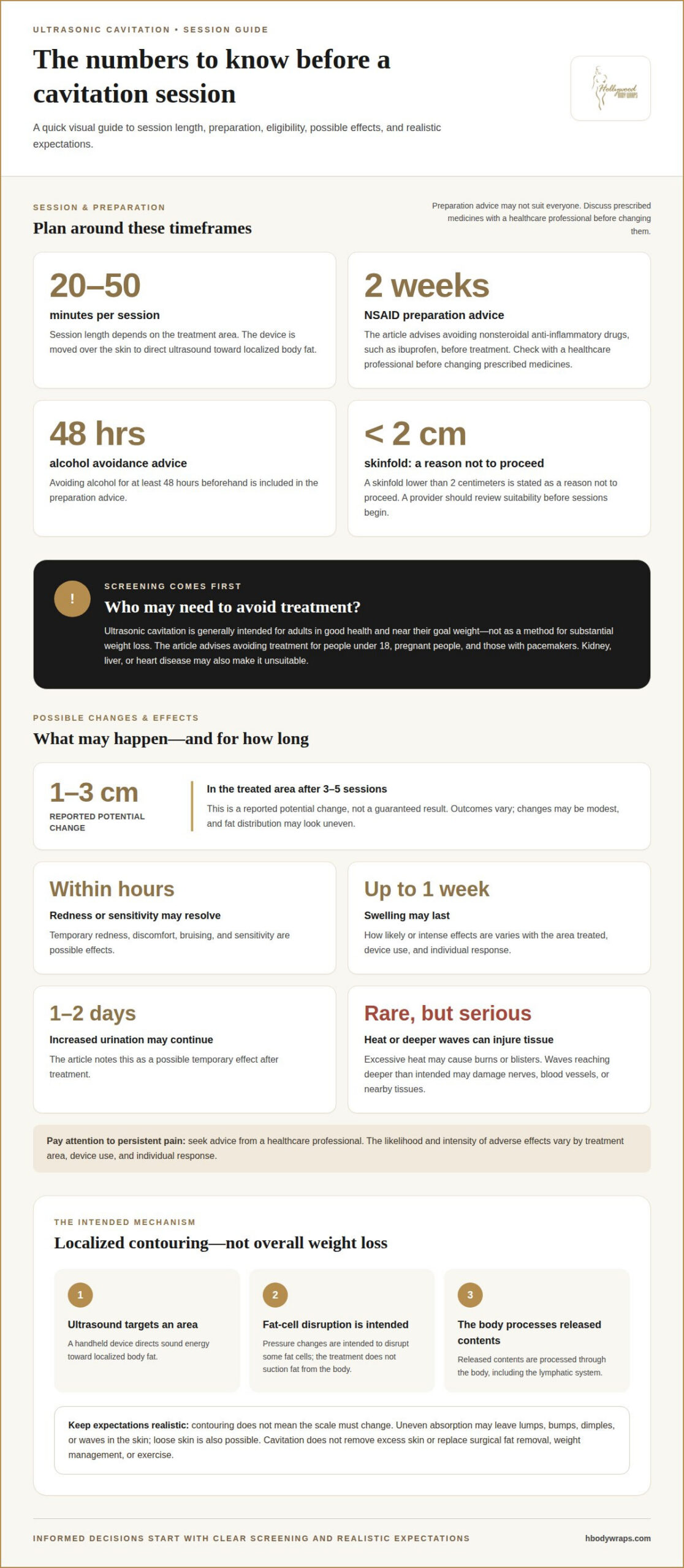
A session begins by reviewing health history, treatment goals, and the area to address. The procedure uses a handheld device over skin, with ultrasound waves directed toward localized body fat. A lipo cavitation session can take 20 to 50 minutes, depending on the treatment area. The abdomen, thighs, and flanks are examples of areas people may seek to contour. This non-surgical approach is different from liposuction, which removes fat surgically.
Eligibility matters. Ultrasonic cavitation is generally intended for adults in good health and near their goal weight, rather than people seeking substantial weight loss. People under 18, pregnant people, and those with pacemakers are advised to avoid treatment. Kidney, liver, or heart disease may also make cavitation unsuitable. A skinfold lower than 2 centimeters is another stated reason not to proceed. A provider should review these factors before sessions begin.
Preparation advice includes avoiding nonsteroidal anti-inflammatory drugs, such as ibuprofen, for 2 weeks before treatment, and avoiding alcohol for at least 48 hours beforehand. These precautions may not suit everyone’s medication needs, so discuss prescribed medicines with a healthcare professional before changing them.
How does it compare with liposuction, cryolipolysis, and radiofrequency treatments? These options use different methods, and no single one is safest or most effective for everyone. Suitability depends on your health, the treatment area, and the result you’re seeking.
What do FDA warnings and regulations say? FDA status is specific to a device, not a blanket endorsement of every cavitation machine. Check the exact device’s FDA status and intended use rather than relying on marketing language alone.
What does it cost, and does insurance cover complications? Cost depends on the treatment area, device, and session plan, and is given after a quote request. Insurance coverage depends on plan terms and the documented reason for treatment.
When evaluating a provider, look for relevant training and experience, clear screening for contraindications, and transparent information about the device used. Ask for its exact model and intended use. A cleared device should be used according to its stated purpose.
How Does Ultrasonic Cavitation Work to Remove Fat?
Ultrasonic cavitation is intended to disrupt fat cells in a defined body area. Their contents are released and processed through the body’s lymphatic system. This non-surgical approach aims at contouring, not overall weight loss. Results vary between individuals, and the treatment may produce modest changes or uneven fat distribution. A reported potential change is 1 to 3 cm in the treated area after 3-5 sessions.
How often do adverse effects occur? Their likelihood and intensity vary with the treated area, device use, and individual response. Bruising, redness, discomfort, and temporary swelling are possible. Redness or sensitivity may resolve within hours, while swelling can last up to a week.
Other effects also need attention. Increased urination may continue for a day or two after treatment. Excessive ultrasound-generated heat can cause burns or blisters. Rarely, waves that reach deeper than intended may damage nerves, blood vessels, or nearby tissues. Persistent pain after treatment warrants advice from a healthcare professional.
Is noninvasive ultrasonic cavitation safe for the liver, kidneys, or other organs? It cannot be described as risk-free for everyone. Kidney, liver, or heart disease may make treatment unsuitable. Unintended deeper penetration may also put surrounding tissues at risk, so health history and treatment-area suitability matter.
Fat reduction is not the same as an even contour. If the body absorbs released fat unevenly, lumps, bumps, dimples, or waves in the skin may appear after healing. Loose skin is also possible. These changes can affect appearance even if the treated area’s circumference changes. Ultrasonic cavitation does not remove excess skin or replace surgical fat removal, weight management, or exercise. Understanding these limits helps set realistic expectations before treatment.
For a broader look at non-invasive body-contouring options, consider how each approach aligns with your goals and health history.
How ultrasonic cavitation works
Ultrasonic cavitation uses sound energy as a non-surgical cosmetic approach to localized fat reduction. Ultrasonic cavitation devices use ultrasound at varying frequencies. These waves create rapid pressure changes in fluid around fat deposits. The intended effect is mechanical disruption, not surgical removal or weight loss across the whole body. A treated abdomen, for example, is approached as a specific contouring area.
At a basic level, changing pressure can form tiny bubbles in fluid. As the bubbles expand and collapse, they create stress around nearby fat cells. The treatment is intended to use these waves to disrupt some cells, rather than heat or cut tissue as surgery does. This describes the proposed mechanism, not a promise that every cell responds the same way. Device settings, placement, and the treated area all matter.
After cell contents are released, the body processes them through pathways that include the lymphatic system. This does not mean the body immediately removes all fat deposits or that the scale must change. Cosmetic contouring has a more localized goal: the outline of a selected area may change, while overall weight depends on broader factors. A healthy routine supports general wellbeing, but does not turn a contouring session into a weight-loss method.
Ultrasound energy also requires controlled application. If waves reach tissue beyond the intended zone or generate excessive heat, injury can occur; burns, blisters, or deeper tissue damage are possible. The aim is to direct energy to the target area while limiting exposure elsewhere. Treating a defined flank area, for example, differs from treating a broader region because placement and coverage affect where energy is delivered.
In short, the proposed mechanism aims to affect localized fat cells through pressure, after which the body processes their contents. The treatment does not physically suction fat from the body. Understanding this distinction helps set expectations: any change is area-specific, and the process differs from liposuction and whole-body weight management.
How ultrasonic cavitation is intended to break down fat
The process begins when an ultrasonic device directs sound energy toward a selected area. The waves create pressure changes in fluid surrounding fat cells. These changes can form microscopic bubbles that expand and collapse, a phenomenon called cavitation. The intended mechanical effect places stress on nearby fat cells without an incision or surgical suction.
As bubbles collapse, they produce localized forces that may disrupt some fat-cell membranes. This is the intended way the treatment breaks down fat: cell contents are released into surrounding tissue. The device is applied to a defined area, such as the abdomen or flank, rather than to remove fat from the whole body. Treatment settings and placement influence where energy is delivered.
After cells are disrupted, the body processes the released fatty substances. The lymphatic system helps transport material, which the body then eliminates as waste. This is a biological process, not immediate physical extraction. Unlike liposuction, an invasive procedure that removes fat surgically, cavitation relies on the body’s own processing after energy is applied.
That distinction shapes the expected outcome. Cavitation treatment is intended for localized cosmetic contouring, not broad weight reduction. Multiple sessions are usually needed for optimal effects, and final results may take 6 to 12 weeks. Exercise and balanced habits support general health, but they don’t make the treatment a substitute for weight management.
The practical takeaway is that ultrasound energy targets a selected area, disrupts some cells, and leaves the body to process their contents. This helps explain both the gradual nature of possible results and why outcomes differ. If energy reaches tissue beyond the intended zone, injury is possible, so how treatment is performed matters. A different approach may be more appropriate for someone seeking substantial weight loss rather than contouring.
For a thoughtful next step, discuss your body-contouring goals and the approach that suits them.
Hollywood Body Wraps & Wellness
Hollywood Body Wraps & Wellness can help you explore non-invasive wellness options when you’re weighing body-contouring goals and treatment considerations. A conversation about your priorities can help clarify whether an aesthetic service aligns with the change you’re seeking, without treating ultrasonic cavitation as a substitute for medical care or overall weight management.
Our options include Mineral inch loss Body Wraps and Non-invasive Cellulite Treatment, as well as facials and a Non-invasive facial lift. These services have different purposes, so the right direction depends on your specific goal, such as addressing cellulite appearance or focusing on facial skin. If you’re unsure where to start, describe your priorities and the areas you’d like to address.
For questions about your health or whether a procedure is medically suitable, speak with a qualified healthcare professional. For help exploring aesthetic wellness options, contact Hollywood Body Wraps & Wellness.
Choose a next step that feels right for you
Let your priorities guide the decision, rather than pressure to pursue a particular treatment. The risks of ultrasonic cavitation deserve consideration alongside your goals, comfort, and health circumstances. A cosmetic choice should leave room for questions and an honest conversation about what matters to you.
Before deciding, clarify the change you’re seeking and whether it’s an aesthetic goal or a health concern. Bring health-related questions to a qualified healthcare professional. For an aesthetic conversation, focus on your preferences and the services that address them. You do not need to rush; taking time to reflect is a practical part of self-care.
Hollywood Body Wraps & Wellness can help you explore its aesthetic and wellness services in light of your preferences. Contact Hollywood Body Wraps & Wellness to begin a conversation about your goals.
A considered choice is a positive step toward feeling more confident in your care.
Frequently Asked Questions
Can Ultrasonic Cavitation Cause Cancer?
Available information does not establish that ultrasonic cavitation causes cancer. Daniel P. Markmann, MD, has been quoted as saying these devices had been used for more than 20 years without proof that they cause cancer. That statement isn’t a guarantee about every device or individual exposure. If cancer history or another medical concern affects your decision, discuss treatment suitability with a healthcare professional.
How Does It Work?
Ultrasonic cavitation applies sound energy through a handheld device to a selected area. Pressure changes can form and collapse tiny bubbles in fluid, creating mechanical stress near fat cells. The intended effect is localized, not whole-body fat removal. The device’s energy and placement determine which tissue is exposed during treatment, so application is part of how the procedure works.
What Are Realistic Expectations From Ultrasonic Cavitation?
A realistic goal is a subtle contour change in a selected area, not a particular clothing size or drop on the scale. Some people see little change, and individual outcomes vary. Compare the same body area under consistent conditions rather than judging by daily weight alone. If your goal is substantial weight reduction, this cosmetic procedure is not designed to deliver it.
What Is Lipo Cavitation and Its Purpose?
Lipo cavitation is another name for ultrasonic cavitation, a non-surgical cosmetic approach intended to contour a localized area. Despite “lipo” in its name, it is not surgical liposuction and does not suction out fat. Its purpose is to address localized fullness, not treat obesity or replace an overall weight-management plan. This distinction matters when deciding whether the treatment matches your goal.
What Are the Common Side Effects of Ultrasonic Cavitation Body Contouring?
Possible short-term effects include tenderness or discomfort, bruising, redness, skin sensitivity, itching, and swelling. Itching or swelling may be temporary and resolve after a few days. Increased urination can also occur for a day or two. Note when a symptom begins and whether it improves; discuss persistent pain with a healthcare professional.
What Serious Complications or Long-Term Risks Have Been Reported With Ultrasonic Cavitation?
Among the risks of ultrasonic cavitation are burns or blisters if excessive heat develops, and rare nerve damage. Waves that penetrate deeper than intended may also affect blood vessels or nearby tissue. Longer-lasting concerns can include loose skin or uneven contours, such as dimples and waves. Seek advice from a healthcare professional if pain persists or a skin change concerns you.