
Approval for one treatment plan doesn’t automatically answer whether follow-on treatments are included. With financing for body contouring procedures, the written agreement’s scope matters as much as the monthly payment.
It’s understandable to focus on whether payments fit your budget. But a treatment plan can change: additional sessions, a different sequence, or a postponed visit may affect what you owe and what financing covers. Before committing, clarify the plan and included services, then compare the total repayment over the full term, not just the monthly amount.
This guide explains how treatment details shape the amount you finance, how to compare consumer payment options, and what to consider if credit challenges or other financial barriers make approval harder. You’ll also learn what to look for in fees and agreement terms, and why approval for payment is separate from clinical suitability. That clarity can help you weigh your options without letting a payment offer make the treatment decision for you.
Key Takeaways
- Build a realistic budget around the full treatment pathway, including related costs that may sit outside the procedure itself.
- Compare payment arrangements by their terms and overall impact, not just by how accessible they appear at first.
- Understand how credit history, income, and existing obligations can influence financing decisions, and consider what options may remain.
- Identify financial barriers early so you can weigh treatment timing and alternatives with greater confidence.
Clarifying the treatment plan before discussing payment
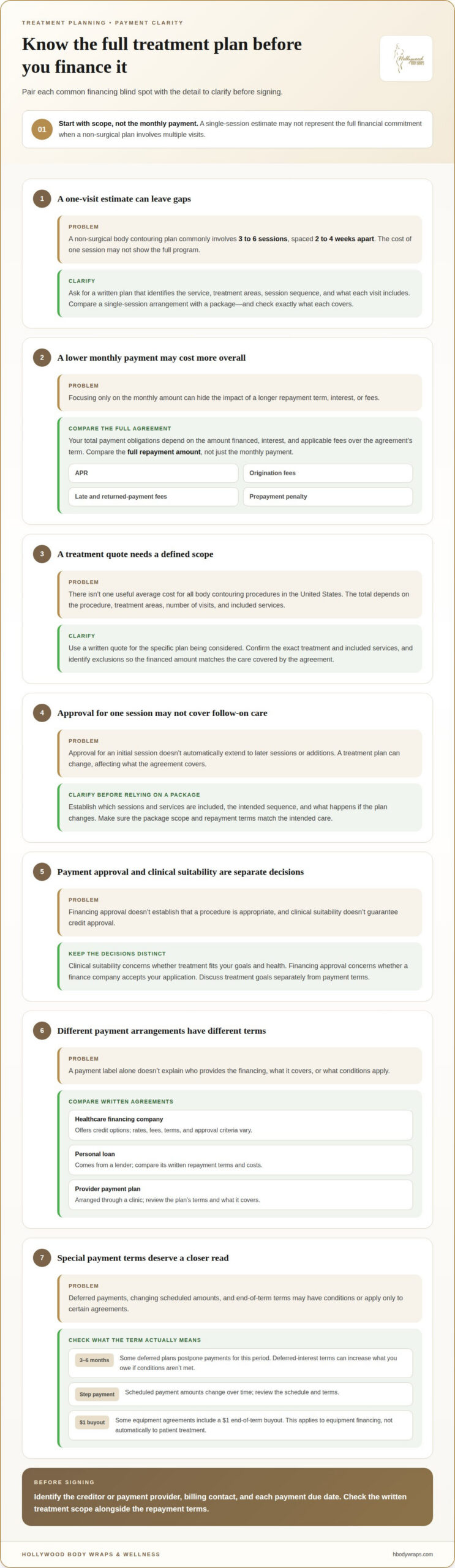
Start with the treatment plan: the type of service, areas addressed, session sequence, and what each visit includes. Non-surgical plans can involve multiple visits, so a single-session estimate may not reflect the full financial commitment.
Comparing Total Payment Obligations
Your total payment obligations depend on the amount financed, interest, and applicable fees over the agreement’s term. Compare the full repayment amount, not only the monthly payment: a lower monthly amount can cost more over a longer term. Before committing, review the APR, origination fees, late fees, returned-payment fees, and any prepayment penalty. A written quote should specify the exact treatment and included services.
Clinical Candidacy and Payment Approval
Clinical suitability concerns whether a treatment fits your goals and health; financing approval concerns whether a finance company accepts your application. These are separate decisions. Financing approval doesn’t establish that a procedure is appropriate, and clinical suitability doesn’t guarantee credit approval. Discuss your treatment goals separately from payment terms.
Healthcare financing companies offer credit options, personal loans come from lenders, and provider payment plans are arranged through a clinic. Rates, fees, repayment terms, and approval criteria vary, so compare each written agreement before choosing.
There isn’t one useful average cost for all body contouring procedures in the United States. The total depends on the procedure, treatment areas, number of visits, and included services. Request a written quote for the specific plan you’re considering.
Deferred plans may postpone payments for 3 to 6 months. Step-payment arrangements change scheduled payment amounts over time. Some equipment agreements include a $1 end-of-term buyout, but that term applies to equipment financing, not automatically to patient treatment.
Before signing, identify the creditor or payment provider, billing contact, and each payment due date. Missed payments may result in late fees, while deferred-interest terms can increase what you owe if their conditions aren’t met.
Consumer financing and treatment accessibility
Consumer financing can spread treatment payments over time, but what it covers depends on the agreement. The treatment schedule and included services affect the amount financed.
Affording Non-Surgical Treatments
Financing non-surgical treatment means paying over time for a plan that may involve multiple visits. That matters because one session’s cost may not represent the full program. Non-surgical body contouring commonly involves three to six sessions, spaced two to four weeks apart. Build the schedule into your budget: appointment timing affects when payments or other treatment costs arise. Compare a single-session arrangement with a package, including what each covers.
Financing Follow-On Treatments and Full Programs
Financing for later sessions or additions differs from financing for a defined full treatment plan. Approval for an initial session doesn’t automatically extend to later care. Before relying on a package, establish which sessions and services it covers, the treatment sequence, and what happens if the plan changes. A full-program figure is useful only when its scope and repayment terms match the intended care.
Eligible Procedures and Related Care
Financing may be available for surgical procedures, such as liposuction or a tummy tuck, and non-invasive treatments, depending on the payment arrangement. Whether anesthesia, facility fees, follow-up care, or revision procedures can be included also depends on that arrangement. Established plastic surgery and aesthetic providers like qmc-doha.com often detail which consultations, surgical techniques, and follow-up visits are involved. A surgical package may include some related care while excluding other expenses. Separate the procedure from aftercare in the written cost breakdown, so the financed amount reflects the services actually covered.
Finding Providers and Financing Options
Finding a local provider and financing option means comparing the treatment plan with the payment agreement, not choosing by a monthly figure alone. Look for a written plan that identifies the procedure, visits, included care, and exclusions; then compare the creditor, repayment period, and billing terms. For an invasive procedure, distinguish surgical care from non-invasive options. To explore a non-surgical aesthetic approach, see non-invasive body sculpting options.
Financing options for patients with less-than-perfect credit
Credit challenges can narrow payment choices, but options still differ. Compare eligibility, interest, and repayment terms before committing.
For a surgical procedure or non-invasive sculpting plan, options may include a personal loan, a provider payment plan, or medical credit. Approval depends on the lender’s criteria, which can include credit history, income, and existing obligations. Ask whether an upfront payment is required and whether the proposed amount covers the full treatment plan.
Financing Compared With Credit Card Interest
A financing offer has a defined borrowing agreement, while a credit card follows its account rate and payment rules. A manageable minimum payment can still leave a balance accruing interest. Compare total repayment under each option, including promotional conditions and fees. For example, a card’s introductory offer may have different consequences from a fixed-payment loan if a balance remains after the promotion ends.
Soft Credit Checks and Instant Decisions
A soft credit check can support an initial eligibility review, while a final approval may require a fuller application. This distinction matters when exploring options without treating a preliminary result as a confirmed loan. Ask the finance company which inquiry it uses at each stage and when it makes the final decision. Prompt decisions may help with scheduling, but approval and treatment suitability remain separate.
Medical Credit Card Financing
A medical credit card is a revolving credit account that may be used for eligible healthcare or aesthetic expenses. Its value depends on the available limit, interest terms, and repayment schedule, so read the offer before using it. ALPHAEON CREDIT terms and limits depend on the applicant’s offer and approval. Compare its written APR, promotional period, fees, and payment obligations with a personal loan or clinic plan.
Financial barriers to body contouring
Financing can spread payments, but it doesn’t eliminate costs outside a treatment agreement. Common budget considerations include insurance exclusions, aftercare, and added charges that change the amount you must fund.
Health insurance plans may not cover cosmetic body contouring or related complications, leaving patients responsible for those expenses. Medicare excludes cosmetic surgery, except when needed to promptly repair an accidental injury or improve the functioning of a malformed body member, according to the Centers for Medicare & Medicaid Services (CMS). CMS also considers liposuction for body contouring to alter appearance cosmetic, not medically necessary, under its Medicare coverage policy.
Medical necessity depends on the purpose and circumstances of care, not whether a payment plan is available. For Medicare, the stated exceptions concern accidental injury repair and the function of a malformed body member. Cosmetic goals alone don’t meet those exceptions. Coverage decisions and exclusions can affect whether insurance contributes, so separate anticipated insurance benefits from the amount you expect to finance.
For surgery, the final charge can vary with the surgeon’s experience, procedures performed, and location. The procedure is only part of the financial picture. Aftercare may involve medications, post-operative garments, and follow-up visits. A package may exclude some costs, so its headline figure might not reflect the full amount owed. List the procedure, related care, and exclusions as separate budget items.
International surgical packages may exclude flights, accommodation, compression garments, longer-term follow-up after returning home, and complication or revision costs. Those exclusions can make the actual commitment larger than the initial quote. Device-based treatment involves a different budget question: treatment costs belong to the patient, while equipment financing concerns the business purchasing the device.
A practical first step is to map every expected charge against the payment plan and any insurance contribution. That view helps distinguish a manageable repayment from a gap that could delay care. For a non-surgical alternative, explore non-invasive body contouring options and consider how treatment scope fits your budget.
Hollywood Body Wraps & Wellness
Hollywood Body Wraps & Wellness offers non-invasive aesthetic services for people considering treatment goals alongside financial commitments. Services include Mineral inch loss Body Wraps, a Non invasive facial lift, Facials, and Non invasive Cellulite Treatment.
If you’re exploring body contouring, first clarify which type of care aligns with your goals, then consider its scope alongside the payment terms. Hollywood Body Wraps & Wellness offers non-surgical aesthetic treatments in Tampa, serving clients from Carrollwood, Lutz, Wesley Chapel, and Westchase. Surgical procedures require a different clinical and financial plan, so keep those options distinct when making your decision.
To discuss your treatment goals and non-surgical aesthetic options at Hollywood Body Wraps & Wellness in Tampa, schedule an appointment.
Choose a Next Step That Fits Your Goals
A thoughtful decision about financing for body contouring procedures starts with choosing care for its suitability, not because a payment option makes it seem easier. Consider what you want to address, what the treatment involves, and how the commitment fits your priorities. A clear direction can make your next conversation more useful.
For non-surgical aesthetic care in Tampa, Hollywood Body Wraps & Wellness offers Mineral inch loss Body Wraps, a Non invasive facial lift, and Facials. These services can be part of exploring options aligned with your personal goals. Discuss the type of care you’re considering separately from a lender’s decision about payment.
Ready to discuss your goals and explore an aesthetic approach? Contact Hollywood Body Wraps & Wellness. Take the process at a pace that lets you feel informed and comfortable with your choice.
Frequently Asked Questions
Can the Approval Extend to Follow-On Treatments?
Not automatically. Approval for an initial treatment doesn’t guarantee funding for later sessions. A lender may approve a specific amount or expense, and additional care may require a new application or available credit. Before scheduling follow-on visits, review the approval amount and remaining credit. For example, adding another treatment area may exceed the original authorization.
Can I know the full amount before a consultation?
You can identify likely cost categories beforehand, but the full amount depends on the treatment plan and services selected. The number of areas, sessions, and included services can change the quote. A written estimate for the specific plan gives you a clearer basis for budgeting. Treat an early estimate as a planning guide, not the final amount to finance.
Does It Cover a Full Program, Not Just a Session?
Financing can cover a full program if the agreement and treatment quote include the complete plan. Check whether approval covers every scheduled session, related services, and planned follow-up. A program may change after treatment begins, so an added visit might fall outside the original amount. Confirm the agreement’s scope before relying on one approval for the full course.
What financing options are available for body contouring, such as medical credit cards, personal loans, and payment plans?
Common options include medical credit cards, personal loans, and provider payment plans. Each can differ in eligibility, repayment structure, fees, and how funds are used. For financing for body contouring procedures, compare written terms and total repayment rather than choosing based only on the initial payment. The available choice depends on the lender or plan.
What are the interest rates, fees, promotional periods, and repayment terms for body contouring financing?
Rates, fees, promotional periods, and repayment schedules vary by lender and offer, so there isn’t one standard set of terms. Review the APR, origination and late fees, returned-payment charges, prepayment conditions, and what happens when a promotion ends. A longer repayment period can change the total owed. Use the agreement’s payment schedule to understand the full commitment before accepting.
What credit score and income are needed to qualify for body contouring financing?
There isn’t one universal credit score or income threshold for every financing option. Finance companies may consider credit history, income, and existing obligations, along with their own approval criteria. A strong application in one area doesn’t guarantee approval. Compare eligibility requirements before applying, and base your treatment decision on clinical suitability and a payment amount that fits your budget.