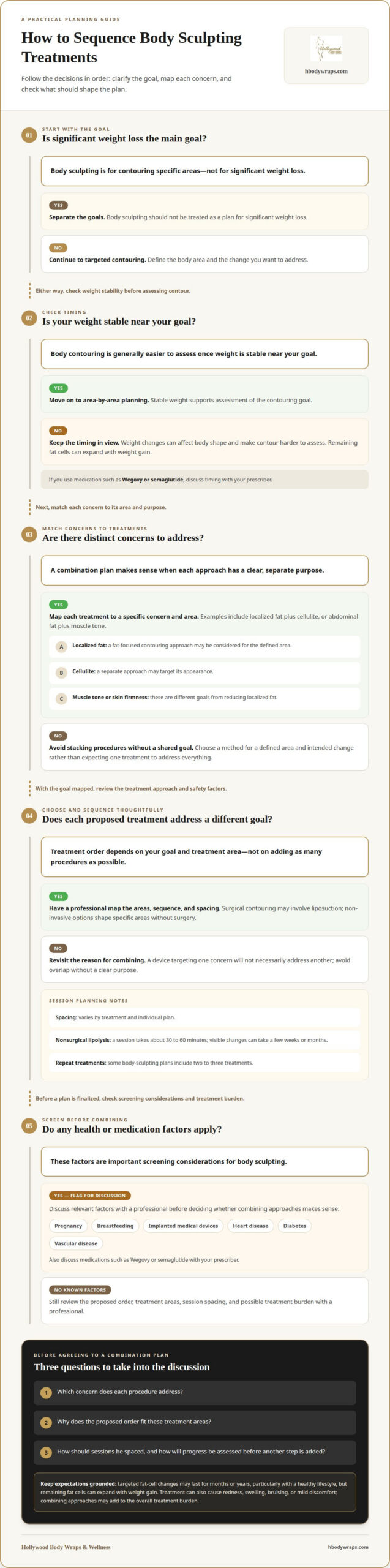
Yes, you can combine body sculpting treatments, but the order matters. Pairing approaches that address different concerns, such as unwanted fat and cellulite, can create a more considered plan than stacking treatments without a clear goal.
A coordinated approach starts by matching each treatment to a specific concern and considering your weight goals. Body sculpting is for contouring, not significant weight loss, so it is generally easier to assess once your weight is stable near your goal.
Treatment order and the areas being treated shape a combination plan. It also helps to distinguish localized contouring from weight management: remaining fat cells can expand with weight gain, so maintaining a stable weight supports your contouring goals. The aim is to choose treatments that work toward the same outcome, rather than stacking procedures without a clear reason.
Key Takeaways
- Build a treatment sequence around the concern each approach is meant to address, rather than layering procedures without a shared goal.
- Match methods to the body area and desired change, since fat reduction, muscle tone, skin laxity, and cellulite call for different considerations.
- Understand what body sculpting can and can’t change over time, and how weight maintenance can influence the contour you achieve.
- Explore how non-invasive body sculpting and cellulite treatment may fit into a coordinated plan tailored to your goals.
What’s the Best Order for a Professional to Combine Body-Sculpting Treatments?
Start by identifying your main concern, the area you want to address, and whether your weight is stable. A professional can then discuss which treatment fits that goal.
Pairing Treatments for Different Concerns
Combining body-contouring treatments means choosing approaches for distinct concerns, such as localized fat and cellulite. One treatment may focus on shaping, while another targets the appearance of cellulite. The right sequence depends on your goal and treatment area, not on adding as many procedures as possible.
Surgical contouring may involve liposuction, while non-invasive options shape specific areas without surgery. Neither approach should be confused with a plan for significant weight loss. If you are using medication such as Wegovy or semaglutide, discuss timing with your prescriber. Body contouring is generally easier to assess once your weight is stable near your goal.
Combining Body-Contouring Devices
Combining devices means using different technologies to address separate goals, such as reducing abdominal fat and building muscle tone. It matters because a device targeting one concern won’t necessarily address another. A professional can map each device to a specific area and objective, then plan the sequence and spacing. The spacing between body-sculpting sessions can vary depending on the treatment and individual plan.
What are the risks and side effects of combining procedures? Treatment can cause redness, swelling, bruising, or mild discomfort; combining approaches may add to the overall treatment burden. Pregnancy, breastfeeding, implanted medical devices, heart disease, diabetes, and vascular disease are important screening considerations for body sculpting.
Who is a good candidate for multiple treatments? A suitable candidate has distinct concerns, such as stubborn fat and cellulite, and weight that’s stable near their goal. Treatment goals and health factors shape whether combining approaches makes sense.
What should you ask a doctor before combining treatments? Ask which concern each procedure addresses, why the proposed order fits your treatment areas, and how sessions should be spaced. Also discuss medications such as Wegovy or semaglutide and relevant health conditions.
Body sculpting methods and treatment areas
Body-sculpting methods differ in the concerns they target. Some focus on localized fat, while others address muscle tone or skin firmness. Non-invasive body contouring can shape specific areas without surgery, but it is not a substitute for significant weight loss. Choose a method for a defined area and goal, rather than expecting one treatment to change everything.
How a Professional Plans Treatment Areas and Session Schedules
A professional begins by mapping each area to its main concern. For example, one area may need fat reduction, while another may call for muscle-focused treatment. That distinction helps shape the procedures and session schedule. A nonsurgical lipolysis session takes about 30 to 60 minutes, and visible changes can take a few weeks or months. Schedule decisions also account for the method and how the body responds between sessions.
How a Professional Customizes Body Sculpting Treatment Areas
Customization means adjusting the treatment plan to the area, goal, and method rather than using one approach everywhere. A muscle-focused procedure, for example, serves a different purpose from a treatment intended to reduce fat. Some body-sculpting plans include two to three repeat treatments for ideal results. Treatment areas and session plans should also reflect whether the goal is contouring, tightening, or muscle tone.
Healthy habits support weight maintenance, while body sculpting focuses on contour and shape. Remaining fat cells can expand with weight gain, so maintaining a stable weight matters after treatment. A focused plan connects the treatment area and approach to the change you want, without treating body sculpting as a replacement for weight management.
For a plan focused on non-surgical contouring, explore non-invasive body sculpting as one option for targeted treatment areas.
Combining body sculpting treatments
A combination plan works best when each treatment has a distinct purpose. One approach may focus on body contouring, while another addresses muscle tone or the appearance of cellulite. Someone concerned about the thighs and abdominal muscle tone, for example, has different goals from someone focused on one small area. The aim is coordinated contouring, not simply adding procedures.
Body sculpting is intended to shape the body, not produce significant weight loss. That distinction matters when choosing a treatment sequence: changes in weight can affect body shape, while contouring focuses on specific areas. If your weight is still changing, it may be harder to assess the contour. Stable habits support weight maintenance and your overall plan.
Fat reduction also has a permanence question. Treatments designed to damage or eliminate targeted fat cells can produce results that last for months or even years, particularly with a healthy lifestyle. However, fat cells remaining in the treated area can expand with weight gain. The change is therefore not a safeguard against future weight changes. Cryolipolysis may come up in a discussion of fat-focused procedures, but the planned method should match the area and goal.
A useful planning process begins with the contour you want, followed by the concern in each area and a treatment matched to each goal. Consider whether proposed treatments overlap or address separate concerns, and how progress will be assessed before adding another step. This keeps the plan focused instead of treating every area alike.
Exercise and steady weight habits support the broader plan; they do not replace targeted body contouring. The practical takeaway is to combine treatments only when they serve complementary goals, while keeping weight management separate from contouring. That makes it clearer what each treatment is intended to address and why it belongs in the plan.
What are the benefits of combining body sculpting treatments?
Combining treatments can address more than one contour concern in a coordinated plan. For example, you might want to contour the abdomen and improve muscle tone in another area. A single approach may not address both goals equally. Pairing treatments gives each one a defined purpose, rather than expecting one procedure to reshape every feature.
A combination plan can focus on the areas that matter to you. One treatment might address the appearance of cellulite on the thighs while another focuses on a separate concern. This area-by-area approach clarifies what each treatment is intended to change and helps determine whether the options complement one another.
Combining methods can also make treatment choices more intentional. A professional can identify the goal for each area, select an approach for that concern, then consider whether another method adds a distinct benefit. For instance, fat reduction and muscle toning have different aims. Keeping those aims separate helps set realistic expectations for each part of the plan.
A staged plan can make progress easier to assess. After an initial treatment, consider how it addresses the intended concern before adding another approach. This helps avoid overlapping treatments without a clear reason. Keep the focus on the contour you want, not the number of procedures.
Keep the limits in view: body sculpting is for contouring, not significant weight loss, and combining treatments does not replace healthy habits or weight management. Remaining fat cells can expand with weight gain. A useful plan connects each treatment to a specific area and goal.
Ready to discuss which non-surgical approaches fit your goals? Explore body-contouring options and consider how each could contribute to a coordinated plan.
Hollywood Body Wraps & Wellness: Non invasive Cellulite Treatment
Hollywood Body Wraps & Wellness in Tampa offers Non-invasive Cellulite Treatment for people whose contouring goals include cellulite, as well as Non-invasive Body Sculpting for body-shaping goals. If you are considering combining approaches, the right plan depends on the concerns and areas you want to address.
Other options at Hollywood Body Wraps & Wellness include the Sculpt Pod red light sauna and Mineral inch loss Body Wraps. Each serves a different wellness or aesthetic interest. When discussing a plan, describe your goals and the areas you want to focus on so the choices stay connected to your priorities.
For a conversation about cellulite treatment and body-contouring options, contact Hollywood Body Wraps & Wellness.
Choose a Plan That Fits Your Next Goal
Your treatment plan can be a starting point, not a fixed script. As your priorities shift, revisit the outcome you want and whether each approach still supports it. If you are deciding whether you can combine body sculpting treatments, focus on your goals, the areas you want to address, and how you want the plan to progress.
Hollywood Body Wraps & Wellness also offers Mineral inch loss Body Wraps, Facials, and a Non-invasive facial lift. These options address different aesthetic and wellness interests, so keep your priorities clear when deciding what belongs in your personal plan.
A thoughtful next step is a direct conversation about the treatment approach that best fits your goals. Contact Hollywood Body Wraps & Wellness to discuss your options, and move forward with clarity and confidence.
Frequently Asked Questions
Can You Combine Medical Weight Loss With Body Contouring?
Yes. Medical weight-loss treatment and body contouring can be part of an overall plan, but they address different goals. A physician-supervised weight-loss program may include prescription medication, nutrition and exercise guidance, and bioimpedance analysis. Since body contouring shapes rather than drives significant weight reduction, timing it after weight stabilizes near the goal can make the contour easier to assess. Keep medication decisions with the prescriber.
Can you combine different body sculpting treatments safely?
Different treatments can be combined when their methods, areas, and your health history make the plan appropriate; combining them doesn’t automatically make it safe. Body sculpting is unsuitable during pregnancy or breastfeeding and with an implanted medical device, heart disease, diabetes, or vascular disease. A professional should account for these factors and possible redness, swelling, bruising, or discomfort before planning overlapping procedures.
Which body sculpting treatments can be combined in the same session?
There is no single same-session combination that suits every area. A professional may consider treatments with separate aims, such as contouring and muscle toning, while avoiding redundant treatment of the same concern. The decision depends on the method, target area, and plan. Treatments can also be staged so the effect of one step can be considered before another.
How long should you wait between body sculpting treatments?
Body-sculpting treatments are commonly spaced four to six weeks apart, while some plans schedule sessions a few weeks apart. The interval depends on the treatment method and the area being addressed; sessions shouldn’t be crowded together simply to speed contour changes. This spacing gives the plan a clear rhythm, with each visit tied to a defined goal and progress review.
How do CoolSculpting, radiofrequency, ultrasound, and laser treatments compare when combined?
CoolSculpting, radiofrequency, ultrasound, and laser should be compared by method, target concern, and treatment area, not treated as interchangeable. The general distinction is that laser energy and ultrasound waves can be used to destroy fat cells. In a combination plan, their role is fat reduction; a second method should address a separate goal, such as muscle tone or cellulite.