
Professional red light therapy can provide broader, more powerful coverage in a shorter session, while at-home devices offer convenience and repeated use. For people comparing options in the Tampa area, at-home red light therapy versus professional treatment also depends on your goal: visible red light is commonly used for surface-level skin concerns, while near-infrared wavelengths reach deeper tissue. The cost trade-off is an upfront device purchase versus recurring session fees.
It makes sense to weigh convenience and cost alongside treatment strength. Cleveland Clinic notes that home devices may be less powerful than professional devices, but power alone doesn’t determine the right option. Consistency, coverage, and the wavelengths used all matter.
This comparison explains how home and professional options differ in device strength, wavelength, session experience, and overall cost. You’ll also see what to consider when choosing between a personal device for regular use and professional sessions for a more guided treatment experience.
Key Takeaways
- Choose between home and professional treatment by weighing convenience, coverage, and how consistently you can follow a routine.
- Learn how device strength and treatment area affect session time, rather than judging a device by power alone.
- Compare visible red and near-infrared light to understand how wavelength relates to treatment depth and your goals.
- Assess the cost trade-off between an upfront device purchase and paying for professional visits over time.
At-Home vs. Professional Red Light Therapy in Tampa
In Tampa and surrounding communities, including Carrollwood, Lutz, Wesley Chapel, and Westchase, your choice depends on your concern, desired coverage, and ability to follow a routine. Session length and eye protection also matter when comparing facial devices with broader systems.
At-Home Treatment Choice
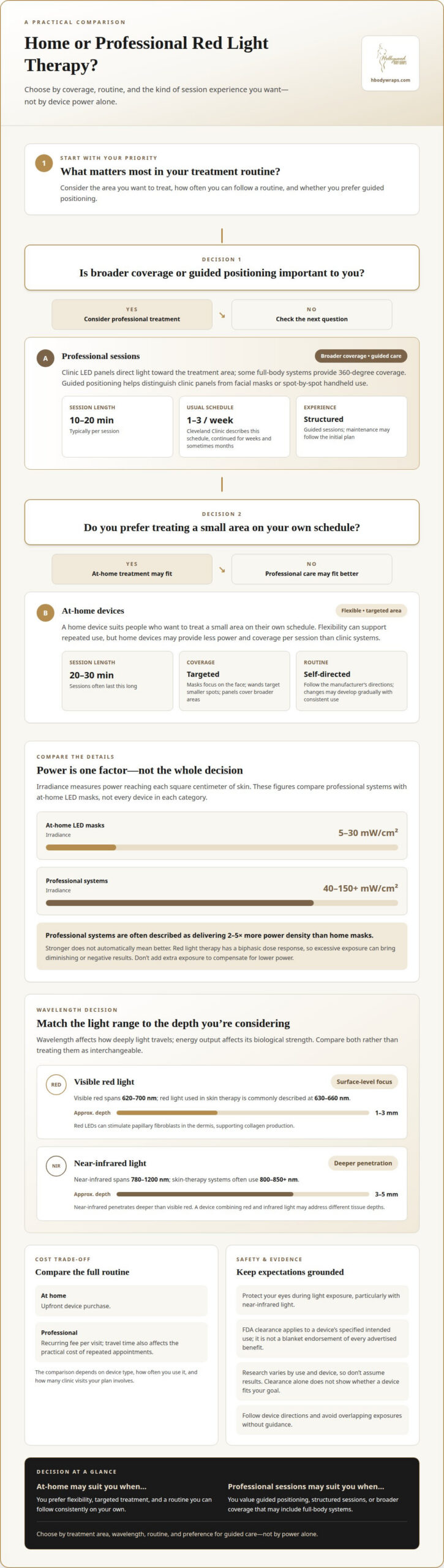
An at-home device suits people who prefer treating a small area on their own schedule. Sessions often last 20-30 minutes, and changes may develop gradually with consistent use. Follow the manufacturer’s directions and protect your eyes, particularly with near-infrared light. Compared with clinic treatments, home devices offer flexibility but may provide less power and coverage per session.
Professional Treatment Choice
Professional treatment provides structured sessions and guided positioning. Cleveland Clinic describes a usual schedule of 1 to 3 sessions a week, continued for weeks and sometimes months. Sessions typically last 10-20 minutes, with maintenance potentially following the initial plan. Recovery is generally not a major planning factor for these non-invasive treatments, though suitability depends on your goal and health context.
Professional Clinic LED Treatments
In a clinic, LED panels direct light toward the treatment area; some full-body systems provide 360-degree coverage. A professional session typically lasts 10-20 minutes, instead of treating spots individually with a handheld device. Clinic panels differ from facial masks through wider coverage and guided positioning. Eye protection remains important during light exposure.
FDA Clearance and Proven Benefits
FDA clearance applies to a device’s specified intended use. It is not a blanket endorsement of every advertised benefit. Research on red light therapy for skin concerns, pain, and hair loss varies by use and device, so don’t assume results. Cleveland Clinic advises protecting your eyes because unprotected exposure can cause damage. Clearance alone does not show whether a device fits your goal.
| Option | Coverage | Session pattern | Guidance |
|---|---|---|---|
| At home | Targeted area | 20-30 minutes | Device instructions |
| Professional | May include full-body coverage | 10-20 minutes | Guided sessions |
Choose based on your treatment area, routine, and preference for guided care.
Home device strength compared with professional sessions
Power, treatment area, and cumulative cost help distinguish a home setup from clinic visits. Compare the device’s measured output and intended coverage, not just its appearance.
Home Device Strength
Professional light therapy systems typically deliver irradiance of 40-150+ mW/cm², while at-home LED masks typically deliver 5-30 mW/cm². Irradiance measures power reaching each square centimeter of skin. Professional systems are described as often delivering 2-5 times more power density than home masks.
Stronger does not automatically mean better. Red light therapy has a biphasic dose response, so excessive exposure can bring diminishing or negative results. For an inflammation concern, output alone does not establish whether a device is suitable. Follow the manufacturer’s directions, and don’t add extra exposure to compensate for lower power.
Panels, Masks, and Handheld Devices
A panel is designed to cover broader body areas, while a mask focuses on the face. Handheld wands target smaller spots, so treating a larger area can require more repositioning. Choose a format suited to the area you intend to treat and the routine you can maintain, rather than assuming one device fits every concern.
Comfort and consistency matter. A mask may fit a facial routine, while a panel may suit broader coverage at home. A wand offers focused placement but requires attention to each spot. Combining a home device with professional sessions can support regular use, but follow the device directions and avoid overlapping exposures without guidance.
Upfront Device Costs and Visit Fees
A home device involves an upfront purchase; professional treatment is paid per visit. Over time, the comparison depends on the device type, how often you use it, and how many clinic visits your plan involves. Travel time also affects the practical cost of repeated appointments, even when it is not part of the treatment fee.
Compare the full routine, not one session against one purchase. A mask or handheld device may suit targeted use, while panels cover broader areas. Professional visits offer a different treatment setting. The right balance depends on your comfort, schedule, and goals. For an individualized treatment path, explore professional treatment planning.
Red and near-infrared wavelengths
Wavelength, measured in nanometers, affects how deeply light travels; energy output affects its biological strength. Red light therapy uses non-ionizing red or near-infrared light, and the process does not generate heat. For skincare, compare wavelength and device output together rather than treating them as interchangeable measures.
Visible red light spans 620-700 nm, while red light used in skin therapy is commonly described at 630-660 nm. This range primarily targets the skin’s surface, with penetration described at approximately 1-3 millimeters. Red LEDs can stimulate papillary fibroblasts in the dermis, supporting collagen production. That makes wavelength relevant when considering surface-level skincare goals.
Near-infrared light spans 780-1200 nm; skin-therapy systems often use 800-850+ nm. Its light penetrates deeper than visible red, with penetration described at 3-5 millimeters. This distinction helps explain why a device combining red and infrared light may address different tissue depths. Check the wavelength information to understand what the device is designed to deliver.
Blue LED light is a different option, not another red wavelength. Blue light used in skin therapy is described at 405-470 nm and penetrates less than 1 millimeter. It reaches the epidermis, where it can target p. acnes bacteria. For example, a skincare device advertising blue and red settings uses different wavelengths for distinct targets.
For a practical comparison, first match the wavelength to the concern: red light for surface-focused skin goals, near-infrared for deeper tissue, or blue light for epidermal bacteria. Then review the device’s output and treatment instructions. Wavelength alone doesn’t establish dose; exposure also depends on energy delivered and session duration. If a home device lists 660 nm red and 850 nm near-infrared, those values identify its light bands, not a guaranteed result. A professional system and a home device can use similar wavelengths while differing in output, coverage, and treatment setup.
At-home versus professional costs
A cost comparison of at-home red light therapy vs professional treatment starts with an upfront device purchase versus recurring clinic visits. Your total depends on the device format, how often you use it, and how many visits fit your routine. A mask, panel, and professional session represent different kinds of spending, so compare options based on the area you want to treat and the routine you can maintain.
Professional visits spread costs across sessions, but repeated appointments add up. Cleveland Clinic describes a usual red light therapy schedule of 1 to 3 sessions a week, continued for weeks and sometimes months. That plan can involve several visits before maintenance begins. Include travel and time in your budget, especially if reaching a clinic makes frequent appointments harder to sustain.
For a practical estimate, compare the full cost of your intended home setup with the visits you expect to attend. A facial mask focuses on a smaller area, while a panel is designed for broader coverage. Output, treatment area, and consistency all influence value. A lower-output device is not automatically the better buy if it does not fit your intended use.
Cleveland Clinic says red light therapy typically isn’t covered by insurance. For professional services, the cost depends on the treatment plan and visit frequency, and is provided after a quote request. Home-device spending depends on the format and intended use. An at-home red light therapy vs professional cost comparison is most useful when it includes the complete routine, not one appointment against one device purchase.
Home treatment may suit you if owning and using a device fits your routine. Professional visits may be a better fit if you prefer guided sessions. To discuss the treatment approach and your goals, request a red light therapy quote.
Hollywood Body Wraps & Wellness
Hollywood Body Wraps & Wellness offers Red Light Therapy and other non-invasive wellness and aesthetic services. The comparison above can clarify whether you’re looking for a home light device or a professional treatment setting. For other appearance-focused goals, services include facials, a non-invasive facial lift, and non-invasive cellulite treatment.
Consider the area you want to address and the experience you prefer. A facial may suit a skincare-focused goal, while a non-invasive facial lift or cellulite treatment addresses different aesthetic concerns. Each option serves a distinct purpose, so choose based on what you want to focus on.
Contact Hollywood Body Wraps & Wellness to discuss your goals and explore the available options.
Choose a routine that fits your goals
The right next step is a routine you can follow comfortably and consistently. Use the at-home red light therapy versus professional comparison to clarify what matters most to you: guided sessions, home convenience, or a focused skincare goal. If you’re managing a medical condition, red light therapy should complement, not replace, medical care.
Hollywood Body Wraps & Wellness offers Red Light Therapy, alongside services such as facials, a non-invasive facial lift, and Mineral inch loss Body Wraps. These services address different wellness and aesthetic priorities, so start with the outcome you want to explore rather than choosing based only on device strength.
For a personal conversation about your goals and available services, contact Hollywood Body Wraps & Wellness. A thoughtful next step can help you move forward with clarity and confidence.
Frequently Asked Questions
Can You Combine Both?
Home use and professional sessions can be combined, but create one schedule rather than stacking exposures. Photobiomodulation has a biphasic dose response, so extra light is not automatically more effective. Consider how home treatment days fit around clinic sessions, and follow the device’s instructions. This matters especially when both approaches treat the same area.
Is it safe?
Short-term use as directed appears safe, but Cleveland Clinic notes that long-term safety remains unknown. Protect your eyes during treatment, particularly around near-infrared devices, and follow the manufacturer’s exposure instructions instead of adding time. If you’re managing an existing condition, use light therapy as a complement to medical care, not a replacement. Avoid overuse; more exposure does not necessarily improve outcomes.
What should I ask a place that offers it?
Ask what treatment goal the device is intended to address, which wavelengths it uses, and how its output is measured. Clarify session length, planned frequency, whether maintenance is expected, and what eye protection is used. If you’re considering facial treatment and a larger body area, ask whether the same setup and treatment plan apply to both.
Who Is a Good Candidate for Each?
At-home treatment may suit someone with a mild concern who can follow device instructions consistently, or someone using a mask between professional sessions. Professional care may fit people seeking broader coverage or a guided routine instead of managing equipment at home. Consider your treatment area, ability to follow instructions, and whether an existing condition requires ongoing medical care.
How does at-home red light therapy compare with professional red light therapy?
At-home and professional treatment differ in control, coverage, and convenience. A home device lets you plan treatment around daily life, while professional equipment may provide broader coverage and guided positioning. The better fit depends on whether you prioritize routine flexibility or a clinic-based session. Compare the intended treatment area and device instructions before settling on an approach.
What wavelengths and irradiance are used in red light therapy devices?
Red light used for skin therapy is commonly 630-660 nm; near-infrared is often 800-850+ nm. Professional systems typically deliver irradiance of 40-150+ mW/cm², while at-home LED masks typically provide 5-30 mW/cm². Irradiance measures power delivered per square centimeter of skin. Compare wavelength and output together: wavelength relates to depth, while output relates to delivered strength.