
Mild, predictable bloating before a period is common and usually eases after bleeding begins. It may start a few days to about a week beforehand and continue for a few days after your period starts. If you’re feeling bloated before a period, relief in Tampa starts with knowing what’s typical and trying gentle lifestyle measures.
Fullness and tightness can be uncomfortable, especially when they return with your cycle. Small changes, such as eating less salty food and moving regularly, may help with mild symptoms. This guide explains why premenstrual bloating happens, which everyday habits may bring relief, when symptoms tend to start and ease, and when persistent or severe bloating needs medical attention.
Key Takeaways
- Mild, predictable bloating around your period is common, but persistent or severe symptoms deserve medical attention.
- Gentle movement and thoughtful food choices may help ease mild cycle-related discomfort.
- Notice when bloating begins and fades in relation to your period to better understand your pattern.
- Explore supportive wellness options when your goal is body care, while treating ongoing symptoms as a health concern.
1. Is bloating before my period normal?
Yes. Mild, predictable bloating before a menstrual period is common and usually eases after bleeding starts. Premenstrual syndrome can include abdominal fullness, discomfort, and a swollen feeling. Bloating describes that sensation; abdominal distension means a visible increase in abdominal girth. They can occur together, but they are not the same thing.
Hormone changes, including shifts in estrogen and progesterone, may affect how the body handles salt and fluid. This can lead to retention and a heavy, puffy feeling, sometimes about a week before a period. Salty foods may increase water retention, so reducing them may help. Hormonal changes are considered a likely factor, and genetics may also play a role, though the causes of PMS-related bloating are not fully understood. Temporary fluid retention is not the same as gaining body fat.
Menstruation can also coincide with changes in bowel habits. Constipation or diarrhea may add pressure and discomfort, making bloating feel worse. Notice whether symptoms follow a recurring cycle and whether digestive changes occur alongside them. Tracking symptoms for a few months can help reveal a pattern. A PMS diagnosis requires symptoms to recur for at least three menstrual cycles in a row, according to the American College of Obstetricians and Gynecologists.
Which over-the-counter medicines can help with PMS bloating, and what are the risks? Ibuprofen and other nonsteroidal anti-inflammatory drugs may help with menstrual pain, but they can contribute to bloating. Ask a healthcare professional or pharmacist about pain-relief options, especially before combining medicines.
When is bloating before a period a sign of a medical problem? Seek medical evaluation for persistent or severe bloating, particularly with pelvic pain, heavy bleeding, or bowel problems. Sudden, severe pain on one side of the pelvis also needs prompt medical attention. If someone has thoughts of self-harm or suicide in the United States, call or text 988, according to the Substance Abuse and Mental Health Services Administration. If someone is in immediate danger, call 911 or go to the nearest emergency room, according to the Federal Communications Commission.
2. Lifestyle measures for mild cycle-related bloating
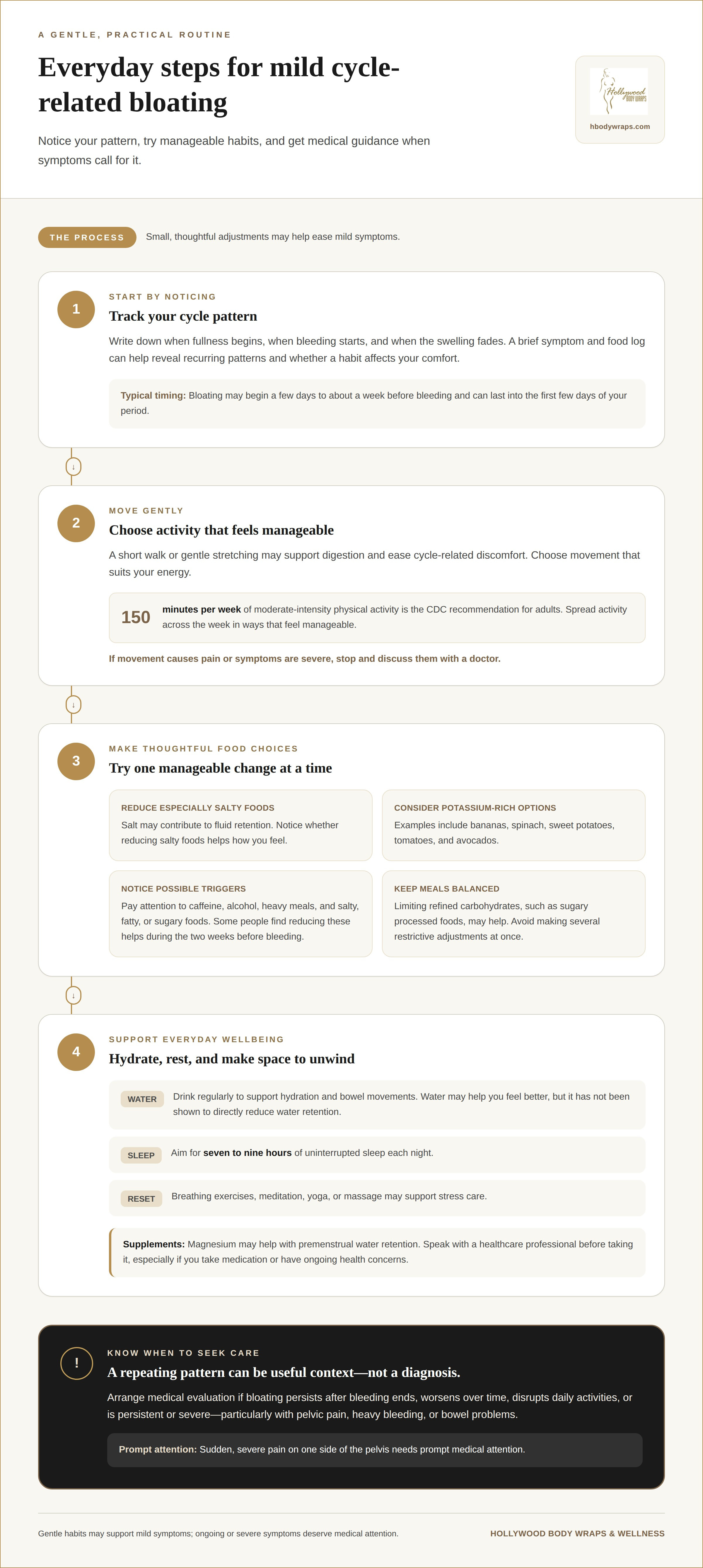
Small routine changes can make mild PMS symptoms easier to manage. If you’re feeling bloated before a period, relief in Tampa may start with a short walk or gentle stretching. Movement supports digestion and may ease cycle-related discomfort. According to the Centers for Disease Control and Prevention, adults should aim for 150 minutes of moderate-intensity physical activity per week. Spread activity across the week in ways that feel manageable, and choose movement that suits your energy.
Eating patterns can also affect how swollen you feel. Before your period, reduce especially salty foods, which can contribute to fluid retention. Choose potassium-rich options such as bananas, spinach, sweet potatoes, tomatoes, or avocados. Drink water regularly to support hydration and bowel movements. Water may help you feel better, though it has not been shown to directly reduce water retention. Limiting refined carbohydrates, such as sugary processed foods, may also help.
Notice how caffeine, alcohol, or heavy meals affect your symptoms. Some people find that reducing caffeinated or alcoholic drinks, as well as salty, fatty, and sugary foods, helps during the two weeks before bleeding. Keep meals balanced and pay attention to changes rather than making several restrictive adjustments at once. A brief symptom and food log can help identify patterns and show whether a habit affects your comfort.
Sleep and stress care matter, too. Aim for seven to nine hours of uninterrupted sleep each night, and try breathing exercises, meditation, yoga, or massage. Magnesium supplements may help with premenstrual water retention, but speak with a healthcare professional before taking one, especially if you take medication or have ongoing health concerns.
Does exercise help relieve premenstrual bloating? Regular walking and stretching may support digestion and ease discomfort. If you’re feeling bloated before a period, relief in Tampa can include practical lifestyle steps like these. If movement causes pain or symptoms are severe, stop and discuss them with a doctor.
For a separate body-care goal, explore wellness support.
3. When premenstrual bloating starts and eases
Premenstrual bloating often follows a recognizable cycle. For many people, it begins a few days to about a week before bleeding. Other premenstrual syndrome symptoms can start one to two weeks beforehand. Timing varies because menstrual cycles and symptoms differ from person to person.
The luteal phase begins after ovulation and lasts until the next period starts. During this phase, changes in estrogen and progesterone can affect how the body handles salt and fluid. The resulting water retention may cause abdominal fullness or swelling. Hormone changes are considered likely contributors, while genetics may also influence PMS-related bloating. Researchers do not fully understand every cause.
Symptoms may become more noticeable as the period approaches, then ease after bleeding begins. For some, bloating continues into the first few days of the period before settling. PMS symptoms commonly go away once a period starts, but the exact pattern varies. A symptom diary can help: note when fullness begins, when bleeding starts, and when the swelling fades. Comparing these details across cycles can show whether the timing repeats.
Timing offers useful context, not a diagnosis. Bloating that appears before each period and then subsides is more consistent with a cycle-related pattern than discomfort that continues throughout the month. If symptoms linger after bleeding ends, worsen over time, or disrupt daily activities, arrange a medical evaluation. A healthcare professional can consider the timing alongside pain, bowel changes, bleeding, and other symptoms.
Prescription diuretics may reduce fluid buildup, but they are not a self-directed fix for routine premenstrual swelling. A healthcare professional can assess recurring water retention and determine whether medication is appropriate. Do not take diuretics without medical guidance, especially if you use other medicines or have ongoing health concerns.
4. Bloating timing during the menstrual cycle
Cycle timing can help distinguish a familiar pattern from ongoing abdominal symptoms. Bloating may appear one to two weeks before a period, while some people notice it only one to two days beforehand. Ovulation usually occurs around the middle of the menstrual cycle, but its timing varies. The luteal phase follows ovulation and continues until bleeding begins.
Hormone levels shift across these phases. Changes involving estrogen and progesterone can affect how the body handles sodium and fluid, contributing to temporary fullness. The amount and timing of swelling vary between people and cycles. Note when bloating starts, when bleeding begins, and when symptoms ease. Recording these details for a few months can make a recurring pattern easier to recognize.
For some, water retention and bloating feel worst on the first day of a period. Scale weight can also fluctuate during the menstrual cycle. A person may gain about 0.5 kilograms during a cycle, and this change typically goes away a few days after the period finishes. That temporary shift is different from a lasting change in body composition.
Exercise and food choices may affect comfort, but they do not make every cycle identical. For example, a salty meal may contribute to fluid retention, while a gentle walk may support digestion. Compare symptoms across cycles rather than judging by one day’s weight or abdominal appearance. The pattern matters more than an isolated measurement.
If bloating continues after bleeding ends, appears throughout the month, or becomes more severe, arrange a medical evaluation. Note any accompanying pelvic pain, bowel changes, or unusually heavy bleeding. These details help a healthcare professional assess whether the timing fits a menstrual pattern or needs further investigation.
Hollywood Body Wraps & Wellness
Hollywood Body Wraps & Wellness in Tampa offers non-invasive wellness and aesthetic services for body-care goals alongside cycle-related concerns. Mineral inch loss Body Wraps and Non invasive Cellulite Treatment focus on appearance, while Facials and a Non invasive facial lift focus on facial care. These services are not medical treatment for menstrual bloating or its underlying causes.
If bloating is persistent, severe, or accompanied by concerning symptoms, seek evaluation from a healthcare professional first. For separate aesthetic goals, consider whether one of these services fits what you’re looking for. Contact Hollywood Body Wraps & Wellness to discuss your body-care interests.
Choose a thoughtful next step
Your next step can be simple: notice what your body is telling you, and choose support that fits your goal. If bloating is persistent, severe, or disrupting daily life, make medical evaluation the priority rather than treating it as an appearance concern. For separate aesthetic goals, a wellness conversation can help you consider options that align with your preferences.
If you’re feeling bloated before a period and looking for relief in Tampa, remember that cycle-related discomfort and body-care goals call for different kinds of support. You don’t need to solve everything at once. Start with the step that best matches what you’re experiencing, and give yourself room to make informed choices.
For a welcoming conversation about your wellness interests, contact Hollywood Body Wraps & Wellness. Move forward at your own pace, with clarity and care.
Frequently Asked Questions
Is bloating before my period normal?
Yes, mild bloating that follows a familiar menstrual pattern is common. Notice whether it comes with other predictable premenstrual symptoms, such as breast tenderness or mood changes, and whether it settles as your period progresses. A simple calendar note can help you recognize changes from your usual pattern. Bloating that persists beyond menstruation or becomes severe warrants medical assessment.
Why does your menstrual cycle cause bloating?
Hormone fluctuations across the menstrual cycle can affect how your body handles salt and fluid, contributing to temporary fullness. The cycle can also coincide with digestive changes, such as constipation, which may increase abdominal pressure. These effects can overlap, so note whether discomfort follows meals, bowel changes, or a particular cycle phase. That context can help clarify recurring patterns.
Can you prevent PMS?
There is no reliable way to prevent the hormonal shifts linked with PMS, but healthy routines may make symptoms easier to manage. Track symptoms across cycles, keep regular sleep and movement habits, and note whether particular foods or drinks seem to worsen discomfort. If symptoms repeatedly interfere with work, relationships, or daily activities, discuss them with a healthcare professional for a tailored plan.
What may help mild cycle-related bloating?
Try gentle walking, steady hydration, and meals with less sodium when mild bloating appears. For example, choose a banana or spinach with a meal instead of a highly salted packaged snack. Keep changes manageable and observe how you feel over the next few days. Ask a healthcare professional before starting magnesium or another supplement, especially if you take medication.
What causes bloating before a period?
Hormonal changes are considered a likely contributor because they can affect fluid balance before menstruation. Genetics may also play a role, and the full cause of premenstrual symptoms is not fully understood. Digestive factors can add to the sensation: constipation, gas, or changes in bowel habits may make your abdomen feel fuller. These overlapping causes help explain why symptoms differ between people.
How long does premenstrual bloating usually last?
Bloating often begins a few days to about a week before bleeding, then eases after the period starts. Some people still feel bloated during the first few days of bleeding. Track the start and end of symptoms alongside your period dates to understand your own pattern. If bloating continues after menstruation or worsens over time, seek medical advice.