The best body-sculpting choice after GLP-1 weight loss may not be the treatment that targets fat alone. To understand how to choose the right body sculpting treatment, start with your main concern: a small area of stubborn fat, loose-looking skin, cellulite, or muscle tone. Body sculpting is for refining specific areas, not for weight loss, so the right fit depends on the result you want and the area you’d like to address.
It’s understandable to want your body’s shape to catch up with the changes you’ve worked toward. The options differ in what they target, how treatment is delivered, and what recovery may involve. This guide compares common approaches by treatment area and downtime, explains what to consider after GLP-1 weight loss, and outlines when a non-invasive option may suit your goals. You’ll also find a practical way to narrow your choices based on your priorities and overall health.
Key Takeaways
- Start by identifying whether your priority is localized fat, skin appearance, cellulite, or muscle tone; each goal points toward different treatment options.
- Compare non-invasive and surgical approaches by the area they address, how treatment is delivered, and the recovery time you can accommodate.
- After GLP-1 weight loss, consider whether you’re seeking refinement or further weight loss, and how stable your weight is before planning body contouring.
- For cellulite concerns or non-invasive body sculpting goals, Hollywood Body Wraps & Wellness offers options that can be matched to your priorities.
How a provider can help choose between non-invasive fat-reduction treatments
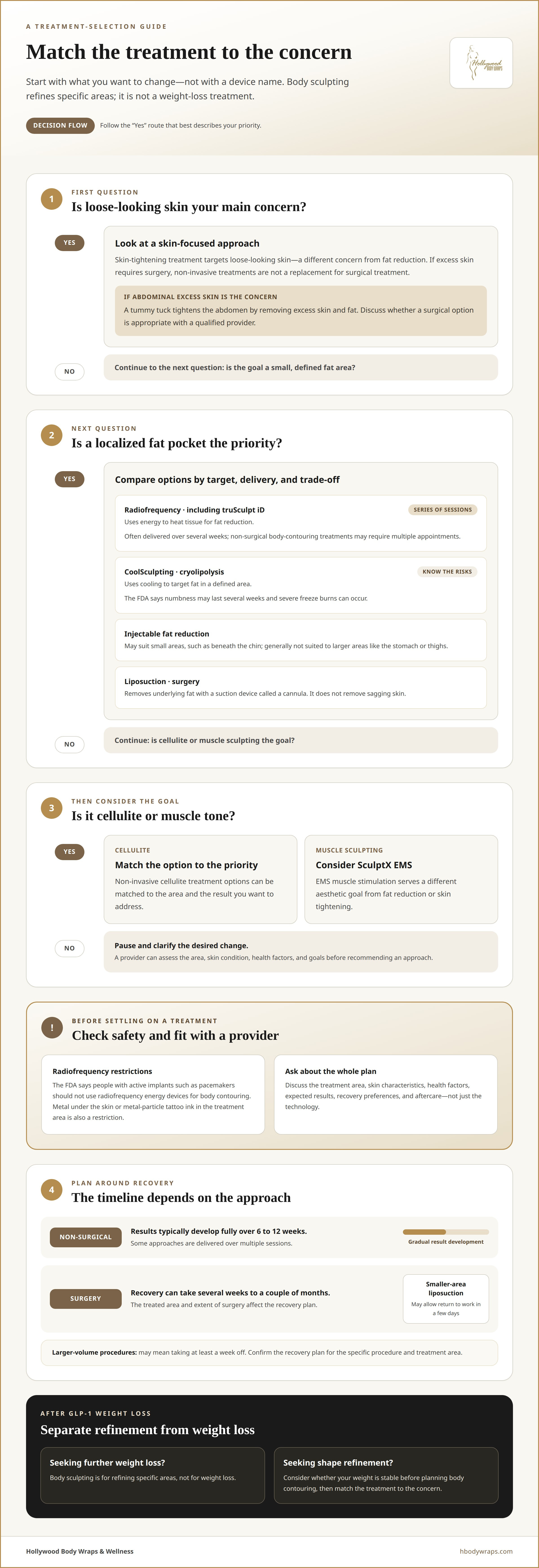
A useful consultation starts by separating a fat pocket from loose skin or cellulite. The provider assesses the treatment area, skin condition, health factors, and desired change before recommending a procedure. For example, a small, pinchable area may call for a different approach than abdominal skin laxity. This step helps clarify whether fat reduction, skin tightening, or another goal matters most.
Radiofrequency treatments, including truSculpt iD, use energy to heat tissue. Radiofrequency fat reduction is typically delivered as a series of sessions over several weeks, and most non-surgical body-contouring treatments require multiple appointments. CoolSculpting is a brand associated with cryolipolysis, which uses cooling to target fat in a defined area. The provider weighs the treatment area, skin characteristics, and recovery preferences when comparing these options. The FDA says cryolipolysis can cause numbness lasting several weeks and severe freeze burns.
Liposuction is different: it is surgery that removes fat beneath the skin using a suction device called a cannula. It can address stubborn fat, but it doesn’t remove sagging skin. Injectable fat reduction may suit small areas, such as beneath the chin, but is generally unsuitable for larger areas like the stomach or thighs. These distinctions help set realistic expectations before selecting a treatment.
| Option | Primary focus | Consideration |
|---|---|---|
| truSculpt iD radiofrequency | Fat reduction using radiofrequency energy | Often a series over several weeks |
| CoolSculpting | Targeted fat reduction through cryolipolysis | Numbness or freeze burns may occur |
| Liposuction | Surgical removal of underlying fat | Doesn’t tighten sagging skin |
| Injectable fat reduction | Small, localized areas | Generally not suited to stomach or thighs |
| Skin-tightening treatment | Loose-looking skin | Targets a different concern than fat reduction |
According to the FDA, people with active implants such as pacemakers should not use radiofrequency energy devices for body contouring. Metal under the skin or metal-particle tattoo ink in the treatment area is also a restriction. Choose by matching the treatment’s target to your concern, then reviewing safety factors and expected recovery with the provider.
What Counts as a Body Contouring Treatment?
Body contouring covers procedures that refine shape by reducing excess fat, tightening skin, or sculpting a specific area. Compare each option by its goal, target tissue, recovery, and fit with your lifestyle.
Nonsurgical Versus Surgical Body Contouring
Surgical procedures change body shape by removing fat or excess skin. Liposuction removes underlying fat, while a tummy tuck tightens the abdomen by removing excess skin and fat. Hollywood Body Wraps & Wellness offers non-invasive body sculpting, not these surgical procedures. Its treatments are designed for clients seeking non-surgical aesthetic services, so they are not a replacement for surgery when a concern involves excess skin or requires surgical treatment.
Nonsurgical treatments avoid surgery and may require multiple sessions; surgical procedures may involve higher upfront costs and deliver results in a single session. In the United States, cost depends on the procedure, treated area, and session plan, with a case-specific quote provided after a quote request. Insurance coverage depends on plan terms and treatment indication, so review benefits with your insurer.
To compare providers, consider at least three plastic surgeons and prioritize board certification plus experience with the specific procedure. A consultation should cover your goals, suitable options, expected results, recovery, and aftercare.
Non-Invasive Body Contouring Technologies
Non-invasive treatments use different methods to address fat, skin, or muscle without surgical incisions. Hollywood Body Wraps & Wellness offers non-invasive body sculpting, skin tightening, and SculptX EMS muscle stimulation, each intended for a different aesthetic goal. The technology alone does not determine the right choice. Begin with the area and appearance you want to address, then discuss which service is suited to that priority.
Start with the outcome you want: fat reduction in the abdomen or thighs, tighter-looking skin, or muscle sculpting. A treatment focused on fat won’t necessarily address loose skin, and muscle stimulation serves a different goal. During consultation, the provider should connect your target area and lifestyle to an appropriate option, explain recovery and aftercare, and discuss expected results. This goal-first comparison makes it easier to weigh benefit against the time and commitment involved.
Treatment areas and recovery considerations
Recovery planning starts with matching the treated area to your calendar and activity needs. Thinking through how to choose the right body sculpting treatment also means considering what the first days and weeks after treatment may involve.
Recovery and Long-Term Maintenance
Non-surgical results typically develop fully over 6 to 12 weeks, while recovery from body-contouring surgery can take several weeks to a couple of months. The treated area and extent of surgery affect the recovery plan. For example, smaller-area liposuction may allow a return to work in a few days, while larger-volume procedures may mean taking at least a week off.
Long-term maintenance depends partly on the result being pursued. Fat-removal results may be long-term if weight remains steady; muscle-related results may last several months to more than a year when exercise continues. The CDC recommends at least 75 minutes of vigorous aerobic exercise weekly to help maintain body-contouring results. Build those habits into your planning after recovery.
A practical step is to map each appointment, recovery period, and activity adjustment against your work and exercise schedule. This helps you discuss timing for the specific area being treated rather than planning around a generic recovery estimate.
Discomfort and Downtime
The FDA says reported body-contouring device complications can include pain or discomfort, redness, swelling, bruising, and nodules. After liposuction, patients are advised to wear a compression garment for two weeks and avoid heavy lifting and vigorous activity for about two weeks. These instructions can shape daily routines, especially when treatment involves an area used during work or exercise.
Travel plans also matter. Allow a few months before a bathing-suit vacation after a body-sculpting procedure. Visible changes may begin within a few weeks, with fuller results around the three-month mark. A second way to approach how to choose the right body sculpting treatment is to place those milestones beside your planned travel and recovery needs.
Before scheduling, list upcoming commitments and discuss how they fit the procedure’s recovery guidance. That simple planning step can help you choose timing that leaves room for healing and follow-up.
How a provider can help choose treatments after GLP-1 medication weight loss
After GLP-1 weight loss, body contouring is usually a refinement step, not another weight-loss method. It is intended for people close to their desired weight who want to address small, localized areas. A provider can first clarify whether your main concern is residual fat, loose-looking skin, or muscle tone. For example, a patient focused on the abdomen may need a different plan from someone concerned about skin appearance.
Weight stability matters before planning treatment. Doctors suggest maintaining a stable weight for at least 6 months before body contouring procedures. This gives the provider a clearer view of the treated area and helps distinguish a persistent fat pocket from shape changes still occurring during weight loss. If your weight is continuing to change, timing and treatment goals may need to be reconsidered.
At consultation, bring your GLP-1 treatment history, current goals, and a clear description of the areas you want to refine. The discussion should cover aesthetic priorities, suitable methods, expected results, session planning, recovery, and aftercare. Surgical body contouring also requires good general health and may not suit people with certain medical conditions. These factors shape whether a non-invasive approach or a surgical procedure fits the goal.
Match the service to the concern rather than choosing based on weight change alone. A localized contouring goal differs from a concern about cellulite or loose-looking skin. Hollywood Body Wraps & Wellness offers non-invasive body sculpting and non-invasive cellulite treatment, as well as weight-loss programs. Be clear about your main priority so the conversation stays focused on the area and outcome you want to address.
For a focused discussion of post-weight-loss goals, explore body sculpting options.
Hollywood Body Wraps & Wellness: Non invasive Cellulite Treatment
Hollywood Body Wraps & Wellness offers non-invasive cellulite treatment for people focused on the appearance of cellulite, along with non-invasive body sculpting for targeted contouring. Advanced body wraps and the Sculpt Pod red light sauna are additional wellness services. Each has a distinct purpose, so choose based on your priority and discuss the relevant option with the spa in Tampa.
Use a conversation about your target area and desired change to identify which approach fits your needs. These services are non-invasive options, not substitutes for surgery or medical care. If you’re exploring body contouring after weight loss, share whether your main concern is cellulite or another shape-related goal so the discussion can stay focused.
Contact Hollywood Body Wraps & Wellness to discuss your body contouring goals and treatment options.
Choose a Next Step That Fits Your Goals
Knowing how to choose the right body sculpting treatment starts with one clear priority. Identify the area or concern that matters most, then use it to guide a focused discussion about suitable options. Hollywood Body Wraps & Wellness also offers advanced body wraps and facial treatments for different goals. For non-invasive body sculpting in Tampa, book an appointment and discuss the target area you want to address.
A thoughtful next step is simply to share what you hope to address and explore the options that align with it. Contact Hollywood Body Wraps & Wellness to discuss your goals and possible treatments. A clear starting point can make your path forward feel more personal, considered, and achievable.
Frequently Asked Questions
Are maintenance treatments required?
Maintenance needs depend on the treatment and the outcome you want. Consider how the service fits your everyday routine, and ask what ongoing care may be relevant to your plan. Hollywood Body Wraps & Wellness offers non-invasive body sculpting and SculptX EMS muscle stimulation for distinct aesthetic goals. Discuss your priority and the treatment’s intended purpose before choosing.
Fat Reduction or Skin Tightening: Which Do You Need?
Consider body sculpting when your priority is targeted contouring, and skin tightening when you want to address the appearance of loose skin. These are different goals, so one service may not address both in the same way. Describe the specific area and appearance you want to change. Hollywood Body Wraps & Wellness offers non-invasive body sculpting and skin tightening, with treatment plans customized for each target area.
How dramatic are the changes?
Non-invasive body sculpting is intended to refine targeted areas, not produce major weight loss or a dramatic whole-body transformation. The change depends on the area and treatment plan. Set a clear, specific goal, such as improving the contour of one area, rather than expecting a particular clothing size or total weight change. Hollywood Body Wraps & Wellness can discuss non-invasive options based on your target area.
How fast do results appear?
Results vary by treatment, so avoid assuming that timelines for other procedures apply to the service you are considering. Discuss what to expect for your specific goal and target area before booking. Hollywood Body Wraps & Wellness offers non-invasive body sculpting, skin tightening, and facial treatments. Its services are performed with no anesthesia, no scars, and zero downtime.
How long do results last?
Consider the treatment’s intended effect and how it fits your goals and routine. Body contouring, skin tightening, and muscle stimulation address different aesthetic priorities, so maintenance expectations may differ. Hollywood Body Wraps & Wellness offers non-invasive body sculpting, skin tightening, and SculptX EMS muscle stimulation. Discuss which service aligns with the outcome you want.
How many sessions are needed?
There isn’t one session count that applies to every body-contouring method. Non-surgical treatment plans commonly involve a series of appointments, and radiofrequency fat reduction is typically performed over several weeks. The treated area, technology, and desired change shape the plan. Ask for the expected appointment sequence and spacing so you can assess how it fits your schedule.