
Cellulite isn’t something vacuum therapy can erase. It may temporarily improve the skin’s appearance by stimulating circulation and lymphatic drainage, but it doesn’t address factors such as genetics, hormones, or fat distribution. If you’re wondering whether vacuum therapy for cellulite works, the practical answer is that it may make skin look smoother for a time, rather than remove cellulite.
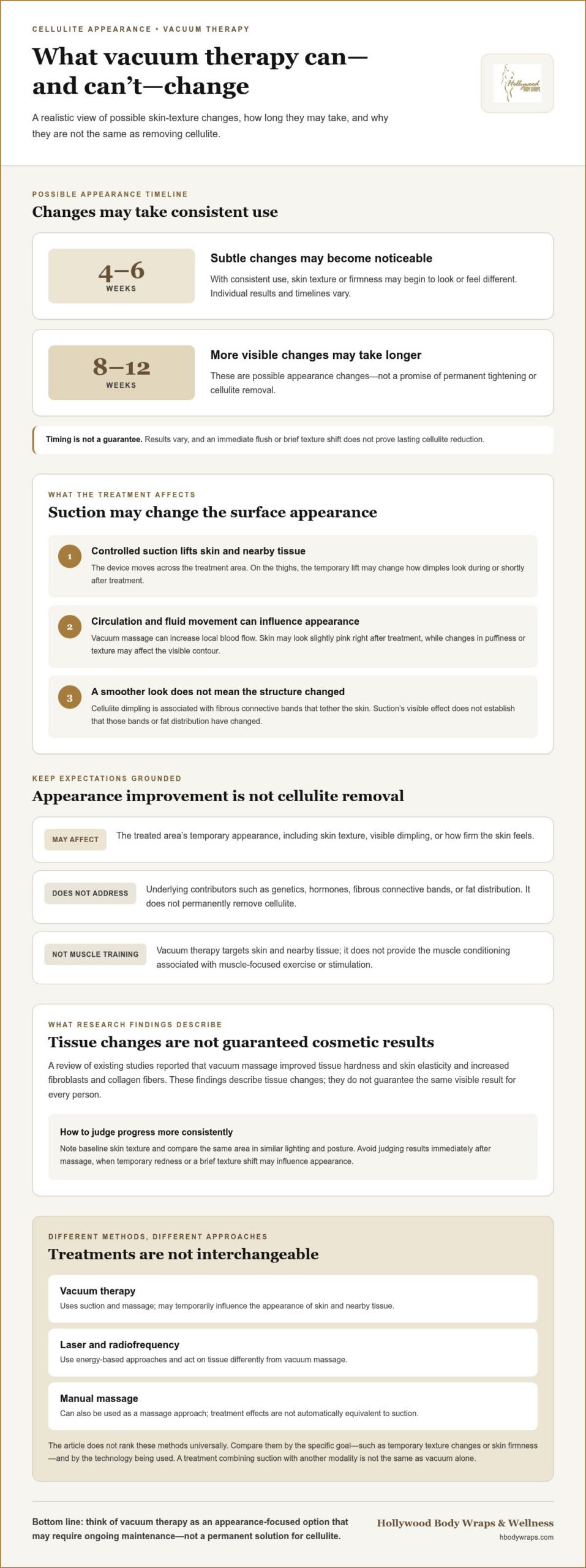
It’s understandable to want a clearer, firmer-looking result without expecting a treatment to change everything. Subtle changes may become noticeable after 4 to 6 weeks of consistent use, while more visible changes may take 8 to 12 weeks. Results and timelines vary, so it helps to understand what the treatment can realistically affect.
This article explains how suction may influence cellulite’s appearance, what session routines are suggested, and what the treatment can’t do. You’ll also learn why maintenance matters and which limits are important when deciding whether vacuum therapy fits your goals.
Key Takeaways
- Vacuum suction may temporarily smooth the skin’s appearance, but it doesn’t change the underlying factors that contribute to cellulite.
- Session frequency and duration vary across recommendations, so follow the guidance for the specific treatment or device and allow time for tissue recovery.
- Comfort matters: suction should feel like a gentle tug or pull, not pain; excessive suction can cause bruising or other skin irritation.
- Circulation, fluid movement, and changes in skin elasticity may help explain why the treated area can look or feel different after consistent sessions.
- Think of vacuum therapy as an appearance-focused treatment that may require ongoing maintenance, not a permanent solution or a substitute for changing fat distribution.
Does vacuum therapy help cellulite?
Vacuum therapy may temporarily improve cellulite’s appearance by encouraging circulation and lymphatic drainage. It may support a smoother-looking surface, but it doesn’t remove cellulite’s underlying causes.
Reduction and Skin Tightening Claims
Cellulite reduction claims describe a possible improvement in visible dimpling, while skin-tightening claims refer to changes in firmness or elasticity. The distinction matters when deciding: a smoother appearance isn’t the same as eliminating cellulite or permanently changing fat distribution.
A review of existing studies reported that vacuum massage improved tissue hardness and skin elasticity and increased fibroblasts and collagen fibers. These findings describe tissue changes, not a guaranteed cosmetic result for every person. Consider the treatment an appearance-focused option, and assess skin texture and firmness over time rather than expecting cellulite to disappear.
Blood Flow and Temporary Texture Changes
Vacuum massage can increase blood flow in the treated area, which may briefly change how the skin looks. Skin may appear slightly pink immediately after treatment, and some people report smoother-looking texture or firmer-feeling skin after several weeks of consistent use.
These short-term effects matter when judging progress: an immediate flush isn’t proof of lasting cellulite reduction. Compare the treated area under similar lighting and at a consistent time, rather than judging it right after massage. This helps distinguish temporary changes from a longer-term shift in appearance.
Comparisons With Other Cellulite Treatments
Vacuum therapy uses suction and massage, while laser and radiofrequency treatments use energy-based approaches; massage may also be performed manually. These methods act on tissue differently, so their results aren’t interchangeable or universally ranked. Compare treatments by your specific goal, such as temporary texture changes or skin firmness.
Vacuum therapy for cellulite has no single average cost across the United States. Price depends on the treatment area, session plan, and whether radiofrequency is included; a case-specific price is provided after a quote request.
Preparation is usually straightforward: no special preparation is necessary before vacuum therapy. Conductive gel isn’t always required for suction massage; follow the instructions for the specific device or treatment protocol. If a device combines suction with another modality, preparation may differ from vacuum alone.
For a practical expectation, note your starting skin texture and ask how the treatment measures progress. Subtle changes may become noticeable after 4 to 6 weeks of consistent use, while more visible changes may take 8 to 12 weeks. Those timelines describe possible appearance changes, not a promise of permanent tightening or cellulite removal.
How vacuum suction may affect cellulite appearance
Vacuum therapy applies controlled suction to the skin’s surface, gently lifting skin and underlying fat layers. On the thighs, that temporary lift can change how dimples look during or shortly after treatment. The device moves across the treatment area, rather than directly reshaping each indentation. Its effect is primarily on the appearance of the skin and nearby tissue.
Cellulite dimpling is associated with fibrous connective bands that tether the skin and create uneven contours. Suction lifts the surface, but a change in appearance does not necessarily mean the underlying causes of cellulite have changed. A smoother appearance after massage isn’t proof that the structural cause of dimpling has changed. Assess skin texture separately from the underlying pattern.
Consider a small area on the outer thigh. A practitioner moves the suction device across the skin, lifting tissue as it travels. The skin may look temporarily fuller or more even afterward. The visual effect can vary with the treatment area, pressure, and the person’s tissue response. It doesn’t indicate that fat has been permanently removed.
Circulation and fluid movement also influence how an area looks. Vacuum massage stimulates local blood flow, and increased circulation can leave skin slightly pink immediately afterward. Changes in puffiness or surface texture may affect the appearance of the contour. These visible shifts don’t establish that fibrous bands or fat distribution have changed.
Suction works on the skin and underlying tissue, not as muscle training. If your goal includes stronger muscle definition, vacuum therapy alone doesn’t do what muscle-focused exercise or stimulation does. Separating those goals helps set expectations: one treatment targets surface appearance, while muscle conditioning targets the muscles beneath it.
Some technologies combine suction with other approaches, such as radiofrequency, but these treatments aren’t the same as vacuum alone. Added energy changes the method, so its intended tissue effects and aftercare may differ. Compare the specific technology being used rather than treating every device labeled “body sculpting” as the same procedure.
To track changes, take a baseline photo of the same thigh area in consistent lighting and posture. Compare it with later images taken under matching conditions, not with a mirror check immediately after massage. This makes temporary redness or a brief texture shift less likely to distort your judgment. Focus on visible contours, not claims that suction permanently removes cellulite.
Suggested frequency, session length, and massage direction
Vacuum therapy schedules vary by device and treatment plan, so recommendations shouldn’t be combined into one routine. Session spacing, treatment area, and suction intensity all affect how a schedule is applied.
Session Frequency and Length
Suggested routines range from 2-3 sessions per week to 3-5 times per week, with recovery time between sessions. One approach uses 10 to 15 minutes per session, while another keeps the full session around 5 to 10 minutes. These differences make the device’s instructions and treatment protocol essential.
Some guidance recommends leaving one or two rest days between sessions, allowing tissue recovery rather than applying suction every day. For cellulite, a suggested course may involve 12 to 15 sessions, depending on the degree and amount of cellulite. Maintenance may then involve one session a month. These are suggested plans, not a reason to add extra sessions or lengthen treatment time.
At-Home Use and Number of Sessions
At-home device recommendations include using vacuum body sculpting 3-4 times per week and beginning with 5 minute treatments per area. Increase treatment time gradually only as the device instructions allow. This matters because excessive suction or duration can cause bruising, and the device’s own directions take priority over a general schedule.
Other recommendations describe treating for 10 to 15 minutes, three to five times per week, while allowing one or two rest days. These routines differ, so choose the plan made for your specific device or professional treatment. Don’t combine the highest frequency with the longest duration from separate recommendations.
Direction matters, too. Use long, slow strokes toward lymph nodes, moving up the legs toward the groin. On the arms, strokes move toward the underarm. Keep the device moving across the skin instead of holding suction in one spot. This gives each area a consistent massage and avoids concentrating pressure on one patch.
Start at a lower intensity, especially with a new device or a sensitive area such as the inner thigh. Vacuum massage should feel like tugging or pulling, not pain. Reduce suction if it becomes uncomfortable, and stop if pain or unusual bruising develops. At home, follow the device’s recommended usage time and method rather than copying a routine intended for another model.
Consistency means following one suitable schedule over time, not treating more often. Cellulite management typically involves ongoing sessions and maintenance; one session isn’t expected to provide permanent smoothing. Track the areas treated and session dates, then assess changes after a consistent course rather than increasing intensity to speed results.
Blood flow, lymphatic drainage, and collagen
Vacuum suction lifts the skin and underlying tissue, stimulating local blood flow during treatment. This response can make the treated area look temporarily pink. It also helps explain why visible changes immediately after a session don’t necessarily represent lasting changes in skin structure.
Lymphatic drainage is the movement of fluid through the lymphatic system. Vacuum massage may encourage fluid movement, which can briefly affect puffiness and surface appearance. This effect is temporary, so a change in how the thighs look after treatment doesn’t mean the underlying causes of cellulite have changed.
Direction matters when massage is intended to support lymphatic movement. Use long, slow strokes toward lymph nodes, moving up the legs toward the groin and up the arms toward the underarm. On a thigh, for example, guide each stroke upward rather than moving randomly across the same patch. Keep the suction comfortable and the device moving.
Movement can support circulation outside a treatment session, too. A suggested option is walking for 10 to 15 minutes a day. Another is putting the legs up the wall for five minutes in the evening to help fluid flow back. These habits aren’t cellulite treatments, but they offer simple ways to include movement in a daily routine.
Collagen and fibroblasts relate to the skin’s supporting structure. A review of existing studies reported that vacuum massage improved tissue hardness and skin elasticity and increased fibroblasts and collagen fibers. These findings offer a possible explanation for changes in firmness, but they don’t establish that suction removes cellulite or permanently changes its appearance.
Consistency still matters when assessing a cosmetic effect. Those timeframes describe possible changes in appearance, not proof of increased collagen for a particular person. Compare the same area in similar lighting over time.
After vacuum treatment, drink water to support normal hydration. Water doesn’t dissolve fibrous bands or erase cellulite, so treat it as a basic wellness habit, not a treatment mechanism. If a procedure combines suction with radiofrequency or red light, it uses additional technology; don’t assume those methods have the same effects or aftercare.
Intensity also affects how suction feels. Begin at a lower setting, since excessive suction may cause bruising. A session should feel like tugging or pulling, not pain. If discomfort or unusual bruising appears, stop the massage and consult a healthcare provider. Gentle, consistent treatment is more sensible than increasing intensity to chase faster changes.
Cellulite prevalence and what vacuum therapy cannot do
Cellulite is common, not a reliable measure of fitness or health. Estimates place it in 80 to 90 percent of post-pubertal women, including thin women and athletes. A dimpled appearance can therefore show up across different body types and activity levels. That context matters: cellulite is a cosmetic concern, not proof that someone needs to lose weight or improve their health.
Genetics, hormones, and fat distribution are among the factors associated with cellulite. Vacuum therapy doesn’t change these causes. It can affect the skin’s appearance, but it can’t rewrite inherited traits, alter hormone levels, or control where the body stores fat. A smoother-looking treatment area isn’t the same as removing the source of dimpling.
Fibrous bands beneath the skin also contribute to cellulite’s uneven surface. Suction lifts the skin and underlying tissue, but it doesn’t release or remove those bands. Findings on collagen and elasticity relate to tissue response, not a promise that skin will become permanently smooth. Keep the distinction clear when evaluating a cosmetic method: surface changes and structural changes are different outcomes.
A consistent routine can support an appearance-focused goal, but sessions require maintenance. Any effect on fluid is temporary, and one session doesn’t provide permanent smoothing. Evaluate the treated area under similar lighting and posture, then consider whether the change matches your goal. If your main goal is changing fat distribution or addressing a medical condition, vacuum therapy doesn’t serve that purpose.
Safety also sets limits. Improper treatment can cause bruising, swelling, numbness, burns, or other skin damage. A session should feel like pulling, not pain. People with severe varicose veins, active skin infections, or who use blood-thinning medication should seek medical advice before starting a body treatment. Stop vacuum massage and consult a healthcare provider if persistent pain or unusual bruising occurs.
The practical takeaway is simple: judge vacuum therapy as a cosmetic option for temporary changes in appearance, not a cure for cellulite or a substitute for medical care. If your goal is to explore a non-invasive approach focused on cellulite’s appearance, learn about cellulite treatment options and how they fit that goal.
Hollywood Body Wraps & Wellness: Mineral inch loss Body Wraps
Hollywood Body Wraps & Wellness offers Mineral inch loss Body Wraps for people exploring body-focused cosmetic treatments. If your main concern is the appearance of cellulite, the spa also offers Non invasive Cellulite Treatment, a closer fit for that goal than a wrap alone.
Vacuum therapy may temporarily change skin appearance, but it doesn’t remove cellulite’s underlying causes. A conversation about your goals can help distinguish between an inch-loss body wrap and a cellulite-focused treatment, then identify the option that best matches what you want to address. These services are cosmetic, not medical care or a permanent solution to cellulite.
To learn more about the available options, contact Hollywood Body Wraps & Wellness or visit hbodywraps.com.
Choose a Next Step That Fits Your Goals
If you’re still asking whether vacuum therapy for cellulite works, start by defining what progress would look like for you. Is your priority the appearance of dimpled skin, another body-care goal, or understanding which cosmetic approach feels right? Clear expectations make it easier to choose a treatment without chasing a promise of permanent change.
Hollywood Body Wraps & Wellness offers a Non invasive Cellulite Treatment for cellulite-focused goals, along with Mineral inch loss Body Wraps. Other personal care options include a Non invasive facial lift and Facials. Each addresses a different concern, so choose based on the result you want to explore rather than assuming one treatment does everything.
When you’re ready to discuss a suitable next step, contact Hollywood Body Wraps & Wellness. A thoughtful choice can make your self-care routine feel more intentional and aligned with your goals.
Frequently Asked Questions
Does At-Home Vacuum Body Sculpting Really Work?
At-home vacuum body sculpting can temporarily affect how treated skin looks, but it doesn’t eliminate cellulite’s underlying causes. Results depend partly on consistent use and following the specific device’s directions. Don’t transfer a schedule from one device to another, for example: suction strength and recommended treatment time can differ. Treat changes as cosmetic, and avoid increasing intensity or frequency to force faster results.
Is the treatment painful?
A vacuum massage should feel like tugging or pulling, not pain. If a session becomes painful, reduce the suction or stop rather than pushing through discomfort. Excessive suction can cause bruising, and improper treatment can lead to swelling, numbness, burns, or other skin damage. Persistent pain or unusual bruising are reasons to stop the massage and consult a healthcare provider.
What does it involve?
The treatment uses a device to create controlled suction on the skin’s surface and lift the skin and underlying tissue. The device moves over the chosen area, such as the thighs, rather than staying in one spot. A professional session and an at-home device may have different instructions, so follow the method and usage time specified for that treatment.
Why is it performed?
Vacuum therapy is used for cosmetic goals, such as temporarily improving the look of uneven skin or supporting a firmer-looking appearance. It may also stimulate circulation and lymphatic movement in the treated area. Someone focused on thigh dimpling, for example, may consider it for surface appearance, not as a way to treat a medical condition or permanently change fat distribution.
Does vacuum therapy reduce cellulite, and what does the evidence show?
Vacuum therapy can temporarily improve cellulite’s appearance, but it doesn’t remove underlying contributors, including genetics, hormones, and fat distribution. A review of existing studies reported improvements in tissue hardness and skin elasticity, alongside increases in fibroblasts and collagen fibers. Those findings describe tissue changes; they don’t establish permanent cellulite removal. Use them to understand the treatment’s potential, not as a promise of a specific cosmetic result.
How does vacuum therapy for cellulite work?
Vacuum therapy applies controlled suction that lifts the skin and underlying tissue. The massage can stimulate local blood flow and lymphatic movement, which may temporarily influence how the treated area looks. Suction acts on the skin and tissue; it doesn’t change genetics, hormones, or fat distribution. That distinction clarifies why an appearance-focused treatment isn’t the same as addressing cellulite’s underlying causes.
How long do vacuum therapy results last?
Changes linked to fluid movement are temporary, and cellulite management generally involves maintenance rather than relying on one session for lasting smoothing. How long a cosmetic change lasts depends on the type of effect being assessed and whether sessions continue. For a useful comparison, keep photos of the same area in similar lighting and posture, then review them over time rather than judging immediately after treatment.
How many vacuum therapy sessions are needed for cellulite?
A suggested cellulite course is 12 to 15 sessions, depending on the degree and amount of cellulite, followed by one maintenance session a month. Recommendations for session spacing vary, so the routine should match the treatment method or device. At home, follow that device’s own instructions; don’t combine the most frequent schedule from one recommendation with the longest treatment time from another.