
What if a dramatic wood therapy for cellulite before-and-after photo says more about lighting and timing than lasting change? It’s understandable to see striking online images and wonder whether the treatment can really smooth dimpled skin, or how long a visible difference might last.
A fair comparison looks beyond the pose. Wood therapy uses specialized wooden tools, and changes may be subtle or temporary, such as smoother-looking skin or less puffiness. It isn’t a fat-loss treatment, and results vary from person to person. Different lighting, angles, or conditions can make a difference look larger than it is.
In this article, you’ll learn how to assess before-and-after images, what changes may be visible, and why results aren’t the same for everyone. We’ll also cover realistic expectations for this non-surgical cellulite treatment and how people in Tampa, Carrollwood, Lutz, Wesley Chapel, and Westchase can explore whether wood therapy aligns with their goals. Hollywood Body Wraps & Wellness offers wood therapy and other wellness services in the Tampa area.
Key Takeaways
- Learn what wood therapy involves and what its wooden massage tools can and can’t tell you about cellulite.
- Use consistent photo conditions to make your own wood therapy for cellulite before and after comparison more meaningful.
- Separate visible differences, such as changes in skin appearance, from claims that photos alone can’t prove.
- Understand why results may vary and why a dramatic image shouldn’t be taken as a promise of lasting change.
- Explore wood therapy as a non-surgical cellulite treatment option at Hollywood Body Wraps & Wellness in Tampa.
Wood Therapy for Cellulite Before and After: What Changes Can You See?
Does a before-and-after photo show a real difference, or a change in presentation? It’s a reasonable question. Wood therapy is massage performed with specialized wooden tools, and it isn’t a cure for cellulite. A realistic look at wood therapy for cellulite before and after means noting possible changes in appearance while keeping their limits in view.
Cellulite describes a dimpled or uneven skin appearance, often on the thighs and buttocks. Its appearance varies from person to person. The Cellulite overview offers background on its characteristics and contributing factors. Massage may temporarily affect how skin looks, but a photo alone can’t show that the underlying structure has permanently changed.
Which visible changes might appear in a comparison?
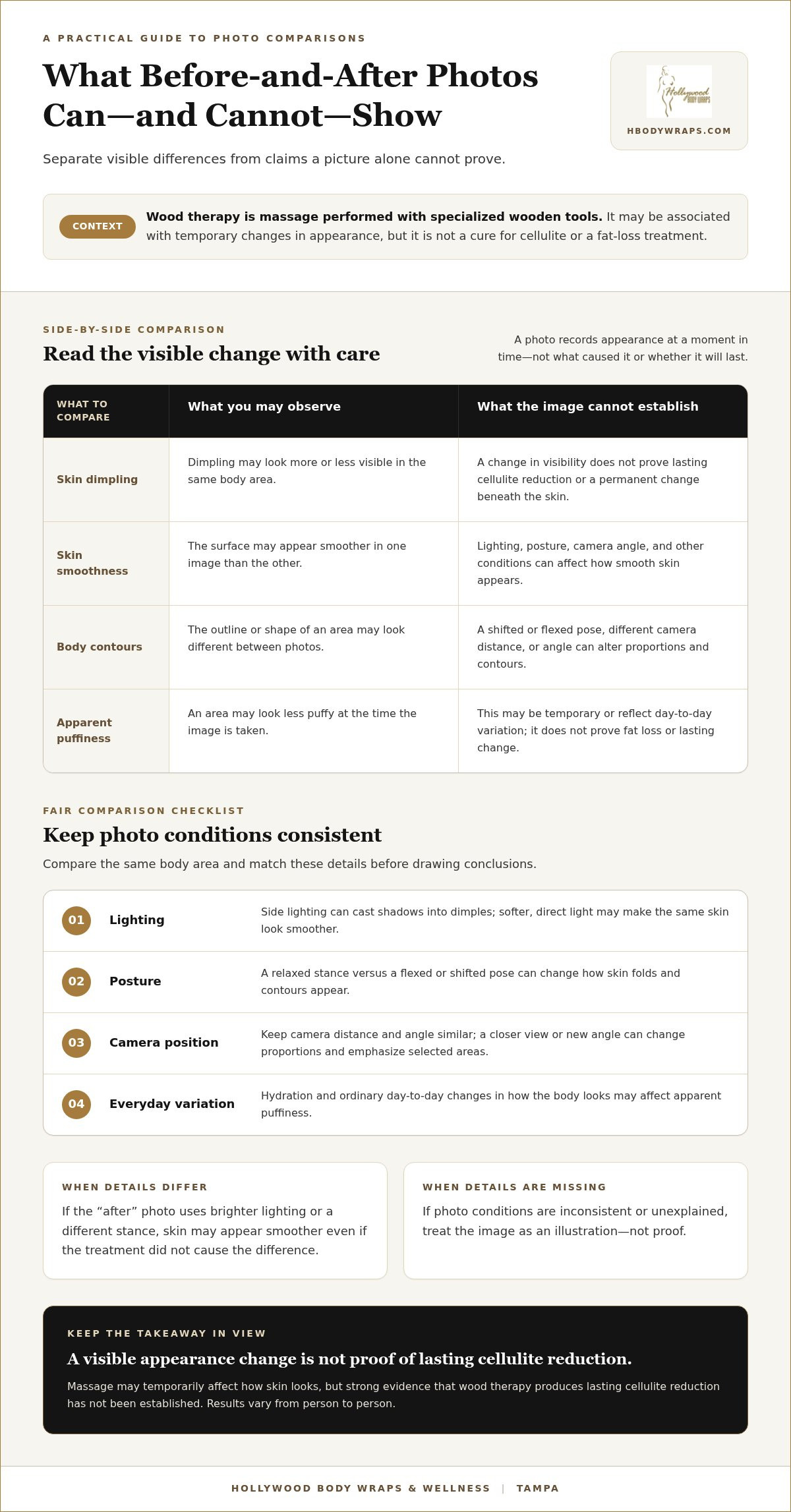
Look closely at the same area in both images. You might notice differences in the visibility of dimpling, skin smoothness, body contours, or apparent puffiness. These are observations, not promised effects. A change in puffiness or surface appearance can be temporary, and it doesn’t establish fat loss or lasting cellulite reduction.
Before interpreting a comparison, check whether both images were made under similar conditions:
- Lighting: Side lighting can cast shadows into dimples, while softer, direct light may make the same skin look smoother.
- Posture: A relaxed stance and a flexed or shifted pose can change how skin folds and contours appear.
- Camera distance and angle: A closer view or a different angle can alter proportions and emphasize selected areas.
- Hydration and day-to-day variation: Changes in hydration or ordinary fluctuations in how the body looks may affect apparent puffiness.
For example, if an “after” image uses brighter lighting and a different stance, the skin may appear smoother even if the treatment didn’t cause the difference. Compare the same body area, camera position, lighting, posture, and clothing before drawing conclusions. If those details aren’t consistent or explained, treat the image as an illustration, not proof.
Why cellulite may still be visible after treatment
Massage doesn’t necessarily remove the features that contribute to cellulite’s appearance. A short-term change at the skin’s surface is different from a permanent structural change beneath it. Strong evidence that wood therapy produces lasting cellulite reduction hasn’t been established, so keep expectations measured.
A visible appearance change is not proof of lasting cellulite reduction. Dimpling that remains after a session doesn’t mean the treatment failed. It may simply mean the skin still has its usual texture, or that any temporary change wasn’t noticeable at that moment. Assess what you can observe without treating every photo difference as a lasting result.
How Wood Therapy Uses Massage and Wooden Tools
Understanding the technique helps put a before-and-after image in context. Wood therapy is a form of body massage in which a practitioner uses specialized wooden tools. The tools are moved over targeted areas, including areas where cellulite is a concern. Their shapes may vary, but they’re massage implements, not devices proven to break down cellulite or remove fat.
Wood therapy is a massage technique, not a clinically proven cure for cellulite. It’s generally described as a way to help improve the appearance of cellulite and support lymphatic drainage. That distinction matters: an image may show a change in how skin looks, but it can’t establish what caused the difference or whether it will last.
What happens during a wood therapy session?
During a session, a practitioner moves wooden tools over selected body areas as part of a massage. The approach can be tailored to the treatment area and individual goals. There isn’t one standard sequence or session length to infer from a photo or general description, so don’t treat an online demonstration as a precise preview of every appointment.
The wooden implements are part of the massage technique. Their use doesn’t prove that cellulite is being broken down beneath the skin. To assess a claim, separate what you can observe, such as a change in skin texture or puffiness, from what a picture can’t show, such as lasting structural change. The American Academy of Dermatology’s overview of cellulite treatments offers context for considering treatment claims and evidence.
What lymphatic drainage can and cannot tell you
The lymphatic system is part of the body’s fluid-transport network. Lymphatic drainage refers to the movement of lymph fluid through that system. Massage may influence fluid movement in treated tissue, which is why wood therapy is sometimes described as supporting drainage. This is not the same as detoxifying the body, removing fat, or permanently changing the structures associated with cellulite.
If an area appears less puffy after massage, that may reflect a temporary change in fluid distribution. It doesn’t prove that cellulite has been permanently reduced or that a body contour will remain different. If dimpling still appears, that alone doesn’t tell you whether the session was worthwhile; the lasting effect of wood therapy on cellulite hasn’t been established.
For a grounded wood therapy for cellulite before and after assessment, keep the treatment’s role clear: it’s a non-surgical massage option focused on appearance, not a substitute for proven fat loss or a guarantee of permanent change. Hollywood Body Wraps & Wellness offers wood therapy in Tampa.
Wood Therapy Before and After: Realistic Results Versus Online Claims
A striking photo can show that someone’s skin looked different at two points in time. It can’t, by itself, show that wood therapy caused the change, how long it lasted, or whether it’s typical. Separate what the image documents from what it merely suggests. Research hasn’t established wood therapy as a durable cellulite treatment, so treat claims of permanent smoothing or fat reduction with caution.
This comparison can help you distinguish visual observations from claims that need stronger evidence:
| What you’re evaluating | What a photo may show | What it cannot establish alone |
|---|---|---|
| Observable appearance | Skin texture, visible dimpling, or body contours seem different between images. | That wood therapy caused the difference, or that it represents a typical result. |
| Possible temporary change | An area looks less puffy or smoother when the “after” photo was taken. | That the change lasted, reflects fat loss, or permanently altered cellulite. |
| Unsupported claim | A caption promises cellulite removal or lasting results based on a dramatic comparison. | Anecdotal images cannot prove permanent effects or predict an individual outcome. |
How to judge a before-and-after photo fairly
Compare like with like. Check whether lighting, posture, clothing, camera distance, and angle match. A relaxed pose versus a shifted stance, or shadowed lighting versus brighter lighting, can change how dimpling and contours appear. Look for context too: does the post say when each image was taken and describe the treatment involved? A single “after” image without that information offers little basis for judging duration or cause.
Be cautious with selectively framed or edited pictures. Cropping can hide surrounding areas, and filters or retouching may alter skin texture. You don’t need to assume every image is manipulated; simply avoid treating an unexplained comparison as evidence of a reliable outcome. The phrase wood therapy for cellulite before and after may lead to compelling visuals, but context makes them interpretable.
What the research does and does not establish
Healthline’s evidence-aware discussion distinguishes a possible short-term change in cellulite’s appearance from proven cellulite removal. Use the same distinction when weighing claims: descriptions of smoother-looking skin or reduced puffiness are possible observations, not established long-term effects. A personal photo can document one person’s experience, but it can’t show whether the result is typical or lasting.
Treatment categories also differ in approach and evidence. If you’re comparing non-invasive options, the Tampa body sculpting guide can help you explore broader contouring approaches without assuming they work the same way as massage. Whatever option interests you, keep the distinction clear: a visible change is worth noticing, but it isn’t proof of permanent cellulite reduction.
How to Track Your Own Wood Therapy Before-and-After Experience
Want to know whether you notice a difference? A simple record can help you compare what you see over time without turning a personal observation into a promise about what wood therapy can do. Choose a method that feels comfortable, and remember that tracking is optional. Your wellbeing matters more than documenting an outcome.
Create a fair visual comparison
If you decide to take photos, consistency matters more than professional equipment. Pick a setup you can repeat, note the dates, and keep the images private unless you genuinely want to share them. Similar conditions make comparisons easier to interpret, though photos still can’t establish what caused a change or whether it will last.
- Choose one setting: Use the same room and lighting, and avoid changing the light source between photos.
- Keep the camera steady: Use the same device, distance, height, and angle. Marking the camera or foot position can help you repeat the setup.
- Match your pose and clothing: Stand naturally in the same position and wear similar clothing, or choose another consistent option that feels comfortable.
- Write down the date and context: Note when each photo was taken in relation to a session, along with anything relevant that might affect how the area looks, such as a change in routine.
There’s no need to photograph an area if doing so feels uncomfortable. You can keep notes instead or skip tracking altogether. Store any images somewhere private and secure, and decide in advance who, if anyone, you’re comfortable showing.
Notice changes without assuming cause
Use neutral descriptions in your notes. For example, record “dimpling looks more noticeable in this lighting” or “area feels less puffy today” rather than “cellulite is gone.” This captures your experience without claiming that massage caused the observation or that it represents a lasting result.
When reviewing photos or notes, consider ordinary day-to-day variation. Lighting, posture, hydration, and other changes in circumstances can affect how skin appears. A difference in one comparison is a snapshot, not proof of permanent change or a prediction of what someone else will experience.
Review your record calmly rather than checking repeatedly for a dramatic difference. If the pictures don’t look meaningfully different, that’s useful information too. Tracking should support your decision-making, not create pressure to continue or to feel dissatisfied with your body.
The mineral body wrap guide explains a separate non-invasive option. Hollywood Body Wraps & Wellness also offers wood therapy in Tampa.
Explore Wood Therapy for Cellulite in Tampa with Hollywood Body Wraps
After reviewing what before-and-after images can and can’t show, you may be wondering whether wood therapy fits your goals. Hollywood Body Wraps & Wellness offers wood therapy in Tampa as a non-surgical option for people concerned about the appearance of cellulite. The service uses specialized wooden tools and is intended to help reduce the appearance of cellulite and promote lymphatic drainage. It isn’t a promise of cellulite removal, fat loss, or a particular visual result.
What Tampa-area clients can expect from the service
Wood therapy is a massage-based treatment that uses wooden tools on areas of concern. Its focus is aesthetic, supporting a smoother-looking appearance and lymphatic drainage. Each person’s skin and cellulite appearance are different, so a photo or another person’s experience shouldn’t be treated as a forecast of your own outcome.
Hollywood Body Wraps & Wellness has provided wellness services since 2006, serving Tampa and nearby communities, including Carrollwood, Lutz, Wesley Chapel, and Westchase. The spa offers a local setting for exploring a non-invasive cellulite treatment. Keep expectations clear: you may be interested in how your skin looks or feels, but lasting cellulite reduction hasn’t been established as an outcome of wood therapy.
Before considering wood therapy for cellulite before and after, think about the change you hope to notice. Is your interest in the look of a particular area, or are you expecting a permanent change in skin structure? Keeping that distinction clear can help you decide whether a massage-based service aligns with your priorities. It also prevents dramatic online images from setting expectations that no individual result can guarantee.
Choose a realistic next step
A grounded next step starts with your preferences. Consider what matters most to you, how you’ll define a worthwhile experience, and whether you’re comfortable with variable visual outcomes. You might also keep private notes about your observations, as described earlier, without interpreting a temporary difference as proof of a lasting effect.
It’s reasonable to explore a treatment and still have questions about what it can realistically do. Wood therapy may suit someone interested in a non-surgical massage option aimed at cellulite appearance and lymphatic drainage. It may not match expectations centered on guaranteed, permanent smoothing or fat reduction. The right choice is one that feels informed and aligns with your goals.
For details about the service, explore wood therapy at Hollywood Body Wraps & Wellness in Tampa.
Choose a Next Step That Feels Right for You
Your next step doesn’t have to be based on someone else’s dramatic photo. Think about what you hope to see, how you’ll judge whether an experience feels worthwhile, and whether a non-invasive massage-based treatment fits those goals. Grounded expectations can make exploring options more thoughtful and personal.
As you weigh wood therapy for cellulite before and after examples, let them inform your questions rather than set a promise for your own body. Visible changes can vary, and a comparison image can’t guarantee a lasting result. You deserve an approach that respects both your goals and realistic expectations.
If you’re ready to explore wood therapy for cellulite appearance, learn about wood therapy at Hollywood Body Wraps & Wellness in Tampa.
Frequently Asked Questions
Does wood therapy really reduce the appearance of cellulite?
Wood therapy may temporarily make skin look smoother or less puffy, but lasting cellulite reduction hasn’t been established. For a practical comparison, look at the same area under consistent conditions rather than relying on a post-treatment impression alone. If you’re exploring wood therapy in Tampa, consider whether your goal is a possible change in appearance, not a guaranteed alteration to cellulite itself.
How long do wood therapy cellulite results last?
The duration of any visible change isn’t established, so there’s no reliable timeframe to promise. If your skin looks different after massage, that appearance may not persist. Changes in fluid distribution and everyday conditions can affect how an area looks. Keep expectations flexible and avoid planning around a claimed result timeline unless it’s supported by dependable evidence specific to the treatment.
Can one wood therapy session make a visible difference?
One session might be followed by a visible difference for an individual, but that won’t happen for everyone. A single person’s photo, even if genuine, can’t establish a typical outcome or show that treatment caused the change. If you notice a difference, treat it as a personal observation, not a prediction of what another session or another person will produce.
Are wood therapy before-and-after photos reliable?
Photos can document appearance, but their reliability depends on how they were made and presented. Look for images taken under consistent conditions, plus clear information about timing and what treatment occurred between them. Be cautious if editing, cropping, or image selection isn’t explained. Even a well-matched pair can’t establish that a change is lasting or representative of typical results.
Is wood therapy painful?
The experience may vary between people and treatment areas, so it isn’t possible to promise that a session will feel a certain way. If you’re considering treatment, share relevant comfort concerns with the practitioner beforehand and speak up if the experience feels uncomfortable during the session. You don’t need to tolerate discomfort to make a treatment worthwhile; comfort is a valid part of deciding whether it suits you.
Can wood therapy remove cellulite permanently?
No lasting or permanent cellulite removal from wood therapy has been established. A temporary shift in how the skin appears shouldn’t be interpreted as a permanent change, and wood therapy isn’t a fat-removal treatment. It may still interest someone seeking a non-invasive massage approach focused on cellulite appearance, as long as the goal is realistic and doesn’t depend on a guaranteed before-and-after outcome.
Is wood therapy the same as lymphatic drainage massage?
No. Wood therapy is a massage technique that uses specialized wooden tools; supporting lymphatic drainage may be one of its intended aims. “Lymphatic drainage massage” describes massage focused on encouraging lymph fluid movement, so the terms aren’t interchangeable simply because both may involve massage. If you’re comparing treatments, focus on the technique being offered and its stated purpose rather than assuming they produce the same effects.