What if the back bulge that won’t budge isn’t something more crunches can solve? The search for the best way to lose back fat non-surgical can feel confusing when treatment names promise different things. Before comparing options, it helps to identify whether you’re concerned about localized fullness, loose skin, or both.
It’s understandable to want a targeted approach when diet and exercise haven’t changed the area as you’d hoped. Non-surgical body contouring may help refine the appearance of specific areas, but it isn’t a substitute for overall weight loss, and results vary. Start with a clear goal and realistic expectations.
This guide compares common non-surgical approaches, explains how fat reduction differs from skin tightening, and outlines what to consider when exploring treatment. In Tampa, Hollywood Body Wraps & Wellness offers non-invasive body sculpting, including lipo laser, cavitation, and Thermasculpt. The spa has served the local community since 2006.
Key Takeaways
- The best way to lose back fat non-surgical starts with matching a treatment category to your aesthetic goal, not choosing a technology by name alone.
- Distinguish approaches intended to address localized fullness from those focused on other contouring concerns.
- Set a clear goal before exploring treatment. Exercises can strengthen muscles but can’t selectively reduce fat in one chosen area.
- Consider your health history and keep expectations realistic when weighing whether a non-surgical approach fits your needs.
- In Tampa, body sculpting options such as lipo laser, cavitation, and Thermasculpt can be part of a conversation about aesthetic goals.
Best Way to Lose Back Fat Non-Surgically: Start With the Right Goal
It can be discouraging when a fold near the bra line or around the waist seems unchanged despite regular movement and thoughtful eating. Fat distribution differs from person to person, and everyday habits can’t determine exactly where the body changes first.
If you’re looking for the best way to lose back fat non-surgical, start by defining the change you hope to see. Non-surgical body contouring refers to aesthetic approaches intended to refine the appearance of a localized area. It isn’t a substitute for weight-loss care or a way to achieve substantial weight change. A visible fold may reflect localized fat, skin laxity, posture, or a mix of factors, so the same approach won’t suit every concern.
Is the concern back fat, loose skin, or both?
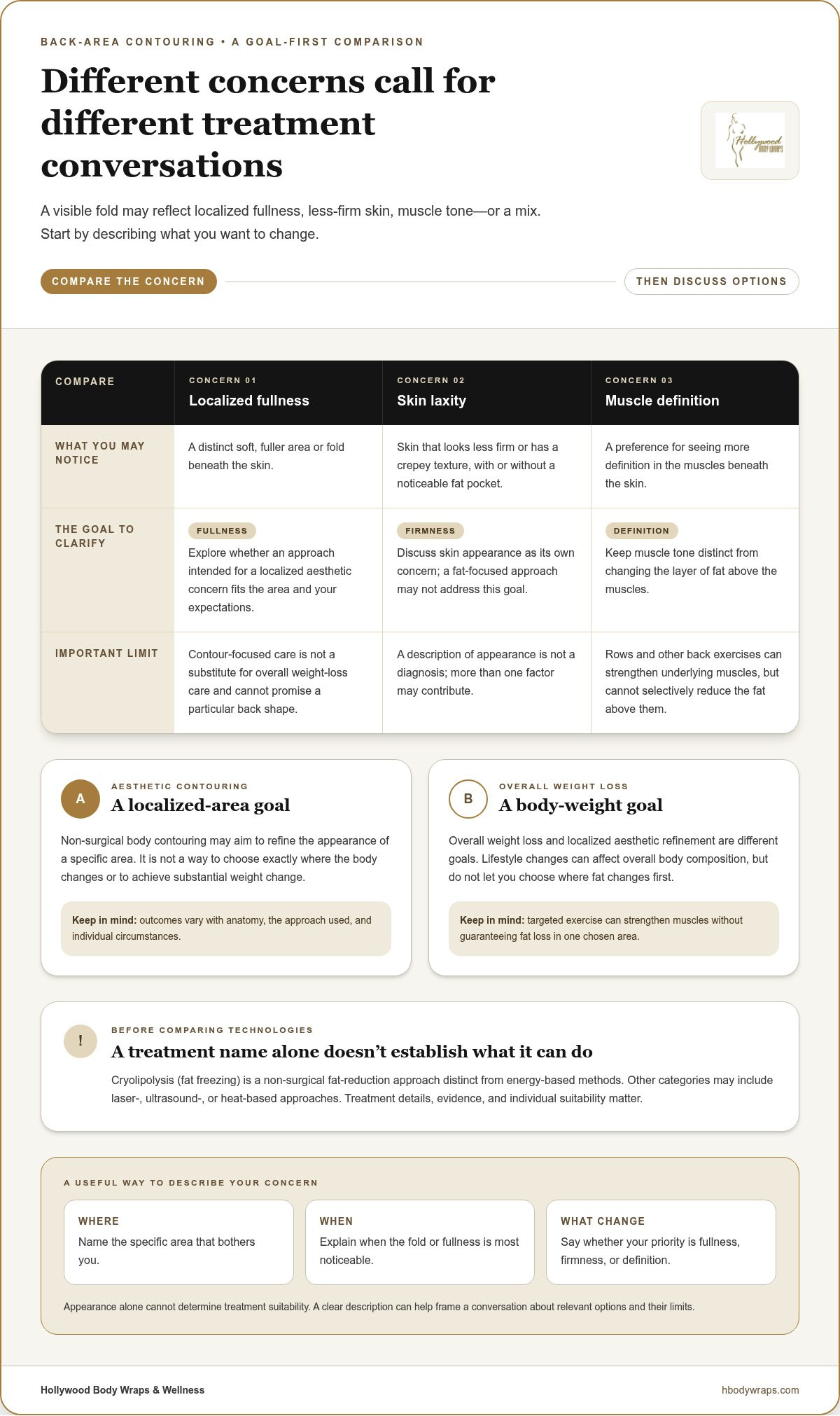
Localized subcutaneous fat sits beneath the skin and may create a soft, fuller area. Loose or crepey-looking skin can appear less firm or finely textured, with or without a noticeable fat pocket. Posture can also affect how folds look as you stand, sit, or move. These descriptions can help you explain what you see, but they aren’t a diagnosis.
Appearance alone can’t determine treatment suitability. Describe the specific area that bothers you, when it’s most noticeable, and what kind of change you want. For example, you might be focused on fullness under the shoulder blades, skin that looks less firm, or how a fold sits beneath clothing. Aesthetic providers such as aqua-tox.co.uk note that having clear details makes it easier to discuss relevant options and their realistic limits during a consultation.
What non-surgical contouring can, and cannot, aim to do
Different treatment categories have different intended uses. Cryolipolysis (fat freezing), for instance, is a non-surgical fat-reduction approach distinct from energy-based methods. Other categories may include laser-, ultrasound-, or heat-based approaches. A technology’s name alone doesn’t establish what it can achieve for a particular person or area. Treatment details, evidence, and individual suitability matter.
Think of contouring as a possible tool for gradual aesthetic refinement, not a shortcut to a different overall body weight. Outcomes vary with anatomy, the approach used, and individual circumstances. No method can promise a particular back shape or precisely control where the body changes. If loose skin is your main concern, a treatment aimed at localized fat may not address your goal.
Localized fat reduction targets a specific aesthetic concern; overall weight loss changes body weight and isn’t the same treatment goal. Keeping that distinction clear helps you compare options without expecting contouring to replace broader weight-management support.
Why Back Fat Can Persist, and What Non-Surgical Treatments Target
Back fullness can persist for reasons that have little to do with effort. Genetics, age, hormones, and overall changes in body composition can influence where fat is stored and where it changes first. Even when overall body composition shifts, the back may not change at the same pace as other areas. That’s why targeted exercise can feel disappointing if you’re hoping for a specific change in the mirror.
Non-surgical contouring approaches focus on localized aesthetic concerns. They aren’t comprehensive weight-management care, and they shouldn’t be presented as a way to choose exactly where fat is lost. Before comparing technologies, separate what you notice about the area from assumptions about what’s causing it.
Why targeted exercise cannot guarantee back-fat loss
Rows and other back exercises can strengthen the muscles beneath the skin and support muscle definition. They can’t selectively reduce the layer of fat above those muscles. Exercise and other lifestyle changes can affect overall body composition, but they don’t let you choose where fat changes first. That’s a limitation of spot-reduction promises, not a sign that you’re exercising incorrectly.
Which tissue concern changes the treatment conversation?
Localized fat, skin laxity, and muscle tone are different concerns, even when they affect the same area. An approach intended for a fat pocket shouldn’t automatically be described as a solution for loose skin or muscle definition. Identifying the concern matters because a treatment can only be judged fairly against the goal it’s intended to address.
For a back-area concern, describe what you notice in practical terms:
- Localized fullness: You’re focused on a distinct pocket or fold and want to explore options aimed at a localized aesthetic concern.
- Skin laxity: The area looks less firm or has a crepey texture, so your goal may differ from reducing fullness.
- Muscle definition: You’re interested in the appearance of the underlying muscles, a different goal from changing the fat layer.
Claims about how a treatment works, its potential effectiveness, and its risks should be supported by current, treatment-specific evidence. A broad label like “laser” or “heat-based” doesn’t establish that every device or protocol works the same way. The best way to lose back fat non-surgical is not a single guaranteed technique, but a considered match between your concern, the approach, and realistic expectations.
If you’re exploring aesthetic options in Tampa, non-invasive body sculpting at Hollywood Body Wraps & Wellness offers a starting point for discussing your goals and available approaches.
Comparing Non-Surgical Back-Fat Treatment Approaches
Technology names can sound similar, but they don’t necessarily target the same concern or work in the same way. For a back-area goal, compare each approach by its intended aesthetic focus, limitations, and the evidence for the specific device and treatment area. That’s more useful than assuming a method is suitable simply because it’s described as non-surgical.
How the main non-surgical modality categories differ
The categories below provide a high-level comparison, not a recommendation. Mechanisms, evidence, and suitability depend on the device and protocol. A category label alone can’t confirm effectiveness for the back or establish that a particular option is appropriate for an individual.
| Treatment category | Intended aesthetic goal | Limitations and evidence to verify |
|---|---|---|
| Cryolipolysis | Localized contouring through controlled cooling approaches. | Review evidence for the specific device, treatment area, expected change, risks, and suitability. Don’t assume results from the category name. |
| Laser-based approaches | May be presented for localized contouring, depending on the technology and protocol. | Understand how the specific device works, what outcome evidence supports, and whether claims apply to the back area. |
| Ultrasound | Uses ultrasound energy in some non-surgical contouring approaches. | Technology and protocols differ. Review device-specific evidence, intended areas, limitations, and risks rather than generalizing across devices. |
| Heat-based approaches | May be used in aesthetic treatments focused on contouring or skin appearance, depending on the device. | Confirm the treatment’s intended goal and evidence for that device. Don’t assume a heat-based approach addresses both localized fat and skin laxity. |
How to compare a treatment with your back-area goal
Start with the change you want: less visible localized fullness, a different skin appearance, or another contouring goal. Then compare the approach’s intended outcome with that concern. Consider what evidence supports the specific technology and treatment area, what limitations apply, and how individual factors may affect results. Keep expectations measured; no category guarantees a particular shape.
Hollywood Body Wraps & Wellness offers non-invasive body sculpting, including lipo laser, cavitation, and Thermasculpt. These offerings shouldn’t be assumed to use the same mechanisms as every laser, ultrasound, or heat-based technology, or to suit every back-area concern. Compare the treatment details with your goal rather than relying on the name alone.
For a broader look at available approaches, explore the Tampa body sculpting guide. It can help you frame questions as you consider which options may align with your goals. The best way to lose back fat non-surgical isn’t a one-size-fits-all label; it’s a realistic, evidence-aware match between the concern and the approach.
How to Decide Whether Non-Surgical Back-Fat Treatment Fits You
A good decision starts with your goal, not a device name. The best way to lose back fat non-surgical depends on what you want to change, the treatment’s intended purpose, and whether its limitations fit your expectations. Non-surgical doesn’t mean risk-free or suitable for everyone. Take time to understand the approach before deciding.
A practical checklist before choosing a treatment
Use this process to clarify your priorities. Specific notes can make an assessment more useful than a general request to “fix” the back area.
- Pinpoint the area and goal. Note whether your concern is near the bra line, beneath the shoulder blades, or around the waist. Describe the visible change you hope for, such as less localized fullness or a different skin appearance, and how the area affects your confidence.
- Separate aesthetic and broader goals. Contouring is intended for localized aesthetic concerns. If your primary goal is overall weight management or you have a medical concern, distinguish that from the appearance change you’re exploring. Body contouring isn’t a substitute for weight-management care.
- Compare purpose and limits. Consider what a treatment category is intended to address, what evidence supports the specific approach, what it may not change, and whether it suits your individual circumstances. Don’t choose based only on a technology label or a promised-looking result.
Questions that clarify expectations and safety
Use the assessment conversation to understand what the approach can realistically aim to change in your specific area. Ask how the outcome is evaluated, what limitations apply, and what information supports claims for the treatment and area being considered. Treatment plans and session needs vary, so don’t assume a standard number or timeline. Ask how those details depend on your goals and the approach.
Discuss relevant health history before aesthetic treatment, including conditions, medications, or other circumstances that may affect suitability. Ask about treatment-specific side effects, contraindications, and aftercare, and request clear information about what to do if an unexpected reaction occurs. Details differ by technology and protocol, so general claims about “non-invasive” treatments aren’t a substitute for understanding the specific approach.
Suitability depends on the treatment, your goals, and your health context. If a proposed result sounds certain or the risks and limitations are vague, pause and seek clearer, treatment-specific information before proceeding. A thoughtful decision may also mean recognizing that a particular aesthetic treatment isn’t right for your concern.
If you’re ready to explore options in Tampa, explore non-invasive body sculpting and use your goals to guide the conversation.
Explore Non-Surgical Body Sculpting for Back Fat in Tampa
Once you’ve clarified your goal and compared treatment categories, a local conversation can help you explore your preferences. Hollywood Body Wraps & Wellness is a Tampa spa established in 2006, offering non-invasive body sculpting options that include lipo laser, cavitation, and Thermasculpt. These are aesthetic approaches to explore, not guaranteed solutions for back fat or overall weight loss.
What to expect when exploring a local body-sculpting option
Bring a clear description of the area you’d like to address and the change you hope to see. For example, explain whether your priority is a specific area of fullness, how clothing fits, or another contouring goal. You can also share what matters to you about the experience, so the conversation considers comfort as well as appearance.
Use the discussion to understand the approach being considered, its intended aesthetic purpose, and its limitations. Suitability and outcomes are individual. No treatment can promise a precise shape, and an approach aimed at one concern may not address another. A measured plan starts with your goals and a clear discussion of what the treatment may and may not aim to do.
A next step for Tampa-area readers
Hollywood Body Wraps & Wellness serves Tampa and nearby communities, including Carrollwood, Lutz, Wesley Chapel, and Westchase. If you’re comparing options, explore lipo laser, cavitation, and Thermasculpt as part of the spa’s non-invasive body sculpting offerings. The best way to lose back fat non-surgical isn’t a guaranteed formula; it’s an informed decision about whether an aesthetic approach fits your concern and expectations.
Keep treatment goals distinct. An inch-loss claim associated with a body wrap shouldn’t be taken as proof of fat reduction or as evidence of the same result as a body-sculpting approach. Mineral inch-loss body wraps are designed to help achieve temporary inch loss, which is different from a claim about fat reduction.
Explore the spa’s Hollywood Body Wraps & Wellness services to learn more and take a thoughtful next step.
Take the Next Step at Your Own Pace
Your next step doesn’t need to be a treatment decision. Note what you’d like to change, what a realistic improvement would look like to you, and what questions you still have. That clarity can make a conversation about aesthetic options more useful and help you decide whether an approach fits your priorities.
The best way to lose back fat non-surgical isn’t a promise of a precise result. It’s a thoughtful choice based on your goals, individual circumstances, and a clear understanding of what a treatment can and can’t aim to do. Take time to compare options and understand relevant considerations before deciding.
When you’re ready to learn more, explore non-invasive body sculpting at Hollywood Body Wraps & Wellness. Start a conversation about your goals and the spa’s body sculpting options.
Frequently Asked Questions
Can exercise target back fat specifically?
No. Exercises such as rows can strengthen back muscles and support muscle definition, but they can’t guarantee fat loss from the area above those muscles. General activity and nutrition choices may influence overall body composition, while where changes appear first varies from person to person. If your back looks different before another area does, that isn’t a sign you’ve exercised incorrectly. Exercise has value, but it can’t precisely sculpt one spot.
Is non-surgical back-fat reduction a weight-loss treatment?
No. Aesthetic body-contouring treatments focus on the appearance of a localized area rather than substantial weight loss. If you’re researching the best way to lose back fat non-surgical, keep that distinction in mind: suitability depends on your goals and circumstances, and results aren’t guaranteed. If broader weight management or a health concern is your priority, that’s different from cosmetic contouring and may call for a separate conversation with an appropriate professional.
How long does it take to see results from non-surgical back-fat treatments?
There isn’t one timeline that applies to every treatment. Timing can vary by category, individual response, and how the outcome is assessed. If you’re tracking a change, use consistent conditions, such as similar posture, lighting, and clothing, so comparisons are more useful. Before deciding, ask about timing claims for the specific approach and look for reliable, current information rather than assuming every modality progresses at the same pace.
Can non-surgical body sculpting help if the main concern is loose skin?
Possibly, but it depends on the treatment and your individual concern. Loose skin and localized fat are different, so an approach focused on fat may not change the skin appearance you’re hoping to address. Consider whether your priority is fullness, firmness, or skin texture, then describe it clearly during an assessment. That conversation can clarify the treatment’s intended purpose without assuming any single non-surgical option reliably tightens skin.
Are non-surgical fat-reduction treatments risk-free?
No. “Non-surgical” doesn’t mean there are no risks. Possible effects and precautions depend on the specific technology and the person receiving treatment, so one device’s safety information shouldn’t be applied to all options. Before an aesthetic treatment in Tampa, discuss treatment-specific risks, contraindications, and aftercare with the appropriate qualified professional. If you have a health concern that could affect your decision, seek medical guidance before proceeding.
What happens if I gain weight after body-contouring treatment?
Your body shape may change with weight changes, and a cosmetic treatment can’t protect against future weight gain or predict where changes will appear. How the treated area looks over time depends on individual circumstances and broader habits. For example, a change in fit around the back or waist may reflect overall body changes, not necessarily a treatment effect. Treat contouring as an aesthetic option, not a weight-management plan or a promise of permanent shape.