
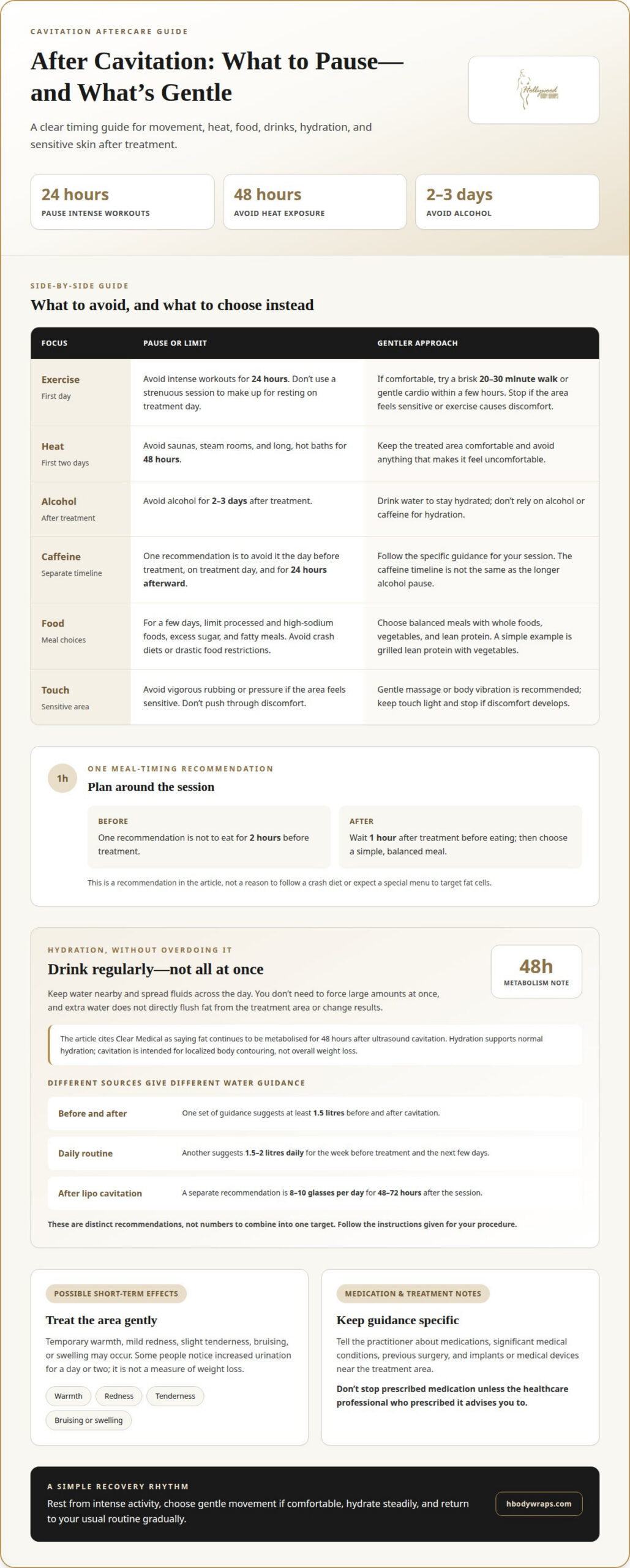
After cavitation, skip intense workouts for 24 hours and avoid saunas and long, hot baths for 48 hours. Knowing what not to do after cavitation treatment also means avoiding alcohol for 2-3 days and following sensible guidance on caffeine, food, and hydration. These simple adjustments can help you plan the hours after your session with confidence.
It’s natural to wonder whether cavitation is painful or safe, and what temporary effects may follow. Warmth, redness, tenderness, bruising, or swelling can occur, so treat the area gently if it feels sensitive. Your comfort and the specific instructions for your treatment matter more than pushing through discomfort.
Here, you’ll find practical guidance on exercise, alcohol, caffeine, and fatty or processed foods, along with the short-term effects you may notice. You’ll also learn how to approach aftercare without turning it into a demanding routine: choose light movement if you feel comfortable, drink water, and return to more intense activity after the initial rest period.
Key Takeaways
- Choose gentle movement if you feel comfortable, and ease back into your usual exercise routine after the initial rest period.
- Keep water nearby and favor balanced meals with whole foods, lean proteins, and vegetables while you recover.
- Plan around alcohol and caffeine guidance, and limit processed foods, excess sugar, and fatty choices after treatment.
- Temporary warmth, redness, tenderness, or increased urination may occur; treat sensitive skin gently and pay attention to how you feel.
1. Exercise after treatment
After ultrasonic cavitation, avoid intense workouts for 24 hours. Give your body a short recovery window rather than adding strenuous exercise immediately. Saunas, steam rooms, and long, hot baths also need a longer pause: avoid them for 48 hours. These are the main activities to avoid after treatment, alongside anything that makes the treated area feel uncomfortable.
Light movement is different. If you feel comfortable, take a brisk 20- to 30-minute walk or try gentle cardio within a few hours. This supports circulation and lymphatic system activity without the intensity of a hard workout. A recommended alternative is about 30 minutes of cardio within a few hours after the session. Stop if the treated area feels sensitive or exercise causes discomfort.
When can you resume intense exercise? After the first 24 hours, you can return to your regular routine if you feel well. Ease back in with a familiar activity, such as your usual walk or moderate workout, before increasing intensity. Treatment frequency and your normal exercise habits can shape how you plan your week, but don’t use a strenuous session to compensate for resting on treatment day.
Diet and exercise work best as steady habits, not a demanding post-treatment challenge. Pair regular movement with a balanced diet, including whole foods, lean proteins, and vegetables. A low-calorie balanced diet is recommended after ultrasonic cavitation; avoid treating exercise as a substitute for balanced meals. Small choices, such as a walk and a simple meal, are easier to maintain than sudden restrictions. For those looking to support their overall mobility and body alignment alongside a healthy routine, clinics like goldenbaychiropracticworks.com.au offer insights into maintaining balanced musculoskeletal health.
Can you get a massage or lymphatic drainage after cavitation, and when? Gentle massage or body vibration is recommended after treatment, but avoid vigorous pressure if the area feels sensitive. Choose gentle touch and stop if discomfort develops. For lymphatic drainage, use the same cautious approach: keep pressure light and avoid rubbing irritated skin.
2. Is Ultrasonic Cavitation Therapy Treatment painful and safe?
Hydration is a practical part of aftercare, but ultrasonic cavitation is not a weight-loss treatment. Drink water after treatment, but don’t expect extra fluids to change your results. Cavitation is intended for localized body contouring, not overall weight loss.
Clear Medical says fat continues to be metabolised for 48 hours after ultrasound cavitation. During this period, keep water available and drink regularly so you stay hydrated. You don’t need to force large amounts at once. A glass with a meal and another between meals can make steady hydration easier to maintain.
Recommendations for before and after a session vary. One set suggests at least 1.5 litres of water before and after cavitation. Another recommends 1.5 to 2 liters daily for the week before treatment, then 1.5 to 2 liters daily for the next few days. Treat these as distinct guidance, not numbers to combine into a single target.
After lipo cavitation, a separate recommendation is 8 to 10 glasses of water per day for 48 to 72 hours after the session. That time frame is longer than the 24-hour period sometimes discussed for other aftercare, so follow the instructions given for your procedure. Water supports normal hydration; it doesn’t directly flush fat from the treatment area.
Some people notice increased urination for a day or two after ultrasonic cavitation. This is a temporary effect, not a measure of weight loss. If you feel thirsty, drink water rather than relying on caffeine or alcohol to hydrate. Keep your routine comfortable and spread fluids across the day.
3. Post-treatment alcohol, caffeine, and fatty-food guidance
After cavitation, avoid alcohol for 2-3 days following treatments. Excessive alcohol immediately after a session can also work against a steady recovery routine. For caffeine, one recommendation is to avoid it the day before treatment, on treatment day, and for 24 hours afterward. These are separate timelines: the longer alcohol pause doesn’t automatically apply to caffeine.
You can eat normally after cavitation, but choose balanced meals rather than following a crash diet. A low-fat, low-starch, low-sugar approach is recommended, with whole foods such as vegetables and lean protein. For a few days, limit processed and high-sodium foods, excess sugar, and fatty meals. Cavitation is non-surgical body contouring, not a reason to drastically restrict food or expect diet alone to remove stubborn fat.
Plan your meal around the procedure, too. One recommendation is not to eat for 2 hours before treatment and for 1 hour afterward. Once that post-session period has passed, choose a simple meal, such as grilled lean protein with vegetables, and continue drinking water. The goal is a sustainable routine, not a special menu that targets fat cells.
Medication guidance is different from food guidance. Don’t stop prescribed medication unless the healthcare professional who prescribed it advises you to do so. Before treatment, tell the practitioner about medications, significant medical conditions, previous surgery, and implants or medical devices near the treatment area. There isn’t a blanket instruction here to stop supplements; avoid making medication changes on your own.
Keep the advice specific to the procedure you’re receiving. Radio frequency and ultrasonic cavitation are different treatment modalities, so don’t assume one set of food or drink instructions applies to both. Follow the aftercare guidance provided for your session, especially the alcohol and caffeine timelines, and return to your usual balanced diet without excessive restrictions.
4. Possible short-term post-treatment effects
A session of ultrasonic cavitation may leave temporary warmth, mild redness, or slight tenderness around the treatment area. These effects can make skin feel sensitive, so handle it gently and avoid vigorous rubbing. Clear Medical says mild redness and tenderness should normally resolve within 48 hours. That short-term response differs from a lasting skin change.
Some people may notice a high-pitched buzzing or ringing during treatment, and it should stop when the applicator is switched off. Residual buzzing or ringing can continue for up to 24 hours after a session. Mild redness or excessive thirst may occur rarely and resolve within a few hours. Note when a symptom appears and whether it eases.
How should you manage minor effects? Wash the area gently with mild soap and use cooler or tepid water rather than hot water. If your skin feels sensitive, choose loose, comfortable clothing and don’t pick, scratch, or vigorously rub it. Gentle care can help avoid further irritation.
What warning signs after cavitation require medical attention? Seek medical attention for symptoms that are severe, worsening, or do not settle within the expected period, rather than treating them as routine redness or tenderness. In particular, contact a medical professional if pain or a skin reaction becomes more pronounced instead of easing.
Cavitation is a non-invasive contouring treatment, not a way to guarantee a particular reduction in stubborn fat or cellulite. Results can take 6 to 12 weeks to appear after the treatment series is complete, so don’t judge an outcome by temporary redness after one session. For body-contouring goals, explore non-invasive cellulite treatment as a separate option to discuss in your care plan.
Hollywood Body Wraps & Wellness: Non invasive Cellulite Treatment
Hollywood Body Wraps & Wellness offers Non invasive Cellulite Treatment as a body-contouring option for people exploring care for cellulite. After learning what to expect from cavitation aftercare, you may consider this service if cellulite is also part of your body-care goals. It’s a separate non-invasive treatment, not a substitute for cavitation aftercare or medical attention for concerning symptoms.
Choose a treatment based on your goal: cellulite care is different from managing short-term sensitivity after a session. Hollywood Body Wraps & Wellness also offers mineral inch loss body wraps, facials, and a non-invasive facial lift.
For a personal discussion about non-invasive cellulite treatment, contact Hollywood Body Wraps & Wellness in Tampa.
Make Your Next Step Feel Personal
Aftercare works best as a manageable routine, not a set of rules that takes over your day. Pay attention to how your body responds and what you want to address next. If you’re considering another aesthetic treatment, discussing your goals can help you understand which option fits your priorities and how it differs from cavitation.
Knowing what not to do after cavitation treatment is useful, but your longer-term plan is personal too. Choose a next step that supports your goals without expecting one treatment to do everything.
For a thoughtful conversation about your goals and available treatments, contact Hollywood Body Wraps & Wellness. Take the next step at your own pace, with a plan that feels right for you.
Frequently Asked Questions
Is Ultrasonic Cavitation Therapy Treatment painful and safe?
Ultrasonic cavitation is non-surgical, but sensations and temporary effects can vary. Warmth, redness, tenderness, bruising, or swelling may occur; swelling can last up to a week. Some people notice increased urination for a day or two. The treatment isn’t suitable for everyone, so health conditions, medications, and implanted devices should be discussed before a session.
How much time is needed between two sessions?
The appropriate interval can vary by treatment plan and the area being treated, so confirm timing before scheduling another session. The interval can depend on the treatment plan and the area being treated, so don’t schedule sessions closer together on your own. A steady schedule also gives time to observe how the treated area responds before the next appointment.
Can I lose weight with Ultrasonic Cavitation?
No. Ultrasonic cavitation is for localized body contouring, not weight loss. It targets a specific treatment area rather than reducing overall body weight. If your goal is weight management, cavitation alone isn’t the right approach; distinguish that goal from contouring a particular area.
Is Ultrasonic Cavitation Suitable for Everyone?
No. It isn’t suitable for people under 18, pregnant individuals, people with pacemakers, or those with kidney, liver, or heart disease. It also isn’t suitable when the skinfold at the treatment area is under 2 cm. Share relevant health information and implanted devices before treatment, so suitability can be assessed against these restrictions.
How much water should you drink after cavitation treatment?
Recommendations vary: one suggests 1.5 to 2 liters of water daily for the next few days, while lipo cavitation guidance suggests 8 to 10 glasses per day for 48 to 72 hours. These are different recommendations, not amounts to add together. Sip water throughout the day and follow the guidance provided for your specific treatment.
How soon can you exercise after cavitation?
Light activity, such as walking, is an option if you feel comfortable after treatment. Wait 24 hours before returning to intense exercise, then ease back into your usual routine. Knowing what not to do after cavitation treatment includes avoiding a strenuous workout during that initial rest period. If movement makes the treated area uncomfortable, stop and let it settle. For those who experience lingering body aches or tension when returning to physical activity, consulting wellness professionals like Vitalité Chiropractic can provide guidance on gentle movement and pain relief.