
What if a stalled number on the scale is a signal to review your plan, not a reason to abandon it? If you’re focused on overcoming a weight loss plateau in Tampa, it’s understandable to feel frustrated when your effort no longer shows up as visible progress. But short-term fluctuations and a sustained stall aren’t always the same thing.
Before changing your diet, adding treatments, or deciding nothing is working, take a clear look at your progress and routine. This guide covers common reasons weight loss can slow, what to review before adjusting your approach, and how to compare lifestyle changes, medical weight-management options, and aesthetic support in Tampa, Carrollwood, Lutz, Wesley Chapel, and Westchase.
You’ll also learn why body contouring and inch-loss services have different goals from a medical weight-management plan. Options such as semaglutide or tirzepatide may be worth discussing with an appropriately qualified provider, while non-invasive services may be relevant to aesthetic goals. A thoughtful next step starts with understanding what each option can and can’t do for you.
Key Takeaways
- A slower scale trend doesn’t automatically mean you’ve failed; learn how to tell a sustained stall from everyday weight fluctuations.
- Use a calm, structured review of your routine and health context before deciding what to adjust. Tracking is optional, not a measure of effort.
- When overcoming a weight loss plateau in Tampa, compare support options by their purpose, limitations, and the professional guidance they involve.
- Choose one realistic next step, then give yourself a clear way to reassess rather than changing several parts of your plan at once.
- Explore medication-assisted weight management separately from aesthetic services such as body sculpting and wraps, which aren’t substitutes for a medical plan.
Why weight loss can plateau in Tampa, and what a stall does and does not mean
A slower scale trend can happen, and it doesn’t mean you’ve failed. If you’re focused on overcoming a weight loss plateau in Tampa, first separate a lasting change in the trend from normal day-to-day changes in body weight. Hydration, digestion, meals, activity, and when you weigh yourself can all affect a single reading. One higher number doesn’t prove fat gain, just as one lower number doesn’t confirm lasting progress.
In practical terms, a weight-loss plateau is a sustained period when a downward weight trend becomes relatively stable; the plateau principle describes how a changing measure can level off over time. There’s no universal number of days or weeks that defines a plateau for everyone. Context matters, including your starting point, routine, health, and how consistently you measure.
How to tell a genuine plateau from normal weight fluctuation
Look for a pattern, not a single weigh-in. If weighing is useful and comfortable for you, use the same scale under similar conditions, such as at the same time of day and in similar clothing. Compare readings over time rather than reacting to each one. You can also use how clothing fits or other measures of progress, if those feel more helpful. Tracking is optional, not a test of discipline.
A brief jump after a salty meal, a change in digestion, or a different weigh-in time can obscure longer-term progress without showing that you’ve gained body fat. If regular weighing creates stress, step back and ask a health professional about other ways to assess progress.
Why progress may slow even when your routine feels unchanged
As body size changes, the energy your body uses can change too. Daily activity, food intake, sleep, and small shifts in routine may also influence the longer-term trend. Even familiar habits can become less consistent over time without it being obvious. These are possibilities to review, not proof that you’ve done anything wrong.
Adaptation may contribute: the body can respond to weight loss in ways that make continued loss slower. But it isn’t a diagnosis or a guaranteed explanation for every stall. Before making major changes, consider what has actually shifted in your routine and health context. If weight changes are unexplained, you have concerning symptoms, or you’re managing a complex health condition or medication, seek advice from a qualified medical professional.
Review your weight-loss plan before changing it in Tampa
Before you cut more food or add demanding workouts, pause and review what your plan looks like in everyday life. A calm check can reveal a manageable adjustment, or show that it’s time to ask for individualized guidance. The Mayo Clinic’s advice on getting past the plateau also emphasizes reviewing habits and progress rather than reacting to one discouraging weigh-in.
Start with three steps: review your weight trend, note any recent routine changes, then look at your food patterns. From there, consider activity, sleep, stress, and relevant health context, in whichever order feels easiest to assess.
- Trend: Use the approach that feels comfortable, whether that’s occasional weigh-ins, a clothing-fit check, or another consistent measure. No single measure tells the whole story.
- Routine: Think about changes in schedule, meals, movement, travel, or other daily patterns. This is an observation, not a test of whether you’ve tried hard enough.
- Food patterns: If useful, note meal timing, portions, drinks, and how often routines differ from your intentions. A food log is optional; it should support insight, not create guilt.
- Activity: Consider both planned exercise and everyday movement, such as walking or time spent sitting. Choose changes that fit your ability and schedule.
- Sleep and stress: Notice whether rest or stress has changed. These can affect how manageable routines feel, so consider them alongside food and activity.
- Health context: List relevant conditions, symptoms, and medications, including any recent changes. Share these with a qualified healthcare professional when they may affect your plan.
Which habits and progress measures are worth checking first?
Look for practical patterns without assuming your memory is inaccurate or your effort is lacking. A brief note about routines may help you spot a change, but tracking isn’t required. Clothing fit, energy, or strength can offer useful personal context, though none can diagnose a health condition. If medication, a medical condition, or new symptoms may be involved, get professional advice before adjusting your approach.
When should you seek professional guidance?
Ask a clinician for help if the stall persists and concerns you, you have questions about medication, or a health-related barrier makes your current plan difficult. A plateau alone can’t identify a hormonal, metabolic, or other condition. Guidance should account for your health history, current treatment, and goals.
Avoid extreme restriction or suddenly increasing exercise as default fixes. These changes may be difficult to sustain and may not suit your health or fitness level. If you’re exploring local wellness or aesthetic services alongside your plan, review Tampa wellness and aesthetic options with a clear understanding of their purpose.
Compare weight-management support and body contouring in Tampa
These options serve different goals, so the right comparison starts with what you want help with. Clinician-led weight management focuses on health and weight-related goals, while non-invasive body sculpting and wraps are aesthetic services. Neither is a universal answer to a plateau. If you’re considering overcoming a weight loss plateau in Tampa, use the questions below to understand each option’s purpose, limits, and appropriate professional guidance.
| Option | Goal | Questions to ask | Limitations and who to consult |
|---|---|---|---|
| Lifestyle support | Review eating, activity, sleep, and other habits in a way that fits your life and health needs. | What kind of support is included? How will the plan be adapted to my routine and progress? | It may not address every health-related barrier. Ask a qualified healthcare professional for individualized guidance. |
| Medication-assisted weight management | Consider whether prescription treatment may be appropriate as part of a broader weight-management plan. | Who assesses eligibility and prescribes the medication? What screening, follow-up, risks, and costs apply? | Semaglutide and tirzepatide aren’t suitable for everyone, and availability and clinical oversight vary. Discuss them with a qualified prescribing clinician who can review your health history and current treatment. |
| Non-invasive body sculpting | Address selected appearance or contouring goals. | What changes can this specific service reasonably address, and what outcomes should I not expect? | It isn’t a treatment for obesity or a replacement for medical weight management. Discuss the service’s suitability and limitations with its provider. |
| Mineral inch loss body wraps | Offer temporary inch loss as an aesthetic goal. | How temporary may the change be, and how is it measured? | Temporary inch loss isn’t the same as body-weight reduction or permanent fat loss. Ask the provider to explain realistic expectations. |
What weight-management support may involve
Lifestyle-based support and medication-assisted care are distinct approaches, and a person’s needs may call for one, both, or neither. A clinician can assess whether medication is appropriate, explain potential risks and benefits, and clarify what monitoring is involved. Don’t assume a medication is suitable simply because it’s offered locally. Before enrolling in a program, confirm who provides clinical oversight and what the process includes.
Where body sculpting and wraps fit, and where they do not
Body contouring may align with a specific appearance goal, but it doesn’t diagnose or resolve why weight loss has slowed. Wraps may provide temporary inch loss; that measurement doesn’t establish a change in body weight. For more detail, explore a Tampa body sculpting guide or a Tampa mineral inch loss body wraps guide. Treat both as aesthetic information, not substitutes for clinician-led weight-management advice.
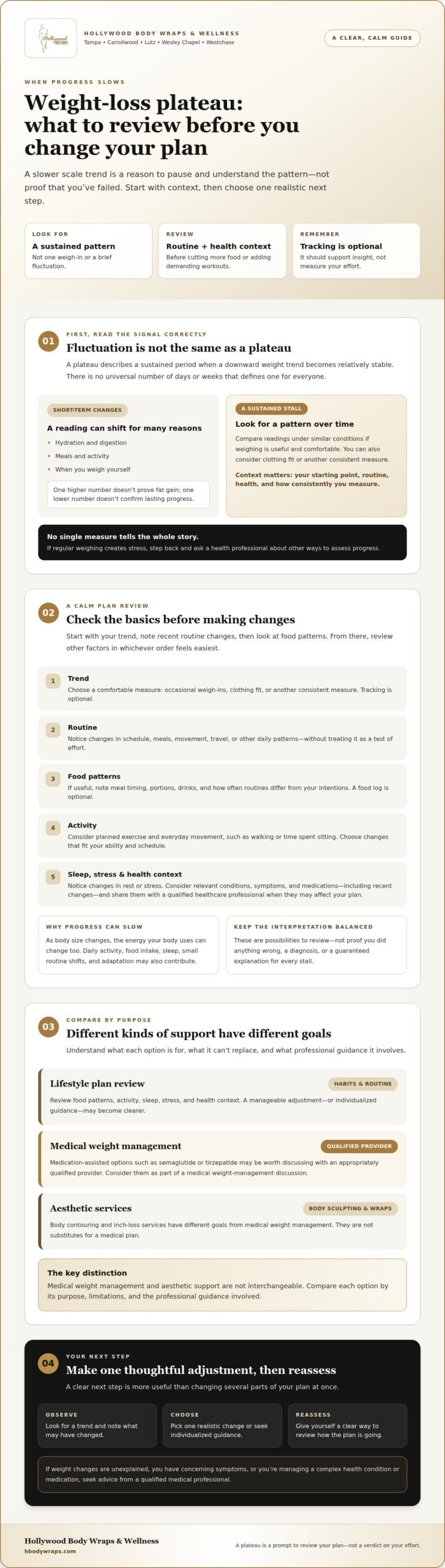
A practical next-step checklist for a weight-loss plateau
A simple sequence can turn frustration into a clear next move. Use this checklist as a guide, not a test you have to pass. For anyone working on overcoming a weight loss plateau in Tampa, the goal is to understand your pattern and choose a safe, manageable next step.
- Review the trend. Look at consistent measurements over time rather than a single reading. If weighing doesn’t feel helpful, consider another progress measure that suits you.
- Note routine changes. Jot down relevant shifts in meals, activity, sleep, stress, schedule, medication, or health. Keep it factual and brief.
- Choose one realistic adjustment. Pick a small change you can sustain, such as planning a regular walk or making meals easier to follow. Avoid extreme restriction or sudden, demanding workouts.
- Reassess with guidance. Agree with a qualified professional on when and how to review progress. Stick to the measures you’ve agreed on, and don’t change prescribed treatment without consulting the prescriber.
Questions to bring to a weight-management consultation
Arrive with a short list of questions and a summary of relevant health information. Ask who evaluates your suitability for a recommended program, who oversees care, and who explains potential risks and alternatives. Find out how progress is monitored and what follow-up or support is included. Share your medications, health conditions, symptoms, and previous treatment experiences so advice can reflect your individual history.
How to set a realistic review point
There isn’t one review timeframe that fits everyone. Ask a qualified healthcare professional when to reassess based on your health history and current plan. Agree on which measures to review, then use them consistently. If symptoms feel urgent, seek urgent medical care; a spa visit or consultation isn’t emergency care.
Readers comparing options around Tampa, including Carrollwood, Lutz, Wesley Chapel, and Westchase, can use these same questions to clarify what each provider offers and who is responsible for clinical decisions. Hollywood Body Wraps & Wellness is a Tampa spa established in 2006, with medication-assisted weight-management programs and aesthetic services among its offerings. Confirm current program details and clinical oversight before considering any medication-assisted option.
Once you’ve clarified your goals, explore Tampa wellness and aesthetic options and ask how each service fits, or doesn’t fit, with your plan.
Explore weight-management and wellness options with a Tampa provider
Once you’ve clarified your goals, a local provider can help you understand which available services may be relevant. Hollywood Body Wraps & Wellness is a Tampa spa established in 2006. Its offerings include semaglutide/tirzepatide weight-management programs, non-invasive body sculpting, and mineral inch loss body wraps. These are options to explore, not guaranteed solutions for a plateau.
What to clarify before exploring a local program
Before considering a medication-assisted program, ask who evaluates eligibility and provides clinical oversight. Confirm how the process works, what screening and follow-up are included, and how potential risks and alternatives are explained. You can also ask what information to bring about your medical history, current medications, and previous treatment experiences.
These questions help you make an informed decision without assuming a program is appropriate for you. Verify current arrangements directly with the provider, including who handles clinical decisions. A spa is not a substitute for general medical care or emergency services; seek an appropriately qualified healthcare professional for health concerns, and urgent care for emergencies.
Choose support that matches your goal
If your concern is weight, health, or medication, discuss next steps with a qualified healthcare professional who can consider your circumstances and current treatment. Semaglutide and tirzepatide are not right for everyone, and a plateau alone doesn’t establish whether either medication is appropriate.
If your goal is aesthetic, non-invasive body sculpting may be an option to ask about. Mineral inch loss body wraps are intended for temporary inch loss, not permanent weight loss. Neither should be presented as a treatment for obesity or as a substitute for medical weight management. Ask the provider to explain the purpose and limitations of any service before deciding.
Taking time to match an option to your goal can make the next step feel clearer. Contact Hollywood Body Wraps & Wellness to ask which services are currently available, how they work, what suitability questions to consider, and when guidance from a healthcare professional or referral may be appropriate.
Take your next step with a clear, supportive plan
A plateau doesn’t automatically mean your effort has stopped paying off. Review your progress over time, consider changes in your routine, and choose a realistic adjustment before making major changes. If progress remains a concern, a qualified healthcare professional can help assess health factors and discuss whether medical weight-management support is appropriate.
For anyone exploring overcoming a weight loss plateau in Tampa, it’s also helpful to distinguish health-focused care from aesthetic services. Hollywood Body Wraps & Wellness, established in Tampa in 2006, offers medication-assisted weight-management programs and non-invasive aesthetic services. Each option has a different purpose, and no service can be assumed to resolve every plateau. Ask about suitability, clinical oversight, process, and limitations before deciding.
Ready to explore local options that may fit your goals? Explore wellness and aesthetic options at Hollywood Body Wraps & Wellness, and bring your questions so you can take your next step with clarity. Progress can look different for everyone, and a thoughtful plan is a strong place to begin.
Frequently Asked Questions
Is a weight-loss plateau normal?
Yes. Weight-loss progress can slow or pause, and that doesn’t automatically mean you’ve failed or gained body fat. Daily readings can shift with hydration, digestion, meals, and weigh-in timing. Look at measurements taken under consistent conditions over time rather than reacting to one number. If the change concerns you or comes with symptoms, discuss it with a healthcare professional.
How long does a weight-loss plateau usually last?
There’s no single timeframe that defines a plateau for everyone. Short-term scale fluctuations can hide a longer-term trend, so review consistent measurements over time before deciding progress has stopped. Your health, routine, and weight-management approach all matter. If the pattern persists or leaves you unsure what to do next, ask a qualified healthcare professional when to reassess and which measures are appropriate for you.
What should I do first when my weight loss stalls?
Start by reviewing your trend and noting any recent changes to your routine before making a major adjustment. Consider food patterns, activity, sleep, stress, medications, and relevant health context. Tracking is optional; a few brief notes may help you notice patterns without judging your effort. For overcoming a weight loss plateau in Tampa, choose one realistic change at a time and seek professional guidance if health factors may be involved.
Can semaglutide or tirzepatide help with a weight-loss plateau?
They may be considered as part of medication-assisted weight management for some people, but neither is appropriate for everyone or guaranteed to resolve a plateau. A qualified prescribing clinician should assess your health history, current medications, potential risks, and alternatives before recommending treatment. If you’re considering a local program, ask who evaluates eligibility, provides clinical oversight, and manages follow-up. Don’t start, stop, or change medication without guidance from your prescriber.
Do body wraps or body sculpting treatments break a weight-loss plateau?
No. Body wraps and non-invasive body sculpting are aesthetic services, not medical treatments for a weight-loss plateau. Mineral inch loss body wraps may offer temporary inch loss, which isn’t the same as body-weight reduction or permanent fat loss. If your goal is weight or health management, discuss next steps with a qualified healthcare professional. Consider aesthetic services separately, with clear expectations about their purpose and limitations.
When should I talk to a healthcare professional about a weight-loss plateau?
Speak with a healthcare professional if the stall persists and concerns you, if you have questions about medication, or if symptoms or a medical condition may affect your plan. A plateau alone can’t diagnose a hormonal, metabolic, or other health issue. Bring your medication list, relevant health history, and notes about recent changes. Seek urgent medical care for urgent symptoms rather than contacting a spa for emergency help.
Can I explore weight-management support in Tampa if I live in Carrollwood or Wesley Chapel?
Yes. Hollywood Body Wraps & Wellness is a Tampa spa established in 2006, with local coverage that includes Carrollwood, Wesley Chapel, Lutz, and Westchase. Its offerings include medication-assisted weight-management programs and non-invasive aesthetic services. Before considering a program, confirm current availability, who provides clinical oversight, and what follow-up is included. For health or medication questions, consult an appropriately qualified healthcare professional who can assess your individual needs.