
What if the best body-wrap schedule isn’t the most frequent one? If you’re asking how often should you get a body wrap, the answer depends on the type of wrap, your goals, the provider’s protocol, and how your skin responds. It’s understandable to want a clear number, especially when online advice recommends very different schedules. But more sessions don’t automatically mean better results. Repeating a treatment before you know how you tolerate it may also lead to discomfort or irritation.
This guide explains what can influence treatment frequency, what to note after a session, and when to ask a provider for guidance before rebooking. You’ll also find practical questions to ask before committing to a series, so you can understand the wrap’s ingredients, application, purpose, and recommended intervals rather than relying on a one-size-fits-all calendar. Hollywood Body Wraps & Wellness serves the Tampa area and offers mineral inch-loss wraps intended to support temporary inch loss. Confirm the spa’s current protocol and any client-specific guidance directly before planning repeat visits.
Key Takeaways
- To decide how often should you get a body wrap, ask about the specific treatment, including its ingredients, application, purpose, and provider-recommended intervals.
- Frequent sessions don’t guarantee better or lasting results. Pause and reassess if irritation or discomfort persists.
- Before rebooking, clarify your goal, learn the wrap protocol, and consider how you felt during and after the session.
- Track your comfort and take measurements consistently so you can review your experience with the provider instead of relying on impressions alone.
How often should you get a body wrap? Start with the type of treatment
There isn’t one schedule that fits every body wrap. How often should you get a body wrap depends on the treatment, the provider’s protocol, your goal, and how you respond. Frequency means the time between sessions, considered in light of those factors. Rather than applying a general interval to every product or person, ask the provider about the specific wrap you’re considering before planning repeat visits.
The term “body wrap” can describe different treatments and materials. For a general overview of what a body wrap is and some of its forms, see Wikipedia. The label alone doesn’t tell you what a particular service involves or how often it may be appropriate. Ask what materials are used, how they’re applied, and what outcome the treatment is intended to support.
What does a body-wrap session involve?
In general, a body wrap involves applying wrap materials to the body or selected areas. The materials and method can vary, so ask the provider to describe the steps for its service. Don’t assume that every wrap uses the same ingredients or follows the same process.
Hollywood Body Wraps & Wellness offers mineral inch-loss wraps intended to support temporary inch loss. A short-term change in measurements isn’t the same as lasting fat loss, weight management, or a change in overall health. A wrap shouldn’t be treated as a medical treatment.
Why is there no universal body-wrap schedule?
Products, application methods, goals, and provider protocols differ. A schedule for one type of wrap may not suit another. Your comfort and skin response also matter when considering a repeat session. That’s why broad online recommendations may not answer what’s appropriate for the treatment you’re asking about.
Before booking a series, ask Hollywood Body Wraps & Wellness to confirm its current protocol and recommended intervals. Don’t assume that a schedule from another provider applies to this service. More frequent sessions don’t automatically produce better or longer-lasting results. Follow the guidance for the specific wrap and reassess if you experience persistent irritation or discomfort.
What affects how often you should get a body wrap?
The right interval depends on more than the calendar. The ingredients used, how they’re applied, the purpose of the wrap, and your comfort can all shape provider guidance. The question “how often should you get a body wrap” is best discussed in relation to the specific treatment, rather than answered with a schedule that assumes all wraps are alike.
Before booking again, ask what materials the wrap uses, what the application involves, and what outcome it’s designed to support. A mineral wrap intended for a temporary change in measurements may have a different purpose from a wrap intended to leave skin feeling softer or more hydrated. Ask the provider to explain the service and its protocol, then consider that information alongside your own response. If a session leaves you uncomfortable, don’t push through just to keep to a planned series.
Does your body-wrap goal change the schedule?
Your goal can help you ask more specific questions. If you’re seeking a temporary appearance or measurement change, clarify how the wrap is intended to support that short-term outcome. Healthline describes the reported effect as temporary water weight loss, not lasting fat loss. A body wrap shouldn’t be presented as a substitute for medical care or sustained lifestyle changes. Ask the provider what the specific wrap is designed to do, what results are realistic, and what it can’t promise.
How should skin comfort and personal circumstances guide timing?
Pay attention to how you feel during and after a session. Before rebooking, tell the provider about persistent irritation, unusual discomfort, or another reaction that concerns you. Share relevant sensitivities, allergies, skin concerns, and health circumstances so the provider can explain its service and any screening guidance. Don’t assume every wrap uses the same ingredients or has the same considerations.
Pregnancy, a skin condition, an allergy, or another health concern may affect whether you choose to proceed. The provider can explain its service and screening guidance, but that doesn’t replace advice from a qualified clinician. If you’re unsure how a treatment may relate to a health condition, or whether a symptom needs attention, consult a qualified clinician before deciding on timing.
Before arranging another session, ask Hollywood Body Wraps & Wellness about the current protocol for its mineral inch-loss wraps and any client-specific guidance. You can learn about the body-wrap service and confirm those details directly. A clear conversation helps you make a considered choice without assuming that more frequent visits mean better results.
Can you get body wraps too often? Signs to pause and reassess
Repeating a body wrap before you understand your response may not be the right choice. A tighter schedule doesn’t guarantee better or permanent results. Let your experience, the provider’s protocol, and realistic expectations guide whether to book again. Don’t assume that additional sessions will create a lasting change.
Pause and reassess if you notice persistent skin irritation, unusual discomfort during or after a session, or another reaction that concerns you. These signs don’t identify a cause, but they are a reason not to automatically proceed with another appointment. Tell the provider what happened and ask about the wrap’s ingredients and protocol before considering a return.
What should you do if your skin reacts after a wrap?
Stop further sessions until the reaction has resolved and you’ve consulted the provider. If symptoms are severe, persistent, or worsening, seek prompt medical advice. A provider can explain details of the service, but shouldn’t be expected to diagnose a reaction. Don’t rebook simply because you planned a series. Your comfort and wellbeing take priority.
If you’re unsure whether a symptom needs medical attention, contact a qualified healthcare professional. Avoid treating a concerning reaction as a normal part of the process or assuming that everyone responds in the same way.
Are frequent body wraps a shortcut to lasting weight loss?
No. Hollywood Body Wraps & Wellness describes its mineral inch-loss wraps as intended to support temporary inch loss. A short-term change in measurements isn’t proof of fat loss or lasting weight change, and a cosmetic effect shouldn’t be confused with a medical outcome. More frequent appointments don’t turn a temporary result into permanent weight loss.
If your goal is broader weight management, discuss it with an appropriately qualified healthcare professional. A body wrap shouldn’t be treated as a substitute for medical care or sustained lifestyle changes. Before scheduling another session, ask what results the specific wrap is designed to support, how the provider recommends spacing sessions, and what signs should prompt you to pause. If irritation or discomfort continues, wait for guidance rather than trying to maintain a particular appointment rhythm.
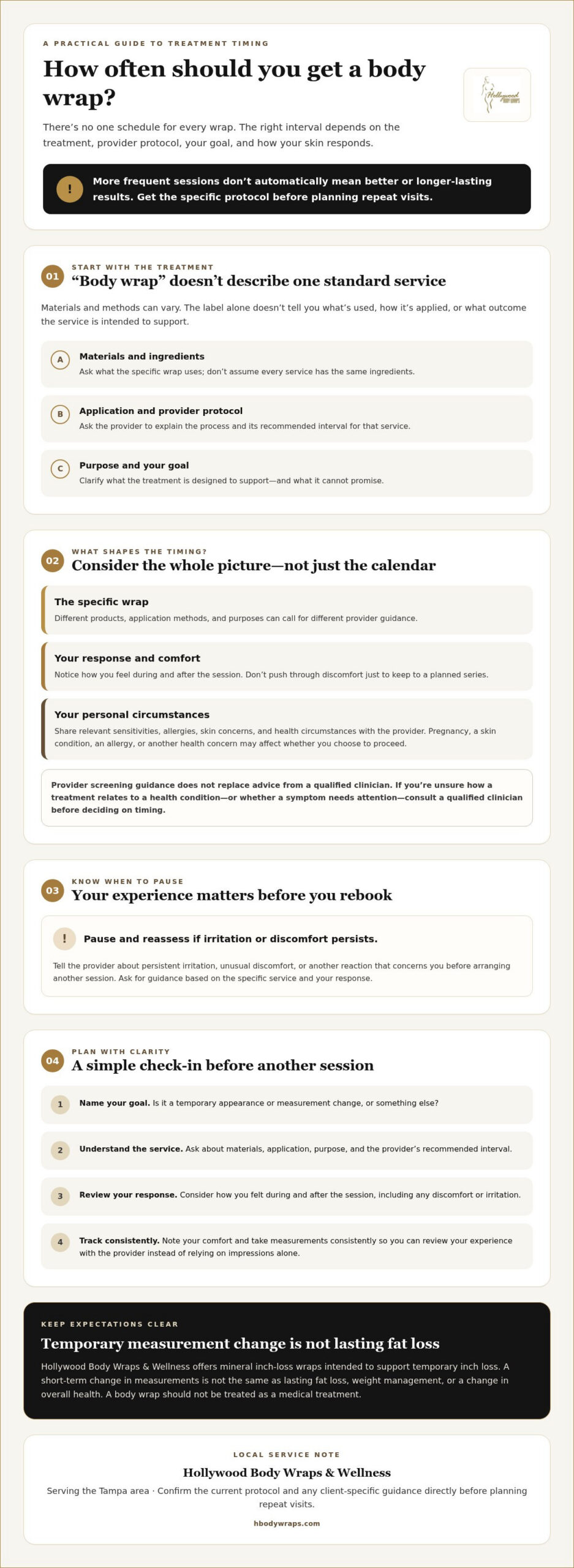
How to plan body-wrap sessions and evaluate your experience
A thoughtful plan makes it easier to decide whether another session fits your goal and comfort level. Use a simple sequence: clarify what you want from the wrap, ask about the current protocol, note how you respond, then decide whether to rebook. You don’t need to commit to a series before you understand the service and its recommended timing.
What should you ask a body-wrap provider before booking?
Bring practical questions to the conversation. The answers can help you understand what’s being offered and what to expect, without relying on general advice that may not match this particular wrap.
- Which wrap is used? Ask about its ingredients and how it’s applied.
- What is the session intended to do? Clarify which outcomes are realistic and which changes may be temporary.
- What does the current protocol recommend? Ask how long to wait before another session and what factors might change that guidance.
- What should I expect during and after the session? Find out what sensations or responses to report and when to contact the provider.
- What information should I share first? Mention relevant allergies, skin sensitivities, previous reactions, and health circumstances.
For details about mineral inch-loss wraps, the article Mineral Inch Loss Body Wraps in Tampa: The Complete 2026 Buying Guide can offer useful service context. Confirm current treatment details and scheduling guidance directly with the provider, since protocols can vary.
How can you track results without overinterpreting them?
If you choose to take measurements, keep the conditions consistent. Use the same measuring point and method each time, and compare readings in a similar context rather than reacting to every small fluctuation. Short-term variation can happen, so one measurement shouldn’t determine whether to book another session.
Track how you felt, too. Make a brief note about comfort during the session, your skin’s response afterward, and any concerns. That gives you a fuller picture than appearance alone. Temporary inch changes aren’t proof of fat loss or a lasting result. Consider your whole experience alongside the provider’s explanation of what the wrap can realistically support.
Still deciding how often should you get a body wrap? Ask Hollywood Body Wraps & Wellness to confirm its current wrap protocol and recommended intervals before planning your next visit. Ask about the body-wrap protocol and use the answers to make an informed decision at a pace that feels right for you.
Getting personalized body-wrap frequency guidance in Tampa
For clients in Tampa and nearby communities, speaking with the provider can clarify how a wrap is intended to work and what schedule its current protocol recommends. Hollywood Body Wraps & Wellness offers mineral inch-loss body wraps intended to support temporary inch loss. Confirm the spa’s current guidance directly. Its service information can help you identify the treatment you’re asking about, but it doesn’t establish a schedule for every client.
What can Tampa-area clients clarify before scheduling?
Bring specific questions so you can decide based on the service, not a schedule you found online. Ask the spa:
- What session interval does the current protocol recommend, and why?
- What does temporary inch loss mean for this particular wrap, and what results should you not expect?
- Could a disclosed sensitivity, skin concern, or personal circumstance mean postponing treatment?
Share relevant details openly. The spa can explain its wrap protocol and any client-specific guidance it uses, but that conversation isn’t a guaranteed personalized medical assessment. If you’re unsure whether the treatment is suitable for a health-related reason, seek advice from a qualified healthcare professional.
When should you seek guidance beyond a spa consultation?
Contact a qualified healthcare professional for medical concerns, persistent symptoms, or questions about whether a body wrap is appropriate given your health circumstances. Hollywood Body Wraps & Wellness offers aesthetic and wellness services, not general medical care. A spa discussion can clarify the treatment and its scheduling protocol, but it doesn’t replace clinical advice.
So, how often should you get a body wrap? Let the specific treatment, your response, and informed provider guidance shape the decision instead of following a universal calendar. To learn more, ask Hollywood Body Wraps & Wellness about body wraps and confirm its current recommendations for mineral inch-loss wraps.
Choose a body-wrap schedule with confidence
There’s no single calendar that answers how often should you get a body wrap. The right timing depends on the specific treatment, its provider protocol, your goal, and how your skin responds. Ask about the wrap’s intended results and recommended intervals before booking a series. Pause if you experience persistent irritation or discomfort.
Keep expectations grounded, too. A temporary change in measurements isn’t proof of lasting fat loss or a broader health benefit. Tracking your comfort and measurements consistently can help you assess your experience without reading too much into a short-term change.
Hollywood Body Wraps & Wellness offers mineral inch-loss body wraps designed for temporary inch loss. For details about the service and its current protocol, ask Hollywood Body Wraps & Wellness about its mineral inch-loss wraps.
With clear information and a schedule suited to the treatment, you can make a considered choice that feels right for you.
Frequently Asked Questions
How often should you get a body wrap?
There’s no single schedule that suits every wrap or person. How often should you get a body wrap depends on the specific treatment, the provider’s current protocol, your goals, and how your skin responds. Ask about recommended spacing before booking repeat sessions, and don’t assume more frequent appointments will produce better or lasting results. Hollywood Body Wraps & Wellness serves clients in Tampa, Carrollwood, Lutz, Wesley Chapel, and Westchase.
Can you get a body wrap every week?
A weekly schedule shouldn’t be assumed to suit every type of wrap. Ask the provider whether that timing aligns with the specific treatment protocol and your circumstances. If you have skin sensitivities, a health concern, or discomfort after a session, pause before scheduling again and seek individualized guidance. A planned series doesn’t mean you need to continue if your experience gives you reason to reassess.
How long should you wait between body wraps?
The appropriate interval depends on the wrap and the provider’s current instructions. There isn’t one established interval that applies to every body wrap. Before booking another session, ask what spacing the provider recommends, what the treatment is intended to support, and what signs mean you should wait. Confirm the current protocol directly rather than relying on a schedule suggested for a different wrap or provider.
Do body wraps help you lose weight permanently?
No. Hollywood Body Wraps & Wellness describes its mineral inch-loss wraps as designed for temporary inch loss. A short-term measurement change shouldn’t be presented as permanent weight loss or proof of fat loss. If your goal is sustained weight management, discuss appropriate options with a qualified healthcare professional. A cosmetic body wrap isn’t a substitute for medical care or a broader weight-management plan.
Is it safe to get body wraps frequently?
Whether repeat sessions are suitable depends on the specific wrap, its ingredients, your skin, and your individual circumstances. Follow the provider’s protocol rather than increasing frequency on your own. Before treatment, share relevant allergies, sensitivities, and health concerns. If you experience persistent or concerning symptoms after a session, pause and seek advice from the provider or a qualified healthcare professional before deciding whether to rebook.
What should you do if your skin feels irritated after a body wrap?
Wait until the irritation has settled and speak with the provider before booking another session. Describe what happened and ask about the treatment and its ingredients, but don’t assume what caused the reaction. If symptoms are severe, persistent, or worsening, seek medical advice. If you’re in Tampa or a nearby community, contact your provider for service-specific guidance and a qualified healthcare professional for medical concerns.
Can you get a body wrap while pregnant or if you have a health condition?
Don’t assume a body wrap is appropriate during pregnancy or with a health condition. Ask a qualified healthcare professional before treatment, and tell the spa about relevant circumstances before booking. The provider can explain its current protocol and any screening guidance, but can’t determine individual medical suitability. This advice applies whether you’re considering a wrap in Tampa, Carrollwood, Lutz, Wesley Chapel, Westchase, or elsewhere.