A lower number on the scale isn’t necessarily the answer: body contouring for a skinny-fat person is intended to reshape targeted areas, not cause overall weight loss. It’s generally considered when you’re at and maintaining your goal weight, with suitability depending on factors such as skin laxity, fat distribution, and overall health.
If you’re lean but bothered by specific areas, it’s understandable to wonder whether treatment can make a visible difference. The key is matching the approach to the concern: excess skin, localized fat, and muscle definition call for different expectations.
This guide explains what body contouring can and can’t do, how surgical and non-surgical options compare, and what treatment and recovery may involve. You’ll also learn why stable weight and realistic goals matter when deciding whether treatment fits your needs.
Key Takeaways
- Body contouring is designed to reshape selected areas, not replace weight loss; stable weight and your specific concerns help guide the approach.
- Surgical procedures can address more substantial loose skin and reshaping needs, while non-surgical options focus on targeted changes with less downtime.
- Plan for gradual changes with non-surgical treatments, and understand that surgery involves a longer recovery and procedure-specific aftercare.
- Match treatment to your goal: localized fullness, skin laxity, and cellulite are different concerns, and each calls for a different kind of solution.
What is body contouring?
Body contouring reshapes selected areas; it isn’t a weight-loss procedure. Non-surgical sculpting targets localized concerns, while surgery can remove excess skin and fat and reshape underlying tissue. For example, someone near their goal weight may want to address one area that remains resistant to diet and exercise. The aim is a change in contour, not a lower number on the scale.
Can body contouring treat a skinny-fat build, or are strength training and nutrition more effective? Strength training and nutrition are more effective for building muscle and changing overall body composition. Contouring may address a localized concern, but it doesn’t replace those lifestyle foundations or produce broad weight loss.
After significant weight loss, skin and tissues may not have enough elasticity to conform to the body’s reduced size. Surgical contouring can remove excess sagging skin and fat, then improve the shape of underlying support tissue. Most surgeons recommend maintaining goal weight for at least six months before surgery. Surgical body contouring is generally considered for people who have reached and are maintaining a stable goal weight. These guidelines help distinguish a stable contouring goal from ongoing weight loss.
What does “skinny fat” mean, and how is it assessed? It commonly describes a lean-looking body with relatively more body fat and less muscle definition. Appearance and scale weight alone don’t establish body composition. Assessment considers fat distribution, skin laxity, overall health, and whether the concern is localized fullness, loose skin, or limited muscle definition.
How can you find a qualified, board-certified body-contouring provider near you? For surgery near Tampa, use board certification in plastic surgery as a screening criterion. Evaluate the proposed procedure in light of your weight stability, skin laxity, fat distribution, and health, since these factors shape candidacy more than the amount of weight lost.
Comparing surgical and non-surgical treatments
Surgery can remove excess skin and fat when loose tissue needs substantial correction. A tummy tuck removes abdominal skin and fat, tightens abdominal muscles, and relocates the belly button. An arm lift addresses sagging upper arms; a medial thigh lift targets the inner thighs. Liposuction removes localized fat, but it doesn’t remove substantial loose skin. These cosmetic procedures involve general anesthesia, and some people need staged operations with recovery between them.
Which body-contouring treatments suit someone with low body weight and excess fat? Nonsurgical fat reduction may suit someone at or near their ideal weight who wants targeted changes, not major reshaping. Cryolipolysis is one example. For notable excess skin, surgical removal or a lift may better address the concern.
Non-surgical body sculpting typically focuses on localized areas and avoids surgical incisions. A nonsurgical fat-reduction treatment takes 30 to 60 minutes per area, and changes develop over time rather than removing hanging skin. The trade-off is scope: these treatments aren’t substitutes for a tummy tuck, arm lift, or thigh lift when loose tissue is the main concern.
Both approaches have risks. Surgery carries risks associated with anesthesia and recovery; smoking increases complication risk, so people who smoke should quit at least several weeks before surgery. The FDA warns that cold-based contouring can cause severe partial- or full-thickness skin burns. It also says radiofrequency contouring devices shouldn’t be used over metal under the skin from an implant or injury. These details matter when comparing a procedure with a non-surgical option.
Match the method to the tissue involved: localized fat, excess skin, or both. For a non-surgical focus on targeted shaping, explore Tampa body-contouring options as one possible direction.
Treatment sessions, recovery, and possible side effects
Session length, visible change, and downtime depend on the treatment. Nonsurgical sessions often take 30 to 60 minutes, while surgical recovery can take several months.
How should someone prepare for body-contouring treatment, and what is recovery like? Share relevant health information before treatment and plan recovery around the procedure. Nonsurgical patients often return to work and usual activities immediately; surgery requires more time for healing and aftercare.
Preparation and Aftercare
Preparation and aftercare mean sharing relevant health details before treatment and following care instructions afterward. This matters because the method affects what patients may experience and how they recover. Tell the health care provider performing non-invasive contouring about relevant information before a session. After cold-based treatment, numbness can persist for several weeks, according to the U.S. Food and Drug Administration. Plan around that possibility when scheduling work or exercise.
Timelines and Costs
Timelines and costs cover the appointment, number of sessions, and time before changes appear. They matter when planning a treatment course around work and recovery. Nonsurgical lipolysis sessions typically last 30 to 60 minutes, and most people need several sessions. Changes often develop over weeks or months, not immediately. Cost depends on the case and is given after a quote request; treatment type, target area, and number of sessions shape the estimate.
Surgical recovery follows a different course. A surgeon may recommend a compression garment for six to eight weeks after surgery, and patients may feel very sore during the first four weeks. Initial discomfort can last up to six weeks, while full recovery may take several months. Surgical drains may also remove fluid or blood from the treatment site.
Side effects vary by method. The U.S. Food and Drug Administration says numbness after cold-based non-invasive contouring may last several weeks. After surgery, report a fever higher than 100.5 degrees Fahrenheit to a health care provider.
Body contouring goals and limitations
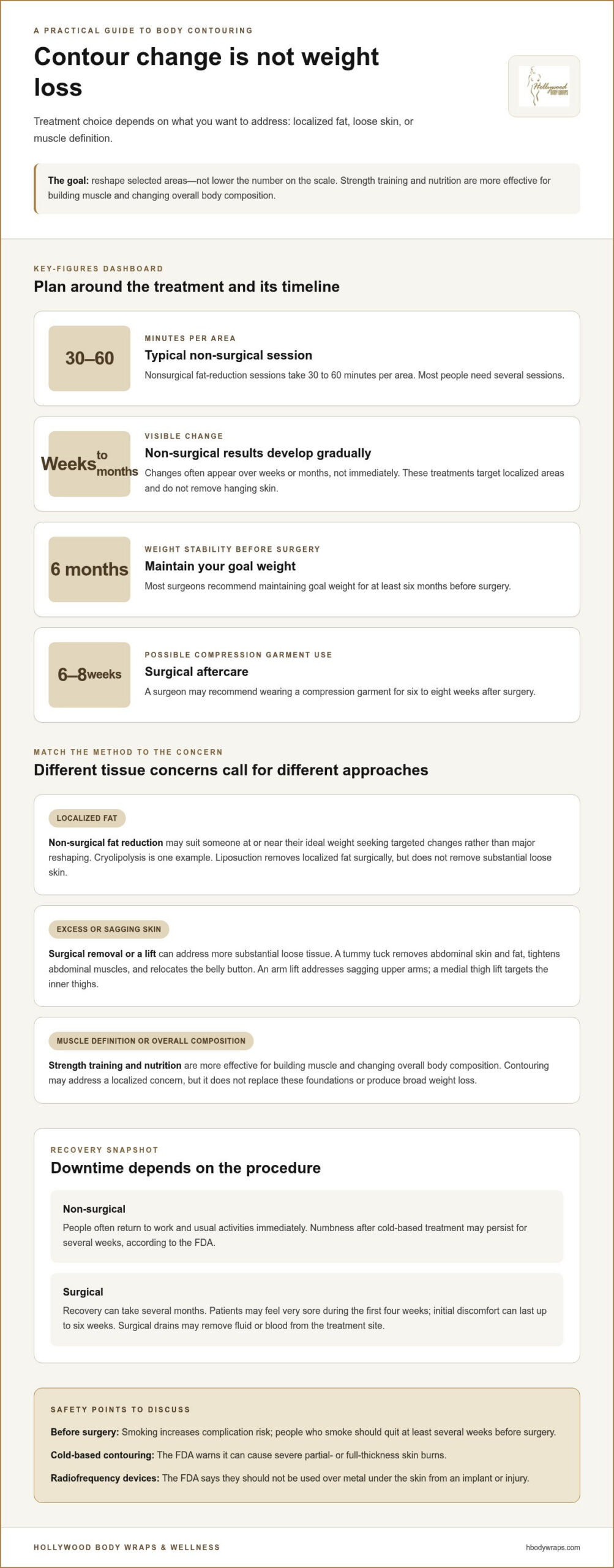
Body contouring changes the outline of a target area; it doesn’t build muscle or address every appearance concern. Nonsurgical lipolysis focuses on localized fat, while surgery can remove excess skin after significant weight loss. The distinction matters: a softer abdomen caused by limited muscle definition calls for a different goal than hanging skin after major weight loss. Neither approach replaces ongoing lifestyle changes.
Set a specific objective before considering treatment. For example, decide whether the priority is localized fullness, loose skin, or a smoother contour in the thighs. A body-contouring treatment can eliminate up to 20% of subcutaneous fat in the targeted area, but that figure describes local fat reduction, not overall weight loss. Cryolipolysis patients report a 15-20% reduction in targeted subcutaneous fat. These figures don’t mean the scale will change substantially.
Weight stability affects the shape treatment can achieve. Continued weight loss after contouring can create new loose skin and compromise results. Age, genetics, skin elasticity, and the rate of weight loss also influence how skin responds. The Cleveland Clinic advises that reaching an ideal weight improves body-contouring results and lowers complications. For surgical plastic surgery, discuss your health, weight pattern, and desired change as separate parts of your goal.
Match the method to the need. Non-surgical contouring suits targeted changes without major reshaping; surgery addresses excess skin and more substantial contour changes. Neither method is designed to replace strength training or nutrition when muscle definition is the main goal. If your priority is weight loss rather than localized shaping, explore Thermasculpt Weight Loss as a distinct service. A clear takeaway: define the concern first, then choose an approach whose purpose matches it.
Hollywood Body Wraps & Wellness: Mineral inch loss Body Wraps
Hollywood Body Wraps & Wellness offers Mineral inch loss Body Wraps for people seeking a non-surgical option as part of an appearance-focused wellness routine in Tampa. A wrap is distinct from surgery and shouldn’t be treated as a substitute for weight management or muscle-building. If cellulite is your concern, the spa also offers Non invasive Cellulite Treatment, focused on that specific aesthetic goal.
Choosing a treatment starts with matching it to your goal. A wrap may suit someone interested in a non-invasive body-care experience, while excess loose skin or a need for substantial reshaping calls for a different approach. Clear expectations help you compare options without confusing inch-loss services with weight-loss procedures.
For details about Mineral inch loss Body Wraps and whether they fit your goals, contact Hollywood Body Wraps & Wellness.
Choose a next step that fits your goals
The right body contouring approach for a skinny-fat person starts with one clear question: what change matters most to you? Consider whether your priority is a specific body area, cellulite, or a broader self-care goal. Naming that priority makes it easier to explore options with realistic expectations and keep your next step focused.
Hollywood Body Wraps & Wellness offers Mineral inch loss Body Wraps for clients interested in non-surgical body care in Tampa. Its services also include a Non invasive facial lift and Facials, which address facial rather than body concerns. Keeping those goals distinct can help you choose a service that matches your focus, without expecting one treatment to address every concern.
If you’re ready to discuss an option that aligns with your goals, contact Hollywood Body Wraps & Wellness. A considered choice is a positive first step toward feeling more at ease in your body.
Frequently Asked Questions
Why is body sculpting used?
Body sculpting is used to refine a particular contour, such as a small area of fullness that remains after weight is stable. It’s an aesthetic option, not a substitute for muscle development or overall weight management. Start by naming the change you want in your silhouette or clothing fit, then separate that goal from broader weight or strength goals.
Is non-surgical fat reduction a good option for me?
Non-surgical fat reduction can suit someone near a stable goal weight who wants localized change rather than broad reshaping. For body contouring for a skinny fat person, first identify whether the concern is a small area of fullness, loose skin, or limited muscle definition. These involve different tissues, and non-surgical fat reduction doesn’t build muscle or remove hanging skin.
What happens during non-surgical lipolysis?
During non-surgical lipolysis, a device is applied to a selected area to target fat beneath the skin; the method depends on the technology used. Sessions typically last 30 to 60 minutes, and several visits are often needed. Cold-based treatment can cause temporary numbness. The U.S. Food and Drug Administration says numbness after this type of treatment can persist for several weeks.
How do CoolSculpting, radiofrequency, ultrasound, and liposuction compare for body contouring?
CoolSculpting uses cryolipolysis, a cold-based approach; radiofrequency and ultrasound use energy to affect targeted tissue. Liposuction is surgery that removes fat through incisions, so it differs in invasiveness and recovery. The methods aren’t interchangeable. The FDA warns that cold-based contouring can cause severe skin burns. It also advises against radiofrequency devices over metal beneath the skin and ultrasound over open wounds or compromised skin.
What results can skinny-fat patients realistically expect from body-contouring treatments?
Body contouring for a skinny fat person can create a localized contour change, but it won’t cause overall weight loss or build muscle. Cryolipolysis patients report a 15-20% reduction in subcutaneous fat in the targeted area, but that figure doesn’t predict a scale change or apply to every method. Results develop gradually, and skin elasticity and fat distribution influence the final appearance.
How much does body contouring cost in the United States, by treatment and body area?
Costs vary by treatment and target area, and there isn’t one figure that applies to both non-surgical sessions and surgery. The estimate depends on the method, the size and number of areas, the session count, and whether surgery involves recovery care. Price depends on the case and is provided after a quote request. Compare what each treatment addresses and how many visits it involves.