What if the best treatment for loose skin after weight loss isn’t the most powerful-sounding option, but the one that matches how much excess skin you have? After working hard to lose weight, it’s understandable to hope your skin will tighten on its own while feeling unsure about bold claims, recovery, and safety.
The right choice depends on skin laxity, health, and goals, not simply the number of pounds lost. Mild looseness may call for a different conversation from substantial folds of excess skin. Non-surgical treatments have limits: they may offer modest tightening, but they can’t remove skin the way surgery can.
This guide compares what time, non-surgical approaches, and surgical procedures can realistically do. It also covers questions about risks, recovery, and choosing a qualified provider, with practical next steps for the Tampa area. Hollywood Body Wraps & Wellness offers non-invasive skin tightening, a service to ask about when discussing whether a non-surgical approach may suit your concerns.
Key Takeaways
- The best treatment for loose skin after weight loss depends on the amount and location of laxity, your health, and the change you want to see.
- Loose skin can look different from remaining or redistributed body fat. Clarifying the concern can help you decide which options are worth discussing.
- Non-surgical approaches, surgical skin removal, and supportive lifestyle measures serve different purposes. Understand what each can and can’t address.
- Use a step-by-step approach to weigh your goals, recovery considerations, and provider questions before choosing a treatment.
- For substantial folds, irritation, pain, or concerns that may need diagnosis, seek medical evaluation. Non-invasive skin tightening is not a substitute for that assessment.
Why Loose Skin Can Remain After Weight Loss and What Treatment Can Change
Weight loss can change your body’s shape without the skin returning to its earlier firmness. Skin has some ability to stretch and recoil, but that response varies. The amount of weight lost, how long the skin was stretched, where changes occurred, age, and genetics can all influence what you see. These factors may help explain appearance, but they don’t diagnose the cause or determine which treatment is right for you.
Mild skin laxity is a small loss of firmness, while excess skin is a more substantial amount of tissue that may hang or form folds. That distinction matters because an approach intended to improve mild laxity may not address larger folds. Skin can continue to change over time, but the degree of change is individual, and no timeline or outcome can be guaranteed.
How to tell loose skin from stubborn fat
Reduced firmness or folds may suggest laxity, while fullness or contour changes can also involve remaining or redistributed fat. The two concerns can occur together, and appearance alone isn’t enough to confirm what’s causing a particular area. If the distinction could change your treatment choice, seek an assessment from an appropriate clinician rather than relying on self-diagnosis.
Why skin may not return to its previous firmness
Collagen and elastin are proteins that help skin maintain structure, stretch, and recoil. Their condition and the skin’s response to a major change in body size differ from person to person. Exercise can support muscle tone and overall health, but it doesn’t remove excess skin. If loose abdominal skin is substantial, a surgical procedure such as Abdominoplasty is fundamentally different from a non-surgical approach because it involves removing excess skin.
What treatment can change depends on whether the main concern is mild laxity, excess skin, remaining fat, or a combination. Non-surgical skin tightening may be worth discussing for appropriate concerns, but it shouldn’t be presented as a way to remove large folds. A clinician can help clarify the concern and discuss realistic options. A Tampa-area spa consultation may help you explore whether non-invasive skin tightening is relevant to your aesthetic goals, but it isn’t a substitute for medical evaluation.
Weight history also matters. The amount lost and how the change occurred may affect the skin’s appearance, but pounds lost alone can’t identify the right solution. First, note what you see, where it occurs, and what change you hope to achieve. That gives a qualified professional a more useful starting point for discussing next steps.
Best Treatments for Loose Skin After Weight Loss: Compare Your Options
The best treatment for loose skin after weight loss depends on what you want to change. Non-surgical skin tightening, surgery, and lifestyle measures serve different purposes. Body contouring can refer to treatments aimed at body shape or fat, not necessarily skin firmness. The FDA explains the scope of Non-invasive body contouring. Ask what a specific service is designed to address before assuming it removes excess skin.
| Option | Possible candidate and concern | Limitations | Recovery considerations | What to discuss with a clinician or provider |
|---|---|---|---|---|
| Non-surgical skin tightening | Someone exploring options for selected concerns involving mild laxity. | May offer a modest appearance change, but doesn’t remove large skin folds. Methods and evidence vary. | Ask about expected downtime and possible temporary effects for the specific method. | What technology is used? What evidence, risks, and realistic degree of change apply to your concern? |
| Surgical skin removal | Someone with substantial excess skin who wants to discuss removal with a qualified medical professional. | Involves surgery and isn’t suitable or necessary for everyone. Candidacy is individual. | Recovery and risks depend on the procedure and personal circumstances. Get guidance from the treating professional. | Ask about candidacy, risks, scarring, recovery, and whether your goals are realistic. |
| Supportive lifestyle measures | Anyone seeking to support general health and maintain strength during or after weight loss. | Exercise can support muscle tone, but it doesn’t remove excess skin. | Choose activity appropriate to your health and abilities. | Ask a healthcare professional for guidance if you have health concerns or need help planning activity. |
When to ask about non-surgical skin tightening
Hollywood Body Wraps & Wellness lists non-invasive skin tightening among its services in the Tampa area. Suitability and likely results need an individualized discussion. Before choosing a service, confirm the method used, the provider’s qualifications, the evidence for your concern, possible risks, and the expected degree of change. Don’t assume every technology works the same way or that a treatment marketed for body contouring removes loose skin.
When to discuss surgery with a qualified clinician
If excess skin forms substantial folds, a medical professional can assess whether surgical removal is an option for your circumstances. Surgery isn’t automatically the right choice, and this article can’t determine candidacy. Discuss potential benefits, risks, and recovery directly with a qualified clinician.
Bottom line: Non-surgical care may suit selected firmness concerns, while significant excess skin may call for medical or surgical evaluation. If you’re exploring a non-surgical option, you can ask about non-invasive skin tightening in Tampa and discuss your goals and expectations.
Can Non-Surgical Treatments Remove Loose Skin? Set Realistic Expectations
No. Non-surgical skin tightening isn’t the same as removing large folds of excess skin. Depending on the method and the person, it may improve the appearance of selected areas, but that isn’t anatomical skin removal. If your goal is to remove substantial hanging skin, discuss medical options with a qualified clinician rather than expecting a non-surgical service to do the same job.
There’s no single answer to what change is realistic for every treatment or person. The method used, treatment area, starting skin condition, and individual response can all affect expected outcomes. Session plans, possible maintenance, discomfort, downtime, and aftercare also vary. Ask for specifics about the proposed treatment instead of relying on broad labels such as “tightening” or “contouring.”
Questions that reveal whether treatment claims are realistic
Before committing, ask how the provider would assess your concern and what change they expect in your specific area. Find out how outcomes are measured, what evidence supports the method, and whether images show comparable starting concerns and consistent follow-up. A dramatic guarantee or before-and-after photos without context should prompt more questions, not pressure you to decide.
- What device or method is used, and what is it intended to address?
- What risks, contraindications, discomfort, downtime, and aftercare should I understand?
- How many sessions might be recommended, and could maintenance be discussed?
- What would indicate that this approach isn’t suitable for my concern?
Clear answers should explain both potential benefits and limitations. If the explanation stays vague or promises skin removal without surgery, pause and seek another qualified opinion.
Why stable weight and overall health matter
Ongoing weight changes can affect body shape and make it harder to judge what you want treatment to address. Discuss weight changes, relevant health conditions, and timing with an appropriate clinician, especially before considering surgery. Individual circumstances matter, so don’t treat a generic timeline as personal clearance to proceed.
Resistance training can support strength and muscle tone, while balanced nutrition supports overall health. Neither guarantees skin tightening or removes excess skin. Avoid relying on supplements, restrictive diets, or treatment promises as shortcuts. Ask a healthcare professional about health questions specific to you.
A quick trade-off: Non-surgical approaches avoid surgical skin removal, but may offer a more limited change and can involve sessions, aftercare, or maintenance depending on the method. Surgery can remove excess skin, but requires an individual medical assessment and discussion of its risks and recovery. Neither option is universally best. The best treatment for loose skin after weight loss is the one that fits your concern, health, and realistic goals, with no pressure to choose before you understand the trade-offs.
How to Choose a Loose-Skin Treatment Safely After Weight Loss
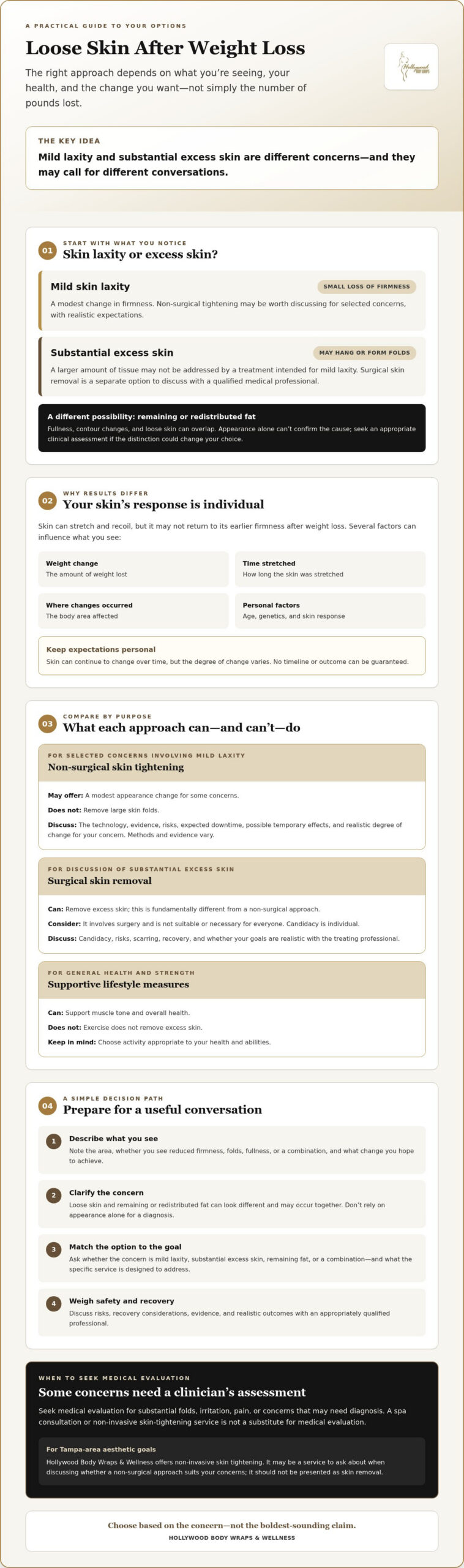
A thoughtful decision starts with identifying the concern, not selecting a procedure from an advertisement. The best treatment for loose skin after weight loss depends on what you want addressed, whether the concern needs medical evaluation, and what each option can realistically offer. Use this decision path to prepare for a useful conversation.
- Define what you notice. Identify the area and whether your concern is looseness, a skin fold, fullness, irritation, or a mix. Significant folds, persistent irritation, pain, or a concern that needs diagnosis warrant evaluation by an appropriate medical professional.
- Identify your goal. Decide what change matters most, such as improved firmness or removal of excess skin. Be specific about what you hope will look or feel different.
- Consult the right professional. Share your weight-change history, current goals, relevant health information, and prior procedures. Ask which concerns a proposed treatment can and cannot address.
- Compare the details. Verify the provider’s relevant training, exact technology or method, candidacy screening, and consent process. Request individualized information about potential outcomes, risks, discomfort, downtime, aftercare, and follow-up.
- Decide without pressure. Take time to review what you’ve been told. Don’t agree until expectations and aftercare are clear, and you understand whether the service is intended to address skin firmness, body contour, or another concern.
What to bring up during a consultation
Bring questions as well as personal context. Ask how the provider assesses your concern, what outcome is realistic for your situation, and how progress is evaluated. You can also ask what might make you unsuitable for the treatment and what happens if you experience an unexpected effect. A spa aesthetic consultation can explain an aesthetic service, but it isn’t a medical diagnosis or a substitute for medical care.
Terms such as “body sculpting” and “skin tightening” aren’t interchangeable. For more context on how contouring differs from a skin-focused concern, read this advanced body sculpting guide.
How to compare providers without relying on promises
Look for clear explanations of the method, who may be a candidate, known limitations, and possible adverse effects. Ask for consent information and aftercare guidance in a form you can review. Before-and-after photos or broad claims shouldn’t replace a discussion of how closely an example matches your concern. Treat guarantees, pressure to purchase a package, or promises of dramatic results for everyone as reasons to pause and ask more questions.
If you’re considering a non-surgical option in Tampa, contact Hollywood Body Wraps & Wellness to discuss non-invasive skin tightening, your goals, and realistic expectations. Seek medical evaluation separately for symptoms or concerns that require diagnosis.
Explore Non-Invasive Skin Tightening in Tampa With the Right Expectations
If you’re exploring the best treatment for loose skin after weight loss, Hollywood Body Wraps & Wellness offers non-invasive skin tightening in the Tampa area. A conversation about the service can help you explain your goals, ask whether the approach may suit your concern, and understand what outcomes are realistic. It isn’t a promise of results or a substitute for medical assessment.
The spa does not provide surgical skin removal or general medical care. If you have significant skin folds, persistent irritation, pain, or symptoms that need diagnosis, consult an appropriate medical professional. Skin tightening is a non-surgical option to ask about for selected concerns, not a way to remove large amounts of excess skin.
What to discuss before booking a Tampa-area treatment
Before deciding, ask which method is used and who determines whether it may be suitable for your concern. Request a clear explanation of what the service is intended to address, its limitations, possible risks, and any expected aftercare. If a provider can’t explain the method or how your concern will be assessed, take time to get more information before proceeding.
Confirm current treatment details and availability directly with the business. Hollywood Body Wraps & Wellness serves Tampa and nearby communities including Carrollwood, Lutz, Wesley Chapel, and Westchase. Check that service information is current for your location. A consultation can help clarify aesthetic goals and expectations, while medical concerns belong with a qualified healthcare professional.
Where body wraps and body sculpting fit
Different services address different goals. Non-invasive skin tightening is the listed service most directly related to discussing skin firmness. Body sculpting focuses on body contouring and shouldn’t automatically be assumed to tighten loose skin or remove excess skin. Mineral inch loss body wraps may target temporary inch loss, which is distinct from removing skin or treating laxity. For more on that distinction, see the mineral inch loss body wraps guide.
Your next step can be simple: review the service details, write down your questions, and discuss whether the approach matches your goals. Explore Hollywood Body Wraps & Wellness to learn more about its Tampa-area offerings. Keep the decision low-pressure, and seek medical advice separately if your concern needs diagnosis or surgical evaluation.
Choose a Next Step That Fits Your Goals
The best treatment for loose skin after weight loss depends on the concern you want to address. Mild laxity and substantial excess skin aren’t the same, and non-surgical tightening may improve appearance without removing large folds. If you’re considering surgery or have pain, irritation, or other symptoms, seek an appropriate medical evaluation.
A safe decision starts with clear information: ask about the specific method, suitability, possible risks, realistic outcomes, and aftercare. Hollywood Body Wraps & Wellness lists non-invasive skin tightening among its Tampa-area services. Confirm current treatment details and discuss whether the service aligns with your goals.
Ready to explore a non-surgical option? Explore non-invasive skin-tightening options at Hollywood Body Wraps & Wellness. Take your time, ask thoughtful questions, and choose the path that supports your well-being with realistic expectations.
Frequently Asked Questions
What is the best treatment for loose skin after weight loss?
The best option depends on how much loose skin you have, where it is, your health, and your goals. Non-surgical skin tightening may be worth discussing for selected concerns involving mild laxity, while substantial folds call for medical evaluation to understand possible options. Start by clarifying whether you’re concerned about skin firmness, excess skin, remaining fat, or a combination. A qualified professional can help you compare approaches without assuming one treatment fits everyone.
Can non-surgical treatments remove loose skin after weight loss?
No, non-surgical treatments don’t remove large folds of excess skin. Depending on the method and individual circumstances, a treatment intended for skin tightening may improve the appearance of selected areas, but that’s different from surgically removing tissue. Ask the provider what the specific method is designed to address, what degree of change is realistic, and what risks or aftercare apply. If skin removal is your goal, discuss options with a qualified medical professional.
Will loose skin tighten on its own after weight loss?
It may change over time, but the amount of change varies and can’t be guaranteed. Skin response may be influenced by factors such as age, genetics, the area affected, and weight-change history. There isn’t a single timeline that predicts what will happen for you. If you’re deciding whether to wait or explore treatment, note how your concern changes and discuss your goals with an appropriate professional.
Is surgery the only treatment for loose skin after major weight loss?
No, surgery isn’t the only option to discuss, but it is distinct because it can remove excess skin. Non-surgical skin-tightening services may be considered for selected concerns, with more limited goals. They aren’t equivalent to removing large folds. Not everyone needs or is a candidate for surgery. A qualified clinician can assess your circumstances, explain potential risks and recovery, and help you understand which options may align with your goals.
Does exercise get rid of loose skin after losing weight?
No, exercise doesn’t remove excess skin. Resistance training may support muscle strength and tone, and regular activity can contribute to overall health, but neither guarantees tighter skin. If your appearance concern persists, consider whether it seems related to skin laxity, remaining fat, or both, and seek an assessment if that distinction affects treatment decisions. Choose activities that fit your health and abilities, and ask a healthcare professional for individualized guidance.
How do I choose a skin-tightening provider in Tampa?
Choose a provider who clearly explains the method, relevant training, candidacy screening, consent process, possible risks, and realistic outcomes. Ask what the treatment can and can’t address, and take time to review aftercare before agreeing. Hollywood Body Wraps & Wellness lists non-invasive skin tightening among its services. If you’re in Tampa, Carrollwood, Lutz, Wesley Chapel, or Westchase, confirm current service availability and details directly with the business.
When should I talk to a doctor about loose skin after weight loss?
Talk to an appropriate medical professional if you have substantial skin folds, persistent irritation, pain, or a concern that needs diagnosis. A medical evaluation is also sensible before considering surgery or if health conditions and ongoing weight changes may affect your options. A spa aesthetic consultation can help you discuss a listed aesthetic service, but it isn’t general medical care or a substitute for diagnosis. Seek guidance suited to your symptoms and circumstances.