
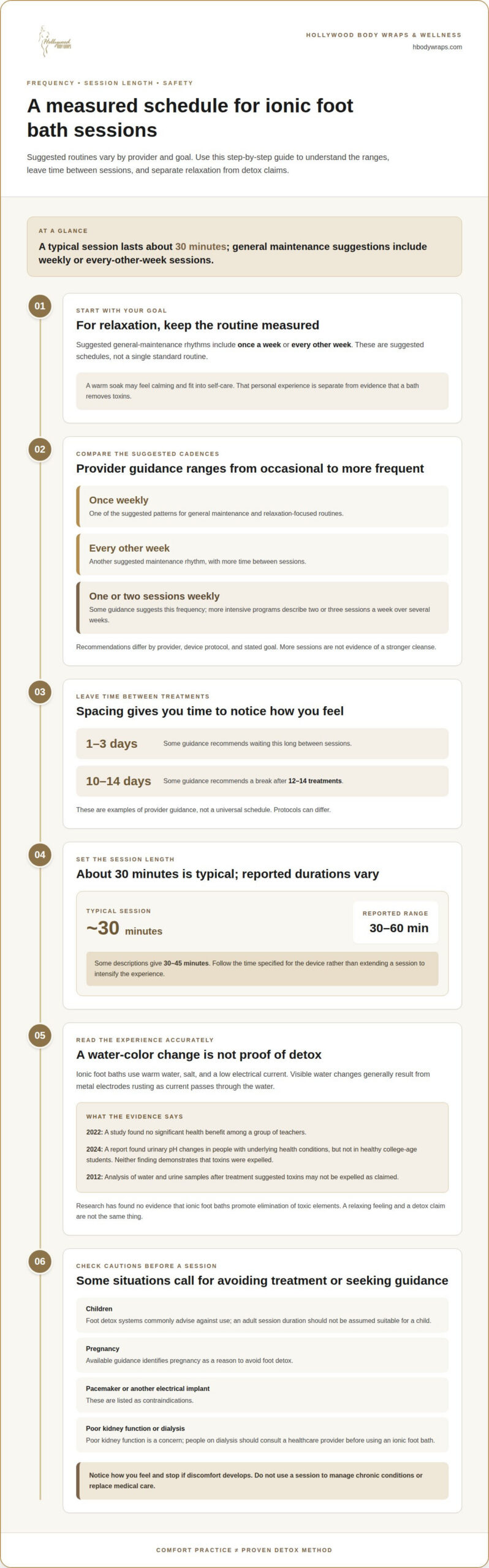
For relaxation, the usual maintenance rhythm is once a week or every other week. The practical answer to how often you should do an ionic foot detox depends on your goals, but a typical session lasts about 30 minutes.
A changing water color can look striking, but it isn’t proof that toxins are leaving your body. Ionic foot baths are intended to use a low electrical current in salt water to draw toxins through the soles of the feet, but strong scientific evidence for detoxification is lacking.
If a warm foot soak feels calming, it’s natural to want a routine that feels comfortable and sensible. This guide explains how ionic foot baths are said to work, what relaxation and detox benefits are claimed, and what the evidence says. You’ll also learn how often sessions are commonly suggested, how long they last, and when to be cautious.
Key Takeaways
- Choose a session rhythm based on your relaxation goals, and leave time between treatments rather than making them a daily routine.
- Expect a typical session to take about 30 minutes, with the exact experience depending on the bath setup.
- Learn how the electrical current is supposed to work, and why water color changes don’t prove toxins have been removed.
- Separate the calming feel of a warm foot soak from detox claims, which lack robust scientific evidence.
Claimed relaxation and detoxification benefits
Ionic foot baths are promoted for relaxation and toxin removal, but those claims have different levels of support. Treat a soothing soak as a wellness experience, not evidence that a machine removes toxins.
Reported Benefits and Effects
People may find an ionic foot bath soothing or relaxing, or enjoy it as part of a self-care routine. That subjective experience can make a session worthwhile as a quiet pause in a busy day. It reflects personal experience, however, not proof of detoxification.
Reported physical effects can include temporary fatigue or mild flu-like symptoms after treatment. Keep these possibilities in mind when deciding whether a session suits you. Stop if you feel unwell, and don’t interpret discomfort as evidence that toxins are leaving your body. The sensation and the detox claim are separate.
Evidence for Detox Benefits
Evidence for ionic foot detox benefits does not establish that the baths remove toxins from the body. A 2022 study found no significant health benefit among a group of teachers. A 2024 report found urinary pH changes in people with underlying health conditions, but not in healthy college-age students. Neither finding demonstrates that toxins were expelled.
Research has found no evidence that ionic footbaths promote the elimination of toxic elements. A 2012 study analyzing water and urine samples after treatment suggested toxins may not be expelled as claimed. Water color also isn’t a reliable detox report: changes generally result from metal electrodes rusting as electric current passes through the water.
The body’s liver and other organs remove toxins naturally, so detoxing isn’t necessary. Feet contain over 2,000 sweat glands, but that fact alone doesn’t show that an ionic bath draws toxins through the soles. A warm soak may still feel relaxing; assess it as a comfort practice, not a proven detox method.
Recommended ionic foot bath frequency
For general maintenance, suggested schedules range from once a week to every other week. Recommendations differ by provider and stated wellness goal, so there is no single standard routine.
Suggested Treatment Frequency
Frequency means how much time you leave between ionic foot bath sessions. Suggested schedules vary: general maintenance recommendations include once a week or every other week, while other guidance suggests one or two sessions weekly. More intensive programs describe two or three sessions a week over several weeks.
How often do ionic foot detox providers recommend sessions? Guidance ranges from once weekly to two or three times weekly, depending on the stated goal. For a relaxation-focused routine, less frequent sessions, such as weekly or every other week, are among the suggested patterns. Some guidance also recommends waiting one to three days between sessions and taking a 10-14-day break after 12-14 treatments.
Factors Behind Frequency Guidance
Yes, recommendations vary among providers, and device protocols can differ. Published session durations range from 30 to 60 minutes, so frequency and session length aren’t identical across every approach. Your intended goal also matters: a maintenance schedule differs from a program described for chronic health concerns. These schedules are recommendations, not evidence that more sessions promote a stronger cleanse.
An ionic foot bath uses warm water, salt, and a low electrical current. Charged electrodes affect the water during a session, but a color change doesn’t show that toxins have been removed. Metal electrodes can rust as current passes through the water, causing visible changes. Consider the color a feature of the process, not a reason to schedule sessions more often.
If you’re considering a structured wellness session, explore wellness treatment options as part of your self-care routine.
Session duration
A typical ionic foot detox session lasts about 30 minutes, though reported durations vary. Session length and spacing are separate choices, and neither proves a detox effect.
Descriptions of ionic foot bath sessions range from 30 to 45 minutes, while other guidance gives a 30-to-60-minute range. Follow the time given for the specific device rather than extending a session to intensify the experience. During treatment, feet rest in a bath while the device runs; notice how you feel and stop if discomfort develops.
People who choose these sessions are generally advised to leave one to three days between them. This gives you time to notice how you feel before deciding whether to schedule another session. Drinking water before and after supports general wellness, but does not establish that the treatment removes toxins.
For adults, the reported session range is about 30 to 60 minutes. Children are different: foot detox systems commonly advise against their use, so an adult session duration shouldn’t be assumed suitable for a child. Pregnancy is also a reason to avoid foot detox according to the available guidance.
A pacemaker or another electrical implant is a contraindication, and poor kidney function is also a concern. People on dialysis should consult a healthcare provider before using an ionic foot bath. These factors matter more than extending a session.
How much does an ionic foot detox session cost in the United States? The price depends on session length, equipment, and location, and is provided after a quote request.
To make a session part of a measured wellness routine, record its duration and your feeling afterward. A simple note, such as “30 minutes, felt relaxed” or “stopped early due to discomfort,” helps distinguish a soothing experience from claims about therapy or body function. Don’t use a session to manage chronic conditions or replace medical care.
How ionic foot detox baths are supposed to work
An ionic foot bath combines warm water, salt, and a low electrical current. During a session, your feet rest in the basin as the device passes current through the water. The word “ionic” refers to charged particles in the bath, not a medical measure of toxins leaving the body.
The promoted explanation is that the current creates charged water that draws toxins through the soles. Some descriptions say negative ions help release unwanted substances. This is a claimed mechanism, not an established account of how human detoxification works. A foot soak may still provide a quiet pause, but relaxation and toxin removal are different outcomes.
Color changes can make the process look dramatic. Metal electrodes in ionic foot baths can rust as current passes through the water, contributing to visible changes. The changing appearance reflects the interaction of electricity, water, and electrodes. It doesn’t identify a toxin, show where it came from, or prove the body released it.
For a useful comparison, consider a clear basin before treatment and discolored water afterward. That contrast alone can’t establish what changed in the body. Research has not found evidence that ionic foot baths promote the elimination of toxic elements. The liver and other organs naturally remove toxins, so a machine’s color display shouldn’t be treated as a test of organ function.
Keep the takeaway simple: the electrical current explains the device’s process, while detox claims go beyond what the visible water can demonstrate. If you’re interested in experiencing a wellness session for relaxation, book an Ionic Cleanse session as a self-care option, not as a substitute for medical care.
Hollywood Body Wraps & Wellness: Ionic Cleanse
Hollywood Body Wraps & Wellness offers Ionic Cleanse for people interested in adding an ionic foot bath to a relaxation-focused wellness routine. It may suit you if you enjoy the calming experience of a foot soak and understand that strong evidence for detoxification claims is lacking.
Think of the session as a self-care experience, not a way to diagnose or treat a health condition. When considering how often to go, focus on how the experience feels rather than assuming water color signals that toxins are leaving your body. If you have health concerns or relevant contraindications, seek medical guidance before using an ionic foot bath.
If you’d like to learn more about Ionic Cleanse, contact Hollywood Body Wraps & Wellness.
Choose a wellness routine that feels right for you
Before booking a wellness visit, decide what you want from it: a relaxing pause, skincare, or body-focused care. If you’re asking how often you should do an ionic foot detox, let your comfort and personal goals guide your routine, rather than treating more sessions as proof of detoxification.
Hollywood Body Wraps & Wellness offers Ionic Cleanse, Facials, a Non invasive facial lift, and Mineral inch loss Body Wraps. These are distinct services for different interests, so choose based on the experience that best matches your self-care priorities. For health concerns related to ionic foot baths, seek medical guidance before booking.
For a welcoming next step, contact Hollywood Body Wraps & Wellness to explore Ionic Cleanse and other wellness options. A thoughtful routine can begin with one choice that feels aligned with your goals.
Frequently Asked Questions
How Often Should You Detox?
For general maintenance, suggested schedules include once a week or every other week. If you’re deciding how often to do an ionic foot detox, base your routine on relaxation goals, not on an attempt to intensify toxin removal. Avoid daily sessions and leave time between treatments to notice how you feel. More frequent sessions don’t establish a greater detox effect.
Is there anyone who should avoid using an ionic foot bath?
Yes. Avoid ionic foot baths if you have a pacemaker or another electrical implant, are pregnant or nursing, have had an organ transplant, or take blood thinners or heartbeat-regulating medication. Open sores or infections on your feet are also a concern. People with diabetes-related neuropathy should avoid them; those on dialysis or blood-pressure medication should seek medical advice first.
Is There Scientific Evidence for Foot Detox?
Strong evidence that ionic foot baths remove toxins or provide health benefits is lacking. A colored basin or relaxed feeling shouldn’t be used to judge detoxification or diagnose a health issue. If your goal is a soothing wellness ritual, distinguish that subjective experience from a medical benefit, and rely on appropriate healthcare for health concerns.
What will I experience during the session?
You’ll sit with your feet in a basin of warm water while the device runs. The water may change color, but that visual effect alone shouldn’t be taken as proof of detoxification. Some people find the experience calming. Pay attention to how you feel, and end the session if you become unwell or notice irritation.
Are There Any Side Effects?
Some people report temporary fatigue or mild flu-like symptoms after an ionic foot bath. Bath ingredients may also irritate open sores. If you feel unwell during or after a session, don’t interpret the reaction as proof that toxins are leaving your body. Consider any existing health concerns before choosing this wellness practice.
Are there risks with doing a foot detox?
Yes. Electrical implants, including pacemakers, are a key concern because ionic baths use electrical current. Foot wounds may become irritated, and diabetes-related neuropathy can make discomfort harder to notice. Pregnancy, nursing, organ transplant history, and certain medications are additional reasons to avoid treatment or seek medical advice. Don’t use a foot bath as a substitute for care for a health condition.