
Loose abdominal skin after weight loss often reflects reduced skin elasticity, not a lack of effort. Non-surgical skin tightening for the stomach may gradually improve mild looseness and skin texture, but it does not remove excess skin or create the more dramatic change a tummy tuck can provide. Radiofrequency heats tissue to encourage collagen activity, with tightening developing over time.
It is understandable to want a firmer-looking stomach without surgery or a lengthy recovery. The right option depends on what is causing the looseness and how much excess skin is present. This guide explains why skin can remain loose after weight loss, how radiofrequency tightening works, and how non-surgical treatment differs from a tummy tuck. You will also learn what these approaches can and cannot address, helping you make a clearer decision about your next step.
Key Takeaways
- Pregnancy, aging, and weight loss can reduce abdominal skin elasticity; identifying the cause helps clarify what kind of change may be realistic.
- Radiofrequency uses heat to stimulate collagen, with gradual tightening rather than immediate removal of excess skin.
- Non-surgical treatments are generally aimed at mild looseness and skin texture, while a tummy tuck can remove excess skin and address separated abdominal muscles.
- After weight loss, stable body weight and the amount of remaining loose skin are important considerations when comparing approaches.
- Mineral inch loss Body Wraps are an option at Hollywood Body Wraps & Wellness for readers interested in body-contouring support, but they aren’t a substitute for surgery to remove excess skin.
What Causes Loose Abdominal Skin?
Loose abdominal skin commonly follows pregnancy, weight loss, or natural aging. These changes can reduce skin elasticity, leaving laxity even after body weight stabilizes. For example, skin stretched during pregnancy may not fully contract afterward. Significant weight loss can also leave excess skin because the tissue’s former volume has changed. Liposuction may make laxity more visible when substantial fat is removed from skin that has already lost elasticity.
How do radiofrequency, ultrasound, and laser skin tightening compare for the abdomen? Radiofrequency heats tissue to encourage collagen activity, while ultrasound can heat skin up to 5 millimeters deep. Laser tightening works gradually, with results appearing over three to six months; the method and treatment area shape the approach.
What non-surgical treatments tighten loose stomach skin? Radiofrequency, ultrasound, and laser treatments can address mild looseness and improve skin texture, but they don’t remove excess skin. Non-surgical skin tightening for the stomach may suit someone seeking gradual, modest firming rather than a major change in abdominal contour. Radiofrequency sessions typically take 30 to 90 minutes, and a series of 2 to 6 treatments may be recommended.
Can non-surgical treatments tighten loose skin after pregnancy or weight loss? They may improve mild laxity after either change, especially when the concern is skin texture rather than a large fold of excess skin. Separated abdominal muscles can cause outward bulging, so muscle separation and skin looseness are different concerns. Exercise can improve underlying muscle tone, but it cannot shrink skin that has lost elasticity.
Treatment suitability for the abdomen depends on the amount of laxity, skin condition, treatment method, and whether muscle separation or excess fat contributes to the contour. A focused assessment distinguishes loose skin from bulging beneath it. That distinction matters: external energy treatments target skin and underlying tissue, while significant excess skin may call for a different approach.
Renuvion radiofrequency-assisted lipolysis differs from external radiofrequency skin tightening. It is almost always combined with liposuction to remove fat before tightening tissue. This makes it a procedural option, not a simple substitute for non-surgical treatment. The liposuction component also changes the recovery involved, while the amount of fat removed and existing skin elasticity influence why these steps are combined.
How do you choose a qualified provider for abdominal skin tightening in the United States? Start with an assessment of the treatment area, degree of laxity, skin tone, and any muscle separation. A useful treatment plan explains whether radiofrequency, ultrasound, or laser suits those findings, what the method targets, and how its recovery compares with procedural options such as Renuvion-assisted liposuction.
What are the risks, side effects, and recovery time for stomach skin-tightening treatments? Recovery depends on the method: non-surgical sessions are generally outpatient procedures with little to no downtime, while Renuvion with liposuction involves a procedural recovery. Non-surgical sessions typically take 30 to 90 minutes, and patients can return to work the same day. The treatment type and energy used shape the side effects and aftercare.
Why consider non-surgical skin tightening?
For mild abdominal sagging, non-surgical treatments can offer gradual tightening without an operation. Keep the trade-off in mind: these treatments may offer gradual improvement for mild skin looseness, but they are not a substitute for addressing more substantial abdominal concerns.
Nonsurgical Treatments Versus Surgery
Non-surgical tightening uses energy to encourage tissue changes, while surgery can remove excess skin and address abdominal muscles. This distinction helps match expectations to the concern. Mild laxity may suit an energy-based approach, while a large fold after weight loss calls for a different discussion. Consider skin elasticity, the amount of excess tissue, the change you want, and the recovery you can accommodate.
Ultrasound, radiofrequency, and laser treatments deliver energy in different ways, and their suitability depends on the treatment area and skin characteristics. Surgery may be considered when sagging is extensive or muscle repair is part of the goal. Liposuction removes fat, but it does not remove loose skin by itself. Choose based on the concern being addressed, not simply on a desire to avoid an incision.
Treatment Duration and Costs
Ultrasound skin tightening is an in-office treatment that typically takes 30 to 90 minutes. Cost depends on the method, treatment area, and number of sessions, so compare the complete plan rather than one appointment alone. The expected improvement and recovery needs also matter when weighing value against surgery.
Non-surgical sessions typically last 30 to 90 minutes, and patients can return to work the same day. Ultrasound results develop gradually, with full results taking three to six months to appear. That timeline can help with scheduling, but the approach isn’t an immediate way to remove excess skin. Treatment plans also differ in how many sessions they involve.
ThermiTight is a name associated with minimally invasive radiofrequency treatment, which differs from external energy treatments. Minimally invasive procedures use a different technique from non-surgical sessions, so recovery considerations also differ. The name alone does not determine whether an approach suits abdominal skin laxity. The key distinction is whether energy is delivered externally or through a procedure beneath the skin.
For the abdomen, suitability depends on the degree of sagging, skin elasticity, and whether fat or muscle separation affects the contour. A focused assessment helps distinguish these concerns. Mild laxity is different from a prominent fold of excess skin, which energy-based treatment will not remove. Tampa-area readers can use these distinctions to clarify the outcome they want before considering options.
Compare the method, treatment area, expected result timeline, and recovery needs. For example, an external treatment plan differs from a procedure involving energy beneath the skin. You can also explore non-invasive skin-tightening options as part of learning about treatment approaches.
Radiofrequency skin tightening
Radiofrequency (RF) treatment delivers controlled energy into tissue to encourage gradual tightening. For the abdomen, the technique matters: external RF, microneedling, and RF-assisted liposuction involve different treatment depths and recovery considerations.
How Radiofrequency Energy Tightens Tissue
Radiofrequency energy heats targeted tissue, prompting a collagen response that develops over time. The treatment does not remove loose skin like surgery; it aims to improve firmness gradually. That difference helps set realistic expectations when comparing an energy-based approach with skin removal.
RF sessions typically take 30 to 90 minutes. A series of 2 to 6 treatments may be recommended for optimal results, depending on the approach and treatment plan. Tissue tightening can develop gradually over time. Results may last one to two years with proper maintenance, though treatment method and individual skin condition affect the timeline.
For abdominal treatment, the key distinction is where and how the energy is delivered. External RF applies energy through the skin, while radiofrequency microneedling uses needles to deliver energy into tissue. These methods are not interchangeable. The treatment area, degree of laxity, and desired change help determine which approach makes sense.
Radiofrequency Treatment Options
BodyTite is a radiofrequency-assisted liposuction approach, while Morpheus8 is a radiofrequency microneedling treatment. Their names describe different techniques, not identical levels of invasiveness. Patients comparing options should understand whether the plan includes liposuction, needle-based delivery, or external energy, because each affects what tissue is treated and the recovery involved.
Radiofrequency-assisted lipolysis is almost always combined with liposuction to remove fat before tightening. BodyTite is therefore not equivalent to external non-surgical RF. The liposuction component changes the procedure and recovery, making it important to distinguish this approach from treatments that deliver energy across the skin’s surface.
Morpheus8 combines microneedling with radiofrequency energy. The needle-based delivery differs from external RF, so treatment planning should account for the abdomen’s skin condition and the intended target. The specific device, energy settings, and treatment pattern shape the plan; the name alone doesn’t establish what an individual session involves.
Costs vary with treatment type, area, and number of sessions. Since non-surgical skin tightening is also offered as a service, no general industry price is useful for estimating a reader’s treatment. The treatment plan’s technique and session count are the main cost factors.
Before choosing, compare the method, treatment area, expected result timeline, and downtime. For example, external RF sessions typically take 30 to 90 minutes, while RF-assisted liposuction includes a surgical fat-removal step. Those differences help patients weigh a gradual tightening approach against a more involved procedure. For those researching how medical aesthetic practices deliver advanced radiofrequency therapies, professional clinics such as ardenclinic.com illustrate how targeted protocols are structured for patients.
Is Skin Tightening as Good as a Tummy Tuck?
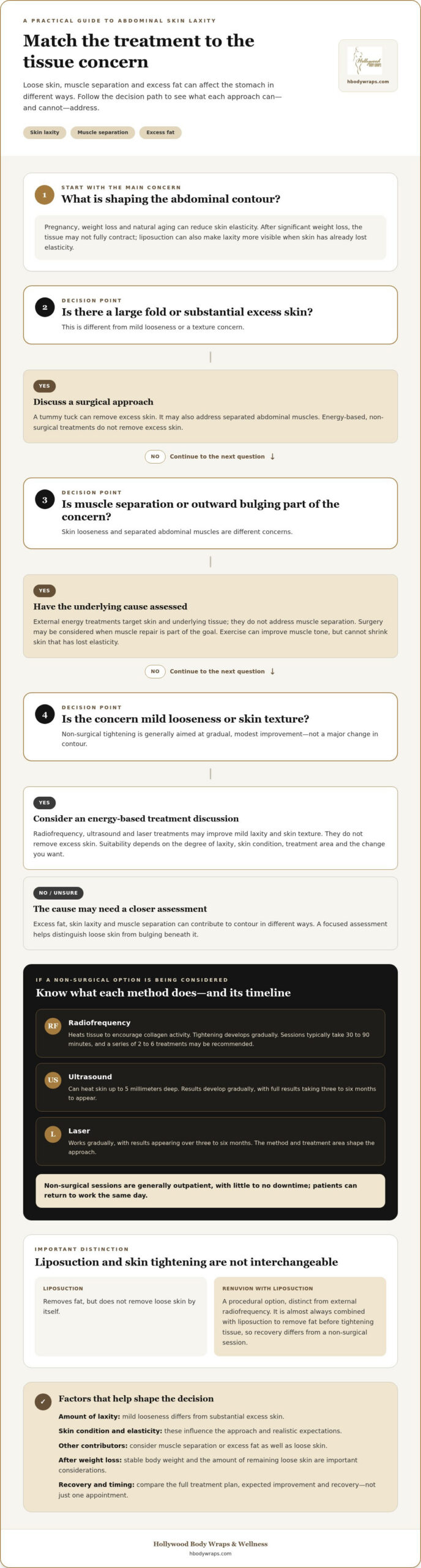
No. Non-surgical tightening and a tummy tuck address different degrees of abdominal laxity. Energy-based treatments can improve texture and mild looseness, but usually create gradual tightening rather than dramatic skin contraction. A tummy tuck is a surgical procedure that removes excess skin and soft tissue. It can also repair separated abdominal muscles when needed. Start by comparing the changes you want, not simply the procedure names.
A tummy tuck becomes more relevant when loose skin forms a substantial fold or muscle separation contributes to abdominal bulging. Non-surgical treatments do not remove excess tissue or repair abdominal muscles. A tummy tuck is not weight-loss surgery, so candidates should reach a stable weight before considering it. After major weight loss, the procedure reshapes remaining tissue rather than serving as a way to lose weight.
The amount and location of laxity help distinguish a mini tummy tuck from a full procedure. A mini tummy tuck primarily addresses loose tissue below the belly button. A full tummy tuck treats more extensive laxity and can address skin above and below the navel. When muscle repair is needed, the full procedure can include it. The location of excess skin is a practical starting point for discussing options with a plastic surgeon.
A full tummy tuck involves an incision near the pubic bone, securing abdominal muscles, and removing excess skin. The operation takes about two to four hours, followed by recovery that can range from two to six weeks. Those recovery needs differ from outpatient skin-tightening treatments, which typically involve little to no downtime. Consider the procedure, incision, muscle repair, and recovery together rather than comparing tightening effects alone.
For combined concerns, lipoabdominoplasty pairs liposuction with a tummy tuck. It addresses excess fat while removing loose skin and soft tissue. Liposuction alone does not correct excess skin after fat removal and can make abdominal looseness more noticeable. For example, someone with both excess fat and a loose skin fold should understand that fat removal and skin removal are separate parts of the treatment plan.
After weight loss, stable weight and the extent of remaining skin are central considerations. Mild laxity with a texture concern differs from extensive hanging skin or separated muscles. Non-surgical tightening can suit the first goal; a tummy tuck can remove excess skin and repair muscles when needed. The effects are not interchangeable: one encourages gradual tightening, while surgery changes the amount of skin and soft tissue directly.
Causes of loose skin after weight loss
After weight loss, there is less volume beneath skin that was stretched to accommodate it. Skin can contract to some degree, but its elasticity varies with age, prior stretching, and individual tissue characteristics. Someone who loses a substantial amount of weight, for example, may notice abdominal folds even after reaching a stable weight. This reflects excess skin, not a failure to keep losing weight.
Collagen and elastin help skin maintain structure and flexibility. Natural aging affects the skin’s ability to retain those qualities, so age can influence how much it tightens after weight changes. Pregnancy can also stretch abdominal tissue, and later weight loss may make existing laxity more noticeable. The appearance depends on the history of stretching and the skin’s remaining elasticity, not simply the number on the scale.
Loose skin and abdominal fat are different concerns. Liposuction removes fat, but it does not remove loose skin; after fat removal, laxity can appear more pronounced. Separated abdominal muscles can also create outward bulging, changing the contour independently of excess skin. Distinguishing among fat, skin, and muscle concerns helps explain why one cosmetic treatment cannot address every post-weight-loss change.
Exercise can strengthen muscles beneath the abdomen, but it cannot shrink skin that has lost elasticity. A healthy diet supports overall skin health, yet it will not eliminate excess skin after substantial laxity. Topical creams can affect surface texture or create temporary tightening, but they do not provide a lasting solution for significant looseness. These limits matter when choosing between routine self-care and a treatment focused on skin appearance.
Energy-based treatments such as radiofrequency encourage collagen production and can gradually improve mild laxity. They do not remove a large fold of skin. By contrast, a tummy tuck removes excess abdominal skin and soft tissue, and can repair separated muscles when needed. Mild looseness with a texture concern differs from hanging skin after major weight loss. Stable weight helps frame the decision because a tummy tuck is not weight-loss surgery.
If weight management remains your priority, explore Thermasculpt Weight Loss as a separate service. It should not be confused with treatment for loose skin: weight-focused support and skin removal address different concerns. Naming the main goal, whether continued weight change, mild laxity, or excess skin, makes the next step clearer.
Hollywood Body Wraps & Wellness: Mineral inch loss Body Wraps
Hollywood Body Wraps & Wellness offers Mineral inch loss Body Wraps for people seeking a non-surgical body contouring service. They may be relevant if your goal is body shaping rather than removing loose skin. A body wrap is not a tummy tuck and does not remove excess skin or repair abdominal muscles. If abdominal laxity is your main concern, understanding the differences between skin tightening, body wraps, and surgery can help you choose a suitable next step.
For a different cosmetic focus, the spa also offers Non invasive Cellulite Treatment, Facials, and a Non invasive facial lift. Each addresses a different concern, so choose according to your personal goal.
Contact Hollywood Body Wraps & Wellness or visit hbodywraps.com to explore its Mineral inch loss Body Wraps.
Choose the Next Step That Fits Your Goals
The most useful next step is to name the change you want, then match it to the kind of service designed for that concern. If you are considering non-surgical skin tightening for the stomach, focus on your priorities for abdominal appearance and the level of change you are seeking. A clear goal makes it easier to explore options without expecting one treatment to address every concern.
For broader aesthetic and wellness interests, Hollywood Body Wraps & Wellness offers Mineral inch loss Body Wraps, a Non invasive facial lift, and Facials. These are distinct services for different goals, so choose the one that best reflects what you would like to explore. Take time to consider which option feels relevant to your personal care plans.
Contact Hollywood Body Wraps & Wellness to explore the available services and take a considered next step toward your goals.
Frequently Asked Questions
How to Decide: Non-Surgical or Surgery?
Choose based on whether your main concern is mild skin laxity or substantial excess skin. Energy-based treatment may suit someone seeking gradual changes in skin texture, while a tummy tuck can remove loose abdominal skin and repair separated muscles when needed. A small area of mild looseness differs from a hanging fold after weight loss. Your goal, skin condition, and willingness to have surgery all shape the decision.
Stomach Skin Tightening in Tampa, Florida: Which Treatment Works Best?
For Tampa-area residents, the best treatment depends on the abdominal concern, not the city: radiofrequency, ultrasound, and laser use different energy approaches. Mild looseness and texture concerns may suit a non-surgical method, while extensive excess skin calls for a different discussion. Compare each method’s target, expected changes, and recovery needs. The best fit is the one aligned with your skin condition and the degree of change you want.
What Is Radiofrequency?
Radiofrequency is energy used to heat targeted tissue and stimulate collagen activity. In skin tightening, this process can encourage gradual firmness rather than physically removing skin. External radiofrequency differs from radiofrequency microneedling, which delivers energy through needles. Radiofrequency-assisted lipolysis is another distinct approach, commonly combined with liposuction. Understanding how the device delivers energy helps clarify whether a treatment is non-surgical or involves a more involved procedure.
How Much Does Non-Surgical Abdominal Skin Tightening Cost in the United States?
There is no single national price for abdominal skin tightening. Cost varies with the method, the size of the treatment area, and the number of sessions in the plan. For example, a course of radiofrequency treatments may be priced differently from a single ultrasound appointment. Compare the full treatment plan and what it targets, rather than relying on the cost of one session as a measure of value.
How Many Treatments Are Typically Needed, and How Long Do Results Last?
The number of sessions and how long results last depend on the method. A radiofrequency plan may recommend 2 to 6 treatments, with results lasting one to two years with proper maintenance. Ultrasound results can take three to six months to appear, while laser results also develop over three to six months. These timelines aren’t interchangeable, so consider the specific technology when planning treatment.
Who Is a Good Candidate for Non-Surgical Stomach Skin Tightening?
Someone with mild abdominal laxity who wants gradual improvement may be a better fit than someone with a large amount of excess skin. Non-surgical skin tightening for the stomach does not remove skin or correct separated abdominal muscles. A soft, slightly loose area differs from a fold that hangs over the abdomen. The amount of laxity, skin condition, and desired change help establish whether the treatment matches the goal.
What Results Can You Expect From Non-Surgical Abdominal Skin Tightening, and When?
Expect gradual improvement in skin texture or mild looseness, not the dramatic skin removal a tummy tuck can achieve. Timing varies by technique: full ultrasound results take three to six months, and laser effects appear gradually over the same period. If you are planning around an event, account for those gradual changes instead of expecting an immediate final appearance after treatment.
How Does Non-Surgical Skin Tightening Compare With a Tummy Tuck?
Non-surgical tightening aims for gradual improvement, while a tummy tuck removes excess abdominal skin and can repair separated muscles. A tummy tuck is surgery, takes about two to four hours, and recovery can range from two to six weeks. By contrast, non-surgical treatments typically involve little to no downtime. Someone with extensive loose skin may need to weigh surgery against the more modest changes targeted by energy-based treatments.