
What if the safest first step for semaglutide nausea isn’t changing your dose, but making a few adjustments and checking in with your prescriber? If “managing semaglutide side effects nausea” is what brought you here, you’re likely looking for relief that won’t disrupt your treatment plan. Nausea can make meals, hydration, and everyday routines feel harder, while online advice can leave you unsure what’s safe to try.
This guide covers practical ways to support comfort, including eating smaller meals and sipping fluids, along with when persistent or severe symptoms need prompt medical attention. Nausea can happen as your body adjusts, but ongoing vomiting, severe abdominal pain, or signs of dehydration shouldn’t be brushed aside.
You’ll also learn what to discuss with your prescriber and what details to share, such as when symptoms began and how they relate to your dose. Most importantly, don’t change your dose or add an anti-nausea medicine on your own. A clear conversation with the clinician managing your medication can help you choose a safer next step.
Key Takeaways
- Semaglutide may affect stomach emptying, which can contribute to nausea, but symptoms alone can’t identify the cause.
- When managing semaglutide side effects nausea, compare when symptoms occur with dose changes, meals, hydration, and other medicines before speaking with your prescriber.
- Keep a brief symptom record, including how long nausea lasts and whether it affects eating or drinking, to make your follow-up conversation more useful.
- Ask your prescriber which symptoms need prompt assessment and where to turn if they occur. Don’t change your medication plan on your own.
- If considering a weight-management program, ask who prescribes and monitors medication, how follow-up works, and how side effects are escalated.
Why Semaglutide Can Cause Nausea and What the Symptom May Mean
Nausea is a reported side effect of semaglutide, but it doesn’t affect everyone, and the symptom alone can’t explain what’s happening in your body. Semaglutide is a glucagon-like peptide-1 (GLP-1) receptor agonist, a medicine that activates GLP-1 receptors. The Semaglutide overview describes its uses and effects. Current prescribing information also identifies nausea as a common adverse reaction and notes that semaglutide delays gastric emptying. Slower stomach emptying may contribute to queasiness or feeling uncomfortably full, but it can’t confirm the cause of any one person’s symptoms.
Understanding that connection can make managing semaglutide side effects nausea feel less confusing, but it doesn’t replace individualized advice. Your health history, other medicines, and the full pattern of symptoms all matter when deciding what to do.
When can semaglutide nausea occur?
Nausea may arise after treatment begins or around a dose increase, but experiences vary. Some people have no nausea; others may notice symptoms at different times or for different lengths of time. There’s no single timeline that applies to everyone, so don’t assume symptoms will resolve by a particular date or alter your dose based on an online schedule.
Keep a simple record for your prescriber: when nausea starts, how long it lasts, how severe it feels, and whether it follows a dose change, meal, or other relevant event. Note what seems to ease or aggravate it. These observations can help your clinician assess the pattern without treating timing as proof of a cause.
Does nausea automatically mean semaglutide is unsafe?
No. Nausea by itself doesn’t determine whether semaglutide is safe or appropriate for you, and it doesn’t automatically mean treatment should stop. The level of concern depends on factors such as severity, persistence, other symptoms, and your medical history. Mild, short-lived queasiness is different from symptoms that prevent you from keeping fluids down or occur with significant pain.
Contact your prescribing clinician for personal guidance, especially if nausea is persistent, worsening, or interfering with eating and drinking. Seek prompt medical assessment for severe or concerning accompanying symptoms. Don’t use symptom lists online to diagnose yourself or change your treatment independently. Your prescriber can consider your circumstances and advise on the next step.
Managing Semaglutide Nausea: Safe Steps to Discuss
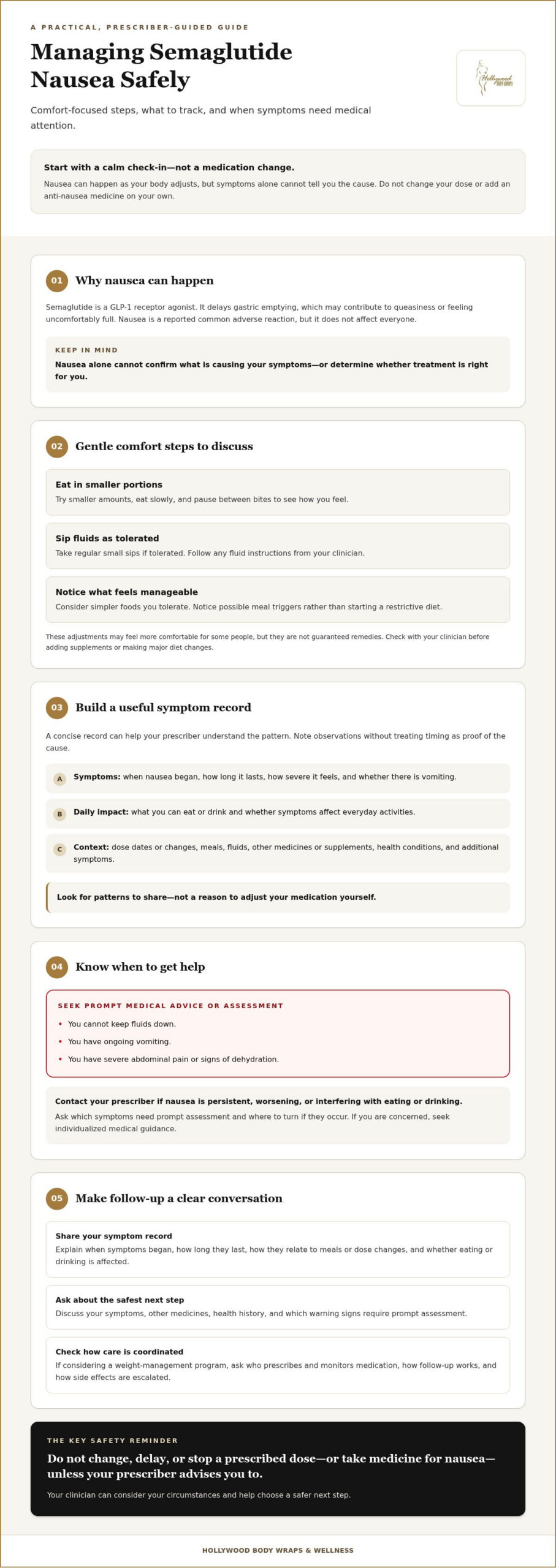
Start with a calm check-in, not a medication change. Assess how you feel, whether you can keep fluids down, and whether symptoms are getting worse. Sip fluids as tolerated, then contact your prescriber if nausea persists, affects eating or drinking, or concerns you. If you can’t keep fluids down, seek prompt medical advice. Mayo Clinic offers additional guidance on when to contact your doctor.
For managing semaglutide side effects nausea, simple food and fluid adjustments may feel more comfortable for some people, but they aren’t guaranteed remedies. Try smaller portions, eat slowly, and consider simpler foods you tolerate. Notice whether particular meals seem to trigger symptoms rather than following a restrictive diet. Keep following any individualized nutrition or fluid instructions from your clinician.
What food and fluid habits may feel easier?
Instead of forcing a full meal, consider smaller amounts and pause between bites to see how you feel. Take regular small sips of fluid if tolerated. If drinking brings on vomiting or you’re unable to keep fluids down, contact a healthcare professional promptly. Avoid adding supplements or making major diet changes without checking whether they’re appropriate for you.
What should you track before asking for help?
A concise record can help your clinician understand the pattern. Note when nausea began, how long it lasts, its severity, any vomiting, what you’ve been able to eat and drink, and whether symptoms interfere with daily activities. Include dose dates and any recent changes as information only, not as a prompt to adjust your medication yourself.
- Meals, fluids, and anything you suspect may affect symptoms
- Other medicines or supplements you take
- Relevant health conditions and any additional symptoms
Share your notes with your prescriber and ask which steps are right for your circumstances. Don’t change, delay, or stop a prescribed dose, or take a medicine for nausea, unless your prescriber advises you to. Individual guidance matters, particularly when symptoms persist or you have other health conditions.
If you’re exploring a weight-management program, review semaglutide weight-management options and ask who prescribes and monitors medication, how follow-up is handled, and where to direct side-effect concerns. Get clear answers before you begin.
Dose Changes, Timing, and Other Causes: What to Compare Before Acting
Nausea after taking semaglutide can raise a pressing question: is the medicine responsible, or could something else be contributing? Timing can offer useful context, but it can’t establish the cause. Note whether symptoms began after starting treatment or a prescribed dose change, and compare that pattern with meals, fluid intake, illness, and changes to other medicines. Share what you notice with your prescriber rather than drawing a diagnosis from timing alone.
Don’t assume nausea is simply an expected medication effect, especially if it persists or worsens. Food-related illness, another health issue, or a different medicine could also be relevant. A clinician can review your symptoms alongside your health history and treatment plan. For additional side-effect information, consult Mayo Clinic on semaglutide side effects, and contact your own prescriber for advice specific to you.
Could something besides semaglutide be contributing?
Possibly. A recent illness, a meal that didn’t agree with you, or another medicine may coincide with nausea. That doesn’t rule out semaglutide as a factor, nor does it prove another cause. Tell your clinician about symptom changes, relevant health conditions, and all medicines or supplements you take, including anything started or changed recently. These details can inform a review without relying on guesswork.
What should you ask before any dose decision?
Nausea doesn’t mean you should independently stop, delay, or alter treatment. Even if it began after a dose change, don’t adjust the next dose without instructions from your prescriber. The right response depends on your symptoms and individual circumstances. Ask direct questions so you know what to do next:
- Could the timing of my symptoms warrant a review of my treatment?
- Which medication changes require your approval, and what should I do before my next dose?
- Which symptoms need same-day advice, and where should I seek urgent assessment?
- How should I follow up if nausea continues or makes it hard to eat or drink?
Persistent or worsening nausea deserves individualized review, even if you don’t have emergency warning signs. Prepare a short timeline of symptoms, dose dates, meals, hydration, and other medicines to make the conversation more focused. This practical approach to managing semaglutide side effects nausea can help you raise the right questions while leaving medication decisions with the clinician responsible for your care.
When Semaglutide Nausea Needs Prompt Medical Attention
Mild nausea that passes and doesn’t prevent you from drinking may be appropriate to discuss with your prescriber. But symptoms that are severe, persistent, or worsening deserve timely medical advice, especially if vomiting makes it difficult to keep fluids down. Repeated vomiting and poor fluid intake can lead to dehydration. Don’t wait for a routine appointment if you’re getting weaker, dizzy, or urinating much less than usual.
Semaglutide prescribing information warns about serious problems that can include pancreatitis and gallbladder issues. Severe, persistent abdominal pain, with or without vomiting, warrants urgent medical assessment. Don’t assume intense or ongoing pain is ordinary nausea. Seek help promptly so a qualified clinician can assess what’s happening.
Which symptoms should prompt urgent assessment?
Seek urgent medical care for severe or persistent abdominal pain, particularly if it occurs with vomiting or other concerning symptoms. Persistent vomiting, inability to keep fluids down, or signs of dehydration also call for timely medical attention. These symptoms can have more than one cause, so don’t try to diagnose them or wait for them to resolve without medical advice.
Call emergency services for possible severe allergic reactions, such as swelling of the face, lips, tongue, or throat, trouble breathing, or collapse. Act immediately. Don’t wait for an online response, a spa visit, or a routine appointment.
Who should you contact and what should you say?
For concerning but non-emergency symptoms, contact your prescribing clinician or an urgent medical-care service and describe what’s happening. For emergency symptoms, call emergency services. Hollywood Body Wraps & Wellness is a wellness and aesthetics provider, not an emergency-care provider, and can’t assess or treat urgent symptoms.
Be ready to share the medication name, your dose history and recent dose dates, when symptoms started, how often you’ve vomited, how much you can drink, and any other medicines or supplements you take. Clear details can help the medical professional determine the appropriate next step. Don’t change or stop your prescribed medication unless your prescriber advises you to.
Safety comes first when managing semaglutide side effects nausea. If you’re considering a weight-management program and have no urgent symptoms, review semaglutide weight-management options and ask who prescribes and monitors medication, how side effects are escalated, and where urgent concerns should go. For symptoms that need prompt or emergency attention, seek medical care rather than contacting a wellness provider.
Build a Nausea Follow-Up Plan and Choose Weight-Loss Support Carefully
A clear follow-up plan can make nausea less uncertain. Track how symptoms change, contact the clinician who prescribes your medication, and follow their instructions rather than making treatment decisions on your own. If symptoms become severe or you develop warning signs, seek medical care promptly instead of waiting for a scheduled visit.
How can you prepare for a useful follow-up conversation?
Bring a brief record of symptoms, dose dates, recent medication changes, meals, and how much you’ve been able to eat and drink. Include vomiting or other symptoms, plus medicines and supplements you take. Then ask what to do if nausea continues, returns, or worsens, and how to get advice between scheduled visits. Confirm which symptoms call for urgent assessment or emergency services.
These details help your prescriber consider the situation in context. Be specific: “I’ve had nausea since Tuesday and can only manage small sips” is more useful than “I feel unwell.” Ask whether you should keep following your current instructions while awaiting guidance. Don’t change, delay, or stop your medication unless the prescriber tells you to.
What should you ask about a weight-management program?
Before starting medication through a program, clarify who evaluates your eligibility, who prescribes, and who monitors treatment. Ask how often follow-up occurs, what side-effect support is available, whom to contact if symptoms interfere with eating or drinking, and where urgent concerns should go. Confirm the provider’s role rather than assuming medication monitoring or nausea support is included.
Hollywood Body Wraps & Wellness offers semaglutide and tirzepatide weight-management programs in the Tampa area. Ask directly about the program’s prescribing model and side-effect follow-up before deciding whether it’s the right fit. The business isn’t a provider of general medical or emergency care. For non-urgent program details, explore weight-management services at Hollywood Body Wraps & Wellness.
Thoughtful follow-up is part of managing semaglutide side effects nausea. Keep your notes, stay in contact with your prescriber, and use the care pathway they recommend. For urgent symptoms, seek medical assessment rather than waiting for a routine appointment or a response from a wellness business.
Take Your Next Step With a Clear, Safety-First Plan
Nausea can be disruptive, but you don’t have to guess your way through it. Track when it starts and how it affects eating or drinking, then share those details with your prescriber. Small, simple meals and steady sips of fluid may feel easier for some people, but don’t change, delay, or stop your medication without clinical guidance.
For managing semaglutide side effects nausea, remember two priorities: contact your prescriber about symptoms that persist or worsen, and seek prompt medical assessment for severe pain, ongoing vomiting, dehydration, or other urgent warning signs. A clear follow-up plan can help you know whom to contact and what to do if symptoms change.
Hollywood Body Wraps & Wellness has provided wellness services since 2006 and lists semaglutide and tirzepatide weight-management programs among its offerings. If you’re exploring support in Tampa, Carrollwood, Lutz, Wesley Chapel, or Westchase, ask who evaluates, prescribes, and monitors medication, and how side-effect concerns are handled. The business isn’t a provider of general medical or emergency care. Explore weight-management services at Hollywood Body Wraps & Wellness, and take your next step with informed questions and care that puts your wellbeing first.
Frequently Asked Questions
Is nausea a common side effect of semaglutide?
Nausea is a possible side effect listed for semaglutide medicines, but not everyone experiences it. Its likelihood and severity can vary between people and treatment circumstances. Check the current prescribing information for your specific medicine, and tell your prescriber if nausea is persistent or troubling. Don’t assume it’s harmless or change your medication based on online advice. Your prescriber can help assess your symptoms in context.
How can I manage nausea while taking semaglutide?
Smaller portions, eating slowly, and taking small sips of fluid may feel more manageable for some people. These general steps aren’t guaranteed to help or suitable for everyone. Keep track of symptoms and contact your prescriber if nausea persists, worsens, or interferes with eating or drinking. When managing semaglutide side effects nausea, follow individualized medical advice and don’t adjust your prescribed dose on your own.
How long does semaglutide nausea last?
There’s no single timeline for semaglutide nausea. Duration and intensity differ, and symptoms may vary with individual treatment circumstances. Record when nausea began, how often it occurs, and whether it’s improving or worsening. Ask your prescriber what to expect with your specific treatment and when to follow up. Reach out sooner if symptoms persist or affect your ability to eat or maintain fluid intake.
Should I stop taking semaglutide if I feel nauseous?
Don’t stop, delay, or change a prescribed dose solely because of online advice. Contact the clinician responsible for your prescription and explain when nausea started, how severe it is, and whether you can eat and drink. They can advise you based on your circumstances and the medicine’s current prescribing information. Seek prompt medical assessment for severe symptoms or warning signs rather than waiting for routine follow-up.
Can semaglutide nausea lead to dehydration?
Yes. Repeated vomiting or difficulty keeping fluids down can increase the risk of dehydration. Seek timely medical advice if you can’t maintain fluid intake, feel increasingly unwell, or notice other concerning symptoms. A clinician can assess your situation and advise what care is appropriate. Don’t rely on home measures alone if symptoms are severe, persistent, or worsening, or if you’re unable to keep fluids down.
When should I seek urgent care for nausea while taking semaglutide?
Seek urgent medical assessment for severe or persistent abdominal pain, a serious allergic reaction, collapse, or other rapidly worsening symptoms. Repeated vomiting or inability to keep fluids down also calls for timely medical advice. Use emergency services for emergency symptoms. Follow your prescriber’s guidance and check the current medicine information. A wellness spa can’t provide emergency assessment, so don’t wait for a spa appointment or online response.
Can a weight-loss clinic help with semaglutide nausea?
A clinic’s role depends on its prescribing arrangement and follow-up services. Before enrolling, ask who evaluates eligibility, prescribes medication, monitors side effects, and handles urgent concerns. Hollywood Body Wraps & Wellness lists semaglutide and tirzepatide weight-management programs, but its clinical oversight details should be confirmed directly. Serving Tampa, Carrollwood, Lutz, Wesley Chapel, and Westchase, the business isn’t a provider of general medical or emergency care.